In a nutshell
- ☕ A humble coffee filter acts as depth filtration, with ~15–30 µm pores that trap fat droplets and fine particles via tortuous pathways and hydrophilic cellulose fibres.
- ⚙️ Set-up: pre-sieve solids, pre-wet the paper, filter warm (about 50–70°C), let gravity work, and swap clogged filters—never press the slurry or you’ll re-cloud the stock.
- ✨ Expect crystal-clear appearance, brighter flavour, and less grease; if body feels lean, add a touch of gelatin or reduce gently to retain mouthfeel.
- 📊 Method trade-offs: sieves and cheesecloth are fast but middling; a paper filter gives high clarity at slower speed; an egg-white raft is pristine but labour-intensive.
- ⚠️ Avoid common mistakes: don’t pour boiling stock onto dry paper, don’t stir up sediment; use two-stage filtering, chill and skim emulsified stocks, and rinse unbleached filters to prevent papery notes.
Home cooks chase that restaurant-grade, glassy stock. The trick? A humble coffee filter. It’s cheap, clean, and astonishingly effective at polishing cloudy broths into a shimmering, golden liquid. Instead of complex consommé techniques, you can deploy an everyday paper cone and a jug. Because paper is a depth filter with tiny, tortuous pores, it traps fats and fine particulates that cloud flavour and dull colour. The change is immediate. The taste snaps into focus. Aromas lift. There are caveats—flow rate, temperature, minor flavour trade-offs—but the method is safe and simple. Here’s how it works, why it works, and how to do it fast without losing what matters.
Why Paper Filters Catch Fats and Fines
At first glance, a paper filter looks like flimsy fleece. Under a microscope, it’s a dense maze of cellulose fibres with pores typically around 15–30 microns (varies by brand). That web acts as a depth filtration medium, not a flat screen. Particles travel into the thickness of the paper and get trapped along winding pathways. Those pathways are long, narrow, and sticky enough—via van der Waals forces and surface energy—to adsorb droplets of liquid fat and snag suspended proteins, collagen flecks, and vegetable sediment.
Temperature matters. Warmer stock is less viscous, so it flows faster, but hot fat forms smaller droplets that can slip through. Slightly cooler stock, around 50–70°C, balances flow and capture. The hydrophilic nature of cellulose also helps: water wets the fibres, fat beads against them, and droplets collide with the matrix instead of gliding through. Add the effect of capillary action, which pulls liquid forward while encouraging lipids to lag. Result: lower turbidity, fewer rainbow sheens, clearer flavour. It’s the same reason paper-filtered coffee tastes “cleaner”—those filters also remove a portion of coffee oils.
How to Set Up the Coffee Filter Hack
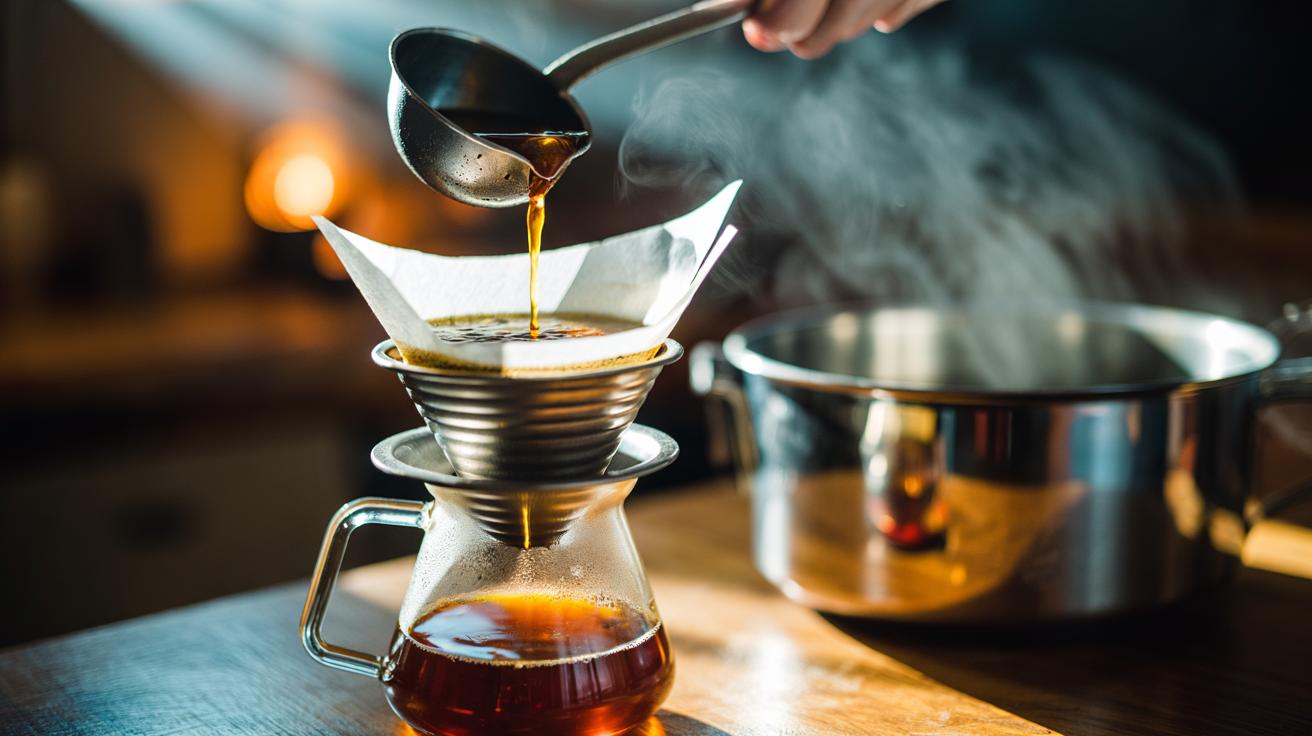
Start with a pre-clarification pass. Pour your stock through a fine-mesh sieve to remove large bones, skins, and aromatics. Then set a wet—rinsed with hot water—coffee filter in a funnel, dripper cone, or sieve. Pre-wetting eliminates paper taste and opens the pores. Place the funnel over a heat-safe jug or a deep bowl, ensuring the outlet isn’t submerged so air can escape. Ladle in stock gently. Don’t dump the pot; you’ll stir up sediment. Let gravity do the work. When the filter slows to a crawl, swap it for a fresh one.
Work in batches. For one litre of stock, expect 10–25 minutes depending on how cloudy and fatty it is. Basket-style filters hold more and clog less than narrow cones. If you’re rushing, chill the stock first and lift off the fat cap; there’s less to trap, so flow improves. Never press or stir the slurry at the bottom—this forces trapped fines through and re-clouds your hard-won clarity. Season after filtering, not before, because clarity can make salt and acidity read differently on the palate.
Speed, Clarity, and Taste: What to Expect
Filtering isn’t just for show. It changes mouthfeel and flavour balance. With a paper pass, you’ll strip out a chunk of suspended fat and denatured proteins that add muddiness. The broth looks jewel-like and tastes brighter. It may also feel slightly leaner, since less lipid means less coating on the tongue. If body is critical—say in a beef jus—add a small gelatin boost or reduce more gently to concentrate without greasiness. The sweet spot is “polished but not hollow”: crystal-clear appearance with intact savoury depth.
Here’s a quick comparison of common straining methods and what they deliver. Pore sizes are approximate and vary by weave and brand, but the trade-offs hold true.
| Method | Approx. Pore Size | Clarity | Speed | Notes |
|---|---|---|---|---|
| Fine-mesh sieve | 500–1,000 µm | Low | Very fast | Great pre-filter to remove bulk solids |
| Cheesecloth (2–4 layers) | 100–200 µm | Moderate | Fast | Better clarity, still allows some fat |
| Muslin | 60–90 µm | Good | Moderate | Washable, reusable, less oil adsorption |
| Paper coffee filter | 15–30 µm | High | Slow–moderate | Adsorbs oils; superb polish |
| Egg-white raft (consommé) | N/A (coagulation) | Very high | Slow | Pristine clarity; more labour |
Common Mistakes and Smart Variations
A few pitfalls trip people up. Pouring boiling stock straight onto dry paper scalds, compacts the fibres, and can release papery aromas. Rinse hot, then filter warm. Stirring the pot before ladling re-suspends sediment; don’t do it. Let it settle five minutes after simmering stops, then ladle from the top. If your filter clogs repeatedly, you likely have an emulsified stock—cool it, skim fat, and try again for a dramatic speed increase.
Variations help. Use two stages: muslin first, paper second. For very large batches, nest a paper filter inside a metal cone with wide holes so the paper is supported and less likely to tear. Unbleached filters can carry a faint woody note; rinsing solves it. Bleached filters are neutral from reputable brands. If you own a pour-over cone (V60, Kalita), it’s ideal; the ribs keep channels open, improving flow. For the clearest consommé-like finish without eggs, add a rest in the fridge, then do a final paper pass. The combination is fast, safe, and consistent.
In the end, the coffee filter hack delivers what home cooks crave: speedy clarity, less grease, and a stock that looks as good as it tastes. It’s low-cost and repeatable, and it respects the work you’ve put into simmering bones and veg for hours. Once you taste the cleaner, brighter result, it’s hard to go back to a cloudy bowl. Will you keep it rustic for certain dishes, or will you adopt paper-polished stock as your new kitchen default—and if so, which recipe will you test first?
Did you like it?4.4/5 (28)