In a nutshell
- 🥔 The potato slice method works by soaking up salty liquid during starch gelatinisation—it does not selectively remove sodium—gently lowering perceived saltiness and slightly thickening the soup.
- 🔬 Use one medium potato per 1–2 litres, cut into 1–1.5 cm slices, simmer 8–12 minutes, then remove when flavour balances; choose waxy potatoes to hold shape, floury ones for a bit more absorption.
- 🧪 Recognise limits: for bigger mistakes, prioritise dilution with unsalted stock/water, add unsalted bulk (veg, beans, grains), temper with fat and acidity, or reset with a precise double-batch.
- 🧯 Adjust in small steps: start with the least disruptive fix, taste between each change, and judge salt on a cooled spoon to avoid misreading flavour at high heat.
- 🧭 Prevent oversalting by staggered seasoning—salt late and lightly, let the pot rest so flavours meld—and treat the potato as a useful assistant, not the star.
When a soup turns brackish with too much salt, folk wisdom points to a humble fix: drop in a potato. The idea sounds like culinary alchemy, yet the reality is more nuanced and rather interesting. Slices of potato do act like sponges, but not by magically trapping sodium ions. They soak up salty liquid. That subtle distinction matters. It helps you rescue dinner without wrecking texture or flavour. As a cook, and as a curious eater, you deserve the science as well as the steps. Here is how the potato slice method works, why it sometimes disappoints, and the smarter ways to steady a salty pot.
Why Starch Seems to Soak Up Salt
Potatoes are packed with starch granules and a porous cell structure. When a raw slice meets hot broth, water diffuses in and heats the granules until they swell, a process known as gelatinisation. That swelling traps some of the surrounding liquid inside the potato’s matrix. The liquid that enters is the same liquid that’s in your pan: seasoned broth containing dissolved sodium ions and chloride. The potato is not selectively removing salt; it is absorbing salty water. Because part of the brine becomes sequestered in the potato and then lifted out, the remaining soup can taste less salty. Not desalted. Just a touch less intense.
A second effect changes perception. As released starch thickens the broth, saltiness appears softer because viscosity dampens flavour delivery to our taste receptors. Temperature matters too: hotter soups often taste less salty than cooled spoonfuls. This is why the method sometimes feels like sorcery and other times like a damp squib. The science is steady; the variables—time, temperature, potato type, and your soup’s volume—determine the outcome.
How to Use the Potato Slice Method Step by Step
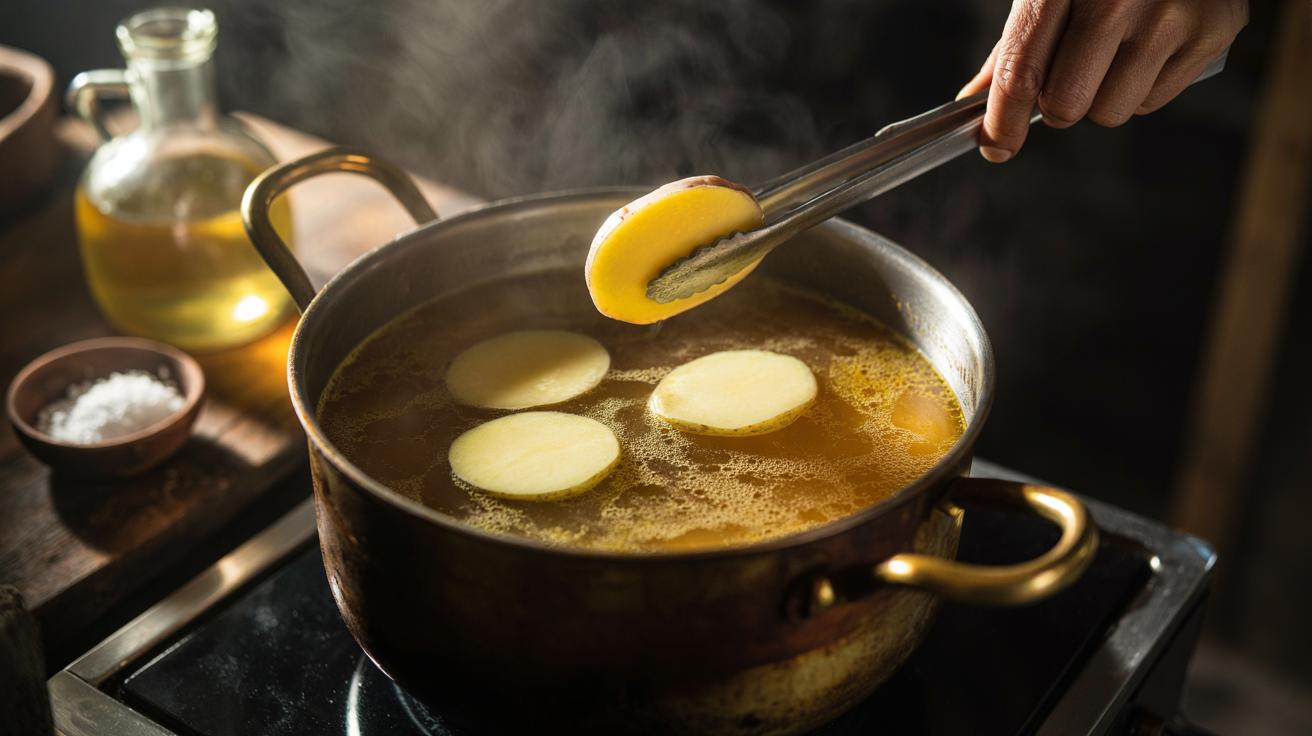
Work with one medium potato per 1–2 litres of soup. Peel it if you like a pristine broth; otherwise, scrub and leave the skin on for less breakdown. Slice into thick coins or wedges, 1–1.5 cm, which gives enough mass to lift out cleanly. Bring the soup to a gentle simmer. Slip in the slices and stir once so they don’t weld to the pot. Cook 8–12 minutes for brothy soups; up to 15 for creamy ones. Taste at the 8-minute mark. Remove the slices the moment the saltiness drops to acceptable; overcooking sheds too much starch and clouds the pot.
Choice of potato matters. Waxy varieties (Charlotte, Nicola) hold shape and are easier to retrieve. Floury varieties (Maris Piper, King Edward) swell more and absorb a little extra liquid but can disintegrate if left too long. If your pot still tastes assertive, repeat with fresh slices rather than extending the first batch indefinitely. You can repurpose the salty spuds—mash with unsalted butter and lemon, or cool and fry into crisp snacks. Minimal waste. Practical cooking.
Limits, Myths, and Better Fixes
Myth first: potatoes do not “extract” sodium like magnets. They capture a small quantity of salty broth and slightly thicken what’s left. Useful, not miraculous. If you’ve overshot by a tablespoon in a small pot, no tuber will save you solo. In those cases, the best fix is arithmetic. Add unsalted stock or water to dilute, then rebalance body with more veg, pulses, or a quick starch slurry (cornflour + cold water) to restore texture. Fat rounds edges—cream, coconut milk, or a knob of unsalted butter. Acidity (lemon, vinegar, tomatoes) brightens and distracts, reducing perceived saltiness without changing concentration.
Always think in layers. Bulk out with cooked grains or beans, all unsalted, so sodium density drops per spoonful. Add aromatics—garlic, herbs, toasted spices—to widen flavour bandwidth. A whisper of sugar can balance bitterness and heat, but avoid tipping into sweetness. Finally, if the pot is truly gone, the professional move is a double-batch: make a second, unsalted soup and combine. It’s efficient and precise. The potato method still has a role—as a fast, low-risk nudge—just not as kitchen mythology suggests.
At-a-Glance Remedies Table
Use this quick reference when a broth tastes too salty. Start with the least disruptive tactic and move down the list. Small, measured changes beat one dramatic swing. Taste between each step, and remember that hot soup reads softer than cooled spoonfuls, so let a spoonful cool 10–15 seconds before judging.
| Technique | What It Does | Best For | Caveats |
|---|---|---|---|
| Potato slices | Absorb some salty liquid; slight thickening | Lightly oversalted soups | Not selective for sodium; watch texture |
| Dilution with unsalted stock/water | Lowers salt concentration precisely | Any soup or stew | May thin body; re-thicken as needed |
| Add unsalted bulk | Spreads sodium over more volume | Veg, beans, grains | Extends cooking time slightly |
| Acid and fat | Masks and rounds perceived saltiness | Creamy or tomato-based soups | Does not change actual sodium |
| Double-batch | Resets seasoning by blending | Severe oversalting | Requires extra ingredients |
One final professional habit prevents salt spirals: staggered seasoning. Salt late and little, then rest the pot. As flavours meld off the heat, salt disperses more evenly and often reads stronger, meaning you need less. Measure with your fingers, not the shaker. Taste with a cooled spoon. And keep a peeled potato in the wings; it’s a credible assistant, never the star. With these techniques in your apron pocket, even a heavy-handed pinch can be rescued without drama.
In British home kitchens and restaurant galley alike, the potato slice method endures because it’s accessible, tidy, and low-risk. It will not defy chemistry, but it will buy you time and temper a salty broth while you apply more precise fixes. Think of it as a first aid kit, not a cure. Try it, then choose dilution, bulk, fat, acid, or a double-batch to finish the job. What’s your go-to rescue when seasoning slips, and which trick has surprised you the most at your own hob?
Did you like it?4.5/5 (28)