In a nutshell
- 🌸 Banana peels deliver potassium (K), plus phosphorus and calcium, boosting buds and resilience while staying low in nitrogen—a bloom booster, not a complete fertiliser.
- 🪱 Decomposition drives nutrient release: chop or dry to increase surface area, bury to avoid pests, and time applications weeks before peak flowering for UK conditions.
- 🧪 Run a soil test to balance nutrients; pair peels with nitrogen sources if needed and avoid excessive K that can hinder magnesium uptake.
- 🛠️ Use practical methods: composting, trench composting, dried peel powder for top-dressing, and Bokashi-style fermenting to speed safe breakdown.
- 🍶 Simple recipes that work: powder (1–2 tbsp per plant monthly), a diluted fermented extract (1:10, soil-only), and buried trench strips that feed borders steadily.
Gardeners have long sworn by the humble banana peel, and not only because it keeps waste out of the bin. The skin is rich in flower-forward nutrients that can lift tired borders and coax more colour from roses, dahlias, and tomatoes. The trick is understanding how the peel breaks down and how to apply it without inviting pests or imbalance. The goal is simple: turn a kitchen leftover into a steady, soil-friendly feed that boosts buds, roots, and resilience. Here’s how the peel’s chemistry works, why timing matters, and the safest, most effective ways to put it to work in British beds and containers.
Why Banana Peels Work: Nutrients and Release Timeline
The power of banana peels lies in their generous share of potassium (K), with a side of phosphorus (P), calcium (Ca) and trace magnesium (Mg). These elements underpin strong flowering, sturdy cell walls, and efficient water regulation. While peels are famously low in nitrogen (N), that’s not a flaw when you’re chasing blossoms over lush leaves. Think of peels as a bloom booster, not a complete fertiliser. Nutrients are released as microbes digest the peel, so the benefit arrives gradually, typically over several weeks, dovetailing with the natural rhythm of root uptake and microbial cycling in healthy soil.
Because release depends on decomposition, size and placement matter. Finely chopped or dried-and-crushed peel exposes more surface area, which speeds microbial access and shortens the lag between application and results. Whole peels break down slowly, especially in cool UK springs, and may temporarily tie up some nitrogen at the decomposition site. If you’re planting for peak summer bloom, get peels into the soil several weeks ahead of showtime. Match the method to the plant: roses, fruiting tomatoes, and ornamental annuals are ideal candidates for a slow, steady K lift.
| Nutrient | Role in Bloom | Peel Level (Relative) |
|---|---|---|
| Potassium (K) | Bud formation, colour intensity, disease tolerance | High |
| Phosphorus (P) | Root growth, flowering initiation | Moderate |
| Calcium (Ca) | Cell walls, blossom-end rot reduction | Moderate |
| Nitrogen (N) | Leaf growth | Low |
Pair peels with a balanced compost to round out nitrogen and organic matter for a complete feed.
Practical Ways to Use Peels Without Attracting Pests
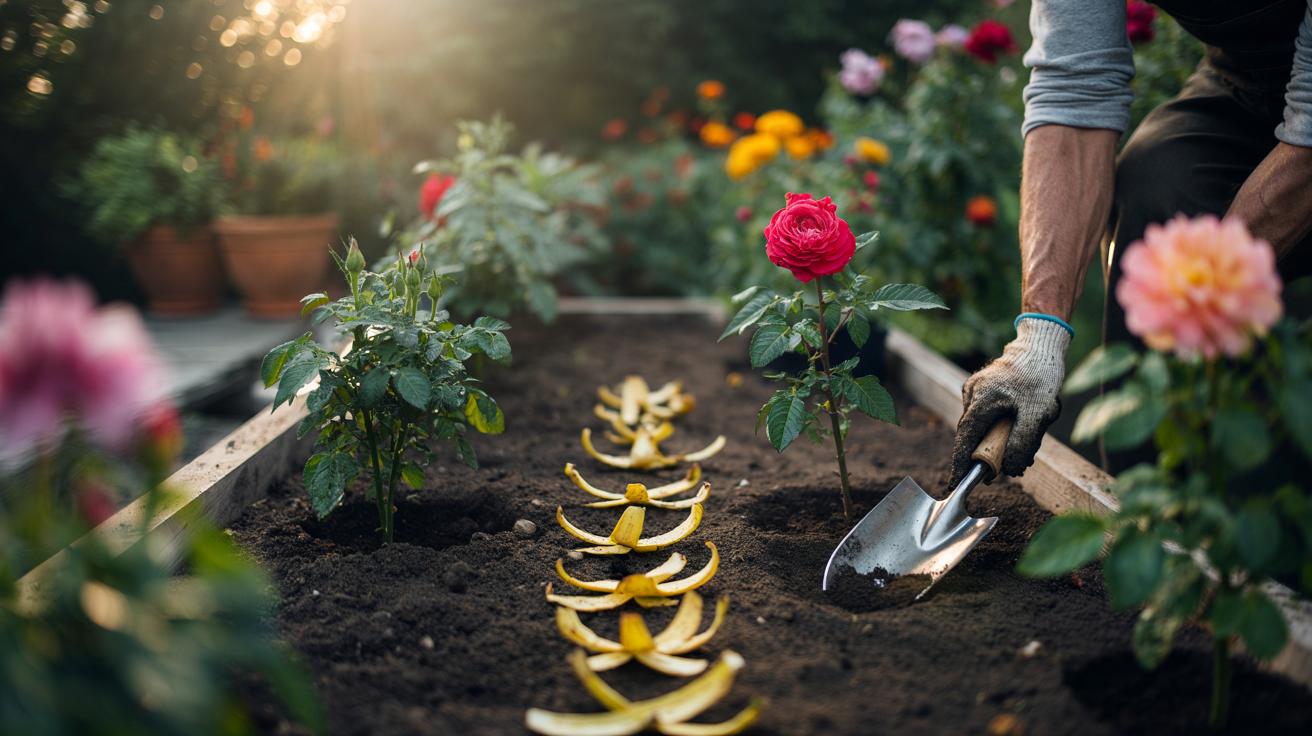
Start with composting. Add chopped peels to your heap as a “green” input, balancing with “browns” like shredded cardboard or dry leaves. This locks nutrients into humus, suppresses odours, and deters rodents. For quicker results near plants, try trench composting: dig a 15–20 cm groove between rows, lay in chopped peels mixed with soil, and cover. Burying material is the simplest way to feed blooms while avoiding flies and foxes. Over a month or two, the trench becomes a nutrient ribbon, handy for heavy-feeding ornamentals and veg.
Prefer minimal digging? Make dried peel powder. Air-dry strips on a rack, then finish in a very low oven until brittle and blend to a coarse powder. Scratch a tablespoon into the top few centimetres of compost around container plants. This raises surface area, speeds microbial action, and keeps things tidy. You can also harness kitchen microbes with a sealed-bucket ferment (Bokashi style): layer peels with bran, drain the leachate, and bury the pre-digested solids. Fermentation reduces volume, suppresses smells, and accelerates breakdown once buried.
Avoid scattering whole peels on the surface. They dry, curl, and can attract pests. Do not overload one spot; a little goes a long way. If your soil is already rich, use peels sparingly and observe plant response week by week.
What Science and Soil Tests Say
Banana peels do contain a meaningful dose of potassium and useful phosphorus, but the soil is a complex ecosystem. The yield gain you actually see depends on texture, temperature, moisture, and the diversity of microbial life. Peels feed microbes first; microbes, in turn, feed your plants. In sandy beds with low organic matter, improvements can be noticeable as water regulation and disease tolerance improve. In heavier clays, the benefit often shows as steadier bloom rather than dramatic growth spurts.
To calibrate, run a simple soil test in early spring for pH and macronutrients. If nitrogen is already modest, bolster with a balanced compost or an organic N source, because peels alone won’t cover it. Potassium surplus can lock horns with magnesium uptake, so avoid overuse if you routinely apply potash. Right nutrient, right rate, right time—this is the gardener’s law of returns. Keep notes: variety, application date, weather, and bloom count. Patterns emerge fast when recorded.
Small trials help. Choose two similar beds or containers; treat one with peel-derived inputs and leave one as your control. Compare bud numbers, flower size, and time-to-bloom. You’ll learn whether peels solve a real deficiency or merely add to the compost pile.
Simple Recipes: Teas, Powders, and Ferments That Actually Help
Peel Powder Top-Dress: Dry peels on a rack for several days, then crisp gently in a low oven until they snap. Blend to flakes or powder. For roses and tomatoes, work 1–2 tablespoons into the top 3–5 cm of soil per plant, monthly during bloom. Water in. The powder format delivers a quiet, steady feed without encouraging pests. For containers, halve the rate and watch the foliage for signs of excess salts (rare, but possible with repeated applications).
Fermented Peel Extract: Fill a jar half-way with chopped peels, add clean water to cover, weigh them down, and loosely cap. Let it sit 5–7 days out of direct sun, venting daily. Strain, dilute at roughly 1:10 with water, and apply to soil, not leaves. This light extract offers a microbe-friendly nudge for potassium-hungry bloomers. Avoid long, smelly soaks; overly anaerobic brews can harm roots and don’t improve efficacy.
Trench Strip for Borders: Every 40–60 cm along a rose border, dig a narrow slot. Mix chopped peels with finished compost and a handful of shredded cardboard, then bury. Water well. This creates a slow-release nutrient band for the season. Fold in a small amount of nitrogen-rich material (like alfalfa pellets) if growth looks pale. Keep everything below the surface to discourage wildlife.
Banana peels won’t replace a full feeding programme, but they are a clever, low-waste way to amplify bloom, fortify plants against stress, and enliven the soil food web. Use them as a potassium-forward accent, not the whole orchestra. Start small, watch closely, and let plant performance guide your hand. From trench to powder to a quick ferment, the method you choose can be as simple as your schedule demands. How will you test peels in your garden this season, and which flowers will you back for a brighter, longer show?
Did you like it?4.5/5 (27)