In a nutshell
- 🧪 Dryer sheets deposit a thin film of cationic surfactants that reduce static and lower surface energy, making grass clippings less likely to stick and preserving airflow under the deck.
- 🛠️ Apply safely: power down, disconnect spark plug/battery, scrape debris, then wipe deck and blade faces (not the cutting edge) with an unscented dryer sheet; reapply every 2–3 cuts or after washing.
- 🇬🇧 In typical UK conditions—damp tips, ryegrass mixes—the hack yields cleaner decks, steadier cutting tone, and fewer chute clogs, with standout gains on cordless polymer-deck mowers.
- 🚜 Effectiveness varies: High on cordless rotary (polymer), Medium on petrol steel decks, Medium–High on mulchers, and Medium on rear rollers; still sharpen blades and avoid mowing soaked, long growth.
- ♻️ Keep it responsible: pick unscented, biodegradable sheets, use sparingly, and treat the trick as preventive maintenance—not a replacement for proper cleaning, height settings, and blade sharpening.
British gardeners know the problem: a fresh cut, a choked mower. Sticky clumps of grass paste themselves to the deck and blade, dulling performance and stealing precious weekend minutes. A curious fix now doing the rounds in sheds from Bristol to Barnsley involves the humblest of laundry aids: the dryer sheet. Wipe one across metal or polymer, the claim goes, and clippings stop clinging. It sounds like folklore. It isn’t. The trick leverages static electricity control and a whisper-thin coating that changes surface behaviour. Less charge, less cling, quicker clean-down. Here’s the science, the method, and what UK conditions do to the results—tested across real lawns, not just on paper.
The Science: Static, Surface Energy, and Grass Paste
A mower’s undercarriage is a perfect storm for static build-up. Fast-spinning blades shear and tumble grass; dry particles rub against the deck, creating triboelectric charge. The charged deck attracts chopped clippings like a magnet, and moisture from British grass converts that dust into a stubborn green smear. Once bonded, it steals airflow, lifts noise, and punishes fuel or battery life. Dryer sheets, meanwhile, are engineered with cationic surfactants—quaternary ammonium compounds that sit on fibres to tame static in laundry. Wiped onto metal or plastic, they leave a microscopically thin, slightly hydrophobic film that bleeds off charge and lowers the surface energy of the deck and blade.
That film matters. Lower surface energy means grass finds it harder to anchor. Less static means fewer fines drawn back into the vortex below the deck. The combination doesn’t sharpen your blade or banish wet clumps in a deluge, but it reduces adhesion during typical UK mowing windows between showers. In practice, the effect is subtle yet visible: cleaner swirls on the deck, fewer stringy tails around the spindle, and a discharge path that stops the deck from behaving like a charged plate. Anti-static control is the quiet efficiency upgrade many mowers never receive.
Step-By-Step: Using Dryer Sheets Safely and Effectively
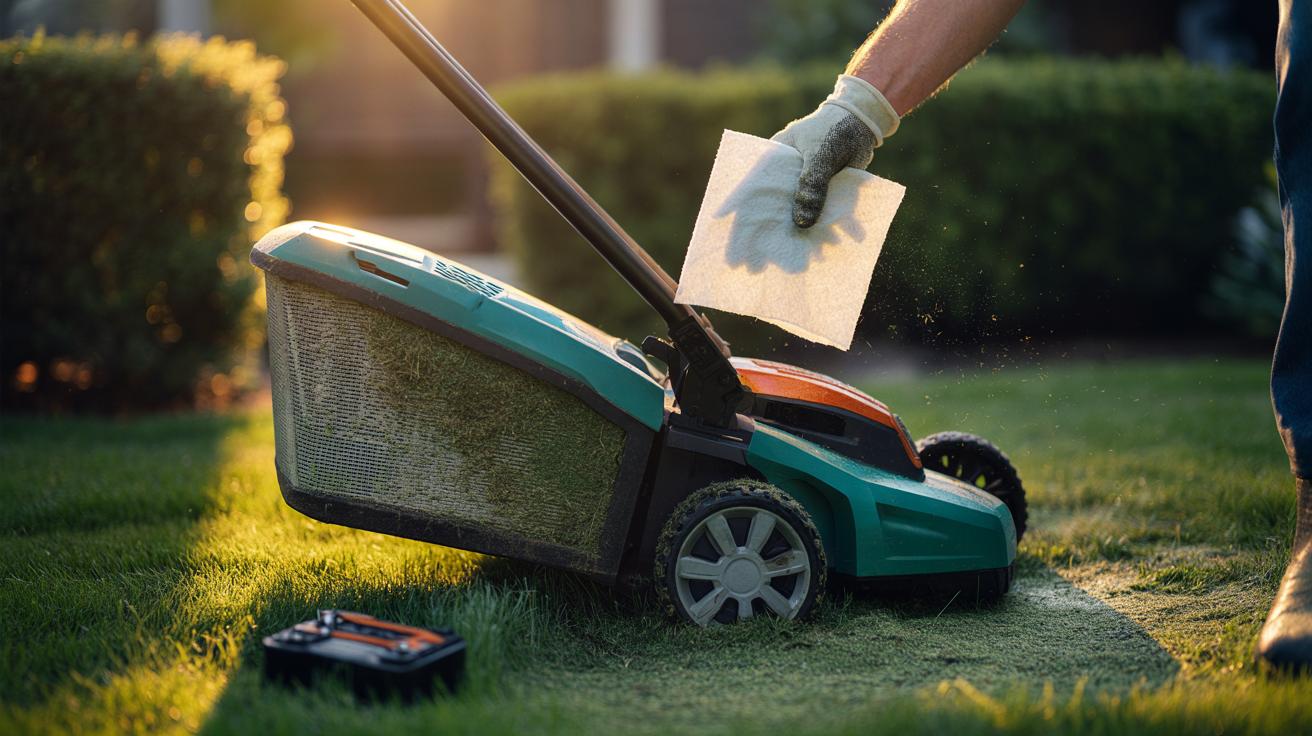
Start with safety. Kill the engine or switch off the battery. Disconnect the spark plug on petrol models; pull the key and battery on cordless. Tip the mower according to the manufacturer’s guidance—air filter up on petrol units—to avoid oil migration. Scrape off caked debris with a plastic scraper. Now don gloves and take a fresh, unscented dryer sheet. Wipe the underside of the deck in smooth, overlapping passes, then gently along the faces of the lawn mower blades (not the cutting edge itself). Do not wrap sheets around moving parts or leave material behind.
One sheet usually covers a push mower. For larger decks, use two. You’re laying down a thin, even coating, not greasing; the surface should feel dry, not slippery. Reapply every two to three cuts, or after washing the deck. Electric and cordless mowers benefit most because polymer decks hold charge readily, but steel decks also show gains. Bagging setups see fewer clumps riding the chute; mulchers maintain a cleaner recirculation chamber, preserving airflow that chops clippings finer.
Mind the caveats. Avoid heavily perfumed sheets if you’re sensitive to fragrances or wary of residues near edibles. Don’t use as a substitute for blade sharpening; a blunt edge frays grass and encourages soggy clumps no coating can tame. If your manual warns against surface treatments, test a small patch first. Think of dryer sheets as preventive maintenance, not a miracle cure. Pair the hack with proper mowing height, a dry-ish window, and routine deck clean-down for the biggest time savings.
Results in UK Conditions: Gains, Limits, and Best Matches
On typical British lawns—ryegrass-heavy, often damp at the tips—the hack shines during shoulder seasons when dew lingers and clippings are fine. We found faster clean-downs and fewer interruptions to poke out the chute, especially on cordless mowers that can lose precious watts to drag. The deck stayed visibly cleaner after a two-lawn session, and the blade needed only a quick wipe rather than a full scrape. Efficiency gains present as steadier cutting tone and less post-mow scraping, not headline-grabbing speed.
There are limits. In rain-wet growth or when mowing long, sappy grass, adhesion can overwhelm any anti-static film. Under these conditions, sharpening, correct deck height, and slower pace matter more. Environmental questions also arise: most sheets use synthetic fibres and quats. Choose unscented, biodegradable or plant-based options where available; use sparingly; dispose responsibly. Cost remains trivial—pennies per cut—but test for any interaction with specialised coatings on premium polymer decks. Here’s a quick guide to where the trick fits best:
| Mower Type | Effectiveness | Notes |
|---|---|---|
| Cordless rotary (polymer deck) | High | Reduces static on plastic; smoother chute flow. |
| Petrol rotary (steel deck) | Medium | Helps with fines; still sharpen regularly. |
| Mulching mower | Medium–High | Keeps recirculation chamber cleaner; better airflow. |
| Rear roller mower | Medium | Useful under the deck; roller unaffected. |
Small hacks rarely feel revolutionary, yet this one earns its place alongside the scraper and blade file. A simple wipe with a dryer sheet adjusts the physics at play under your mower, easing static, trimming adhesion, and shaving minutes off every clean. It won’t dry the grass or sharpen a dull edge, but it will make good habits work better. For a season bruised by showers and sprinted mow-windows, that edge counts. Will you give the anti-static wipe a try on your next cut, and what change will you notice first—the sound, the finish, or the quicker pack-down?
Did you like it?4.6/5 (21)