In a nutshell
- 🌱 Eggshells deliver calcium carbonate for gentle pH buffering and slow-release calcium, improving structure and microbial activity for resilient, long-term soil health.
- 🧪 Prep right: rinse, sterilise by baking, then crush or grind—finer powder = faster action; scratch into beds, top-dress pots, and skip “tea” unless shells are powdered.
- 🛡️ Same-night defence: use crushed shells as a jagged slug deterrent, make stem collars for cutworms, and repurpose halves as tidy seed starters to reduce transplant shock.
- 🔁 In the compost heap and containers, shells buffer acidity, add grit for airflow, and keep media open; manage watering consistency to prevent blossom-end rot rather than relying on calcium alone.
- 🌿 Build over time: add small amounts annually and blend with compost, manure, and leaf mould for better drainage, stronger stems, and steadier soil health—a circular, low-cost habit.
From breakfast plate to bed border, the humble eggshell is a quiet revolution waiting in your kitchen. Gardeners love a quick win. And while shells won’t rewrite the soil rulebook in a single night, they can deliver immediate practical benefits and set the stage for sustained health. Think simple pest barriers, gentle pH buffering, and a steady trickle of calcium that roots can draw upon over time. Rinse. Dry. Crush. That’s the heart of it. Waste becomes resource, swiftly and safely. If you’ve a tray of seedlings or a clutch of slug-prone hostas, this is a zero-cost experiment that pays back fast, then keeps paying for months.
Why Eggshells Work in Soil
Eggshells are mostly calcium carbonate. In the soil, this mineral behaves like a gentle buffer, helping nudge acidity towards neutral and strengthening cell walls as the calcium becomes available. The shell’s porous structure offers micro-surfaces for beneficial microbes to colonise, improving aggregation and water movement. It is not an instant fertiliser spike. It is a slow, steady release. That’s the point: resilience over rush.
There’s a myth to tidy up. Blossom-end rot in tomatoes isn’t usually fixed overnight by adding calcium; it’s most often caused by irregular watering that blocks the plant’s uptake. Eggshells help only if the soil is genuinely calcium-poor, and even then, they take time to break down. But in sandy or heavily leached beds, they’re a smart, low-cost addition, complementing compost and mulches to build texture and stability.
Crushed shells also raise the soil’s proportion of coarse particles, improving aeration around roots. That means less waterlogging in heavy spots and a nicer tilth for seedlings. Think of them as mineral grit with benefits. Subtle chemistry; visible structure. Put together, that’s why the technique has endured on smallholdings and allotments alike.
How to Prepare and Apply
Start simple. Rinse shells to remove albumen, then dry. For food safety, spread on a tray and bake at 100–120°C for 10–15 minutes to sterilise and make them brittle. Crush with a rolling pin, or blitz in a coffee grinder for powder. The finer the grind, the faster the calcium becomes plant-available. Fine powder equals faster action.
Application is easy. For beds, scratch in 1–2 handfuls of fine shell per square metre, mixing lightly into the top 2–3 cm. For pots, top-dress with a tablespoon per 20 cm container, then water. Avoid burying deep; surface biology does the first wave of work. Fold a cup of shells into your compost bin each week to counter mild acidity and add grit for worms. Skip the folk “eggshell tea” unless you’ve powdered the shells; soaking chunks does very little.
| Particle Size | How to Make | Nutrient Availability | Best Uses | Time to See Effects |
|---|---|---|---|---|
| Powder (<1 mm) | Grind in a mill/grinder | Faster, months | Top-dress pots, seed compost, gentle pH buffer | Structural now; calcium in 1–3 months |
| Crushed (1–5 mm) | Rolling pin or mortar | Slow, many months | Bed amendment, slug deterrent ring | Barrier tonight; nutrient in 6–12 months |
| Halves | Keep shell cups intact | Very slow | Seed starter pods, drainage crocks | Structural now; nutrient over a year+ |
Always handle shells clean and dry to prevent odour and pests. Store a jar by the hob and keep adding until you’ve enough for a session. It’s the kitchen habit that changes your beds.
Pest Defence and Practical Uses Tonight
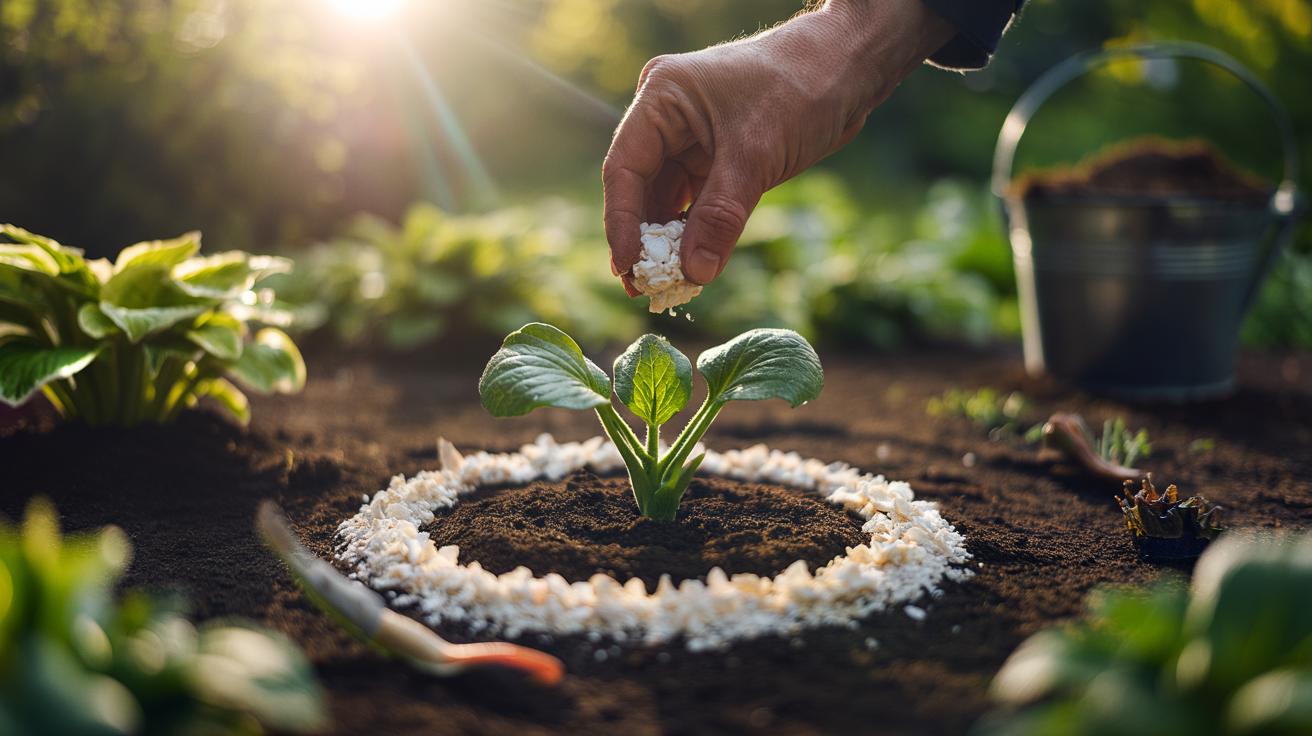
Want a same-day difference? Use shells as a physical slug deterrent. Scatter a 5–8 cm ring of jagged, crushed shell around vulnerable seedlings and soft-leaved beauties. The texture is abrasive and uncomfortable for slugs and snails to cross. Does it stop every raid? No. But it reduces pressure, especially overnight when damage peaks. It’s a cheap, visible line of defence.
Make quick collars. Press a band of crushed shell into the soil around stems to disrupt cutworms and other crawlers. In wet spells, the gritty mix helps prevent splash-back that spreads blight spores. For birds that peck seedlings, shell sparkle can add a brief visual deterrent. Another hack: fold shells into muddy paths for temporary traction near the greenhouse door. Not pretty, but functional when rain hits.
Use halves as seed starters for peas or salad. Puncture a drainage hole, add seed compost, sow, and later plant the whole cup after cracking the base. It’s tidy propagation and reduces transplant shock. Tonight’s task list writes itself: prepare shells, lay deterrent rings, and prime a tray of “pots”. Small moves, real protection.
Compost, Containers, and Soil Health Over Time
Eggshells shine in the slow lane. In a compost heap, they buffer acidity from green material, provide grit that improves airflow, and supply trace minerals that microbes and worms appreciate. Powdered shell disappears quickly into the matrix, while bigger pieces hang back as micro-aggregates that keep the heap from compacting. It’s structure as much as nutrition.
Container gardeners benefit twice. First, a teaspoon of powder per small pot curbs peat-free mixes from drifting too acidic over a long season. Second, the grit keeps media open, helping roots breathe in fickle British summers. For tomatoes and peppers, mix fine shell through the top layer and water consistently; you’re managing both calcium availability and plant uptake together. Remember: watering rhythm is king, shells are the insurance.
On allotments, keep adding small amounts each year rather than one heavy dump. Soil biology responds best to steady inputs. Combine shells with leaf mould, well-rotted manure, and green manures for a diversified mineral diet. You’ll notice sturdier stems, cleaner runoff, and fewer slumps after rain. Over time, the garden stops lurching from feast to famine. It becomes reliably good, week in, week out.
Eggshells won’t turn clay into loam by sunrise, but they will give you instant barriers, cleaner propagation, and a measured lift in soil quality that accumulates season after season. It’s circular, frugal, and oddly satisfying. Tonight, you can rinse, bake, crush, and deploy around the plants that need it most. Tomorrow, you’ll see less slug grazing and neater beds. In a month, you’ll see stronger growth. So, which corner of your garden will you transform first with a handful of shells?
Did you like it?4.6/5 (29)