In a nutshell
- 🌙 Eggshell water releases mild calcium and slight alkalinity overnight, supporting roots and the soil microbiome; aim for gentle, regular dosing rather than a “miracle” fix.
- 🧪 Nutrient profile: chiefly calcium with trace magnesium and phosphorus; strengthens cell walls and new growth but is not a complete fertiliser for nitrogen or potassium needs.
- 🔧 Preparation and use: rinse and heat‑treat shells, crush, steep overnight, strain; apply as a soil drench, dilute for seedlings, avoid acid-loving plants, and use every 2–4 weeks.
- ⚠️ Myth-busting: it won’t cure blossom end rot overnight—consistent watering is key; skip vinegar “boosts,” and expect clearer results in containers than open ground.
- 📍 Regional nuance: UK areas with hard water may see minimal benefit; soft‑water or rainwater gardeners notice more—pair with compost and steady irrigation for best results.
Britain’s gardeners love a thrifty tip, and few are thriftier than turning kitchen scraps into plant tonic. Enter eggshell water, the cloudy infusion made by steeping cleaned shells in hot water overnight. It looks humble. It works quietly. Yet it can nudge soil chemistry, feed microbes, and supply a trickle of calcium where roots are searching. Not a miracle. Not a fad. It’s a small, steady assist that aligns with a low-waste ethos. Used sensibly, it complements compost and routine feeding, supporting sturdier stems and better fruit set. Think of it as a gentle top-up rather than a full meal for your plants.
How Eggshell Water Works Overnight
Eggshells are mostly calcium carbonate with a whisper of magnesium and traces of other minerals embedded in the membrane. When you steep cracked shells in hot water, a tiny portion dissolves into solution, often as bicarbonate, particularly if the water is slightly acidic. That slow release matters. Plants absorb most calcium through roots as ions in soil water; a mild infusion can ease deficiency-prone conditions without shocking the system. The key is gentle, regular dosing rather than one heavy-handed pour. You’ll rarely smell anything, and if you’ve boiled the shells first, you drastically cut microbial risks.
Overnight, the brew’s alkalinity usually rises a notch. That can buffer acidic potting mixes, making them more welcoming for crops like tomatoes, peppers, and roses. It also subtly supports the soil microbiome, which thrives on balanced pH and consistent moisture. Do not expect miracles by morning. Calcium is relatively immobile inside plants; tissues formed before supplementation won’t retrofit themselves. But seedlings and new growth can benefit, especially under erratic watering or in light, leaching-prone substrates.
Context matters. In much of the UK, tap water is already “hard,” rich in dissolved carbonates. If you see limescale on your kettle, you’re likely supplying calcium at every watering. In such areas, eggshell water’s effect is modest. In soft-water regions or with rainwater-only regimes, the difference can be more noticeable. Match the remedy to your local water profile, not to a generic internet promise.
Nutrient Profile and Plant Benefits
What exactly does this infusion carry? Primarily calcium, in small, variable quantities; plus faint traces of magnesium and phosphorus from residual membranes. The amounts depend on shell surface area, water temperature, steeping time, and acidity. Expect “low but useful” rather than “fertiliser-grade.” That’s fine. Calcium isn’t about rapid green-up like nitrogen; it stabilises cell walls, helps root tips divide properly, and supports disease resilience. Stronger cell walls translate into sturdier growth and less splitting in fruit.
| Component | Presence in Eggshell Water | Role in Plants | Notes |
|---|---|---|---|
| Calcium (Ca) | Low–moderate, variable | Cell walls, root growth, signalling | Most beneficial for fruiting crops and seedlings |
| Magnesium (Mg) | Trace | Chlorophyll component | Too little to fix chlorosis alone |
| Phosphorus (P) | Trace | Energy transfer (ATP), roots | Better supplied via compost or feed |
| Alkalinity | Mild increase | Buffers acidic mixes | Can nudge pH upward over time |
Visible payoffs? Fewer calcium-related hiccups in fast-growing tissues, steadier flower and fruit formation, and a calmer pH in peat‑free mixes that skew acidic. Gardeners often cite the dreaded blossom end rot in tomatoes as a target. Eggshell water won’t cure damaged fruit, but by supporting calcium availability in the root zone, it can reduce recurrence when paired with consistent watering. Houseplants in soft-water areas also respond, especially those that sulk in overly acidic substrates. Think of eggshell water as insurance for new growth and delicate root tips rather than a cure-all.
Safe Preparation and Application
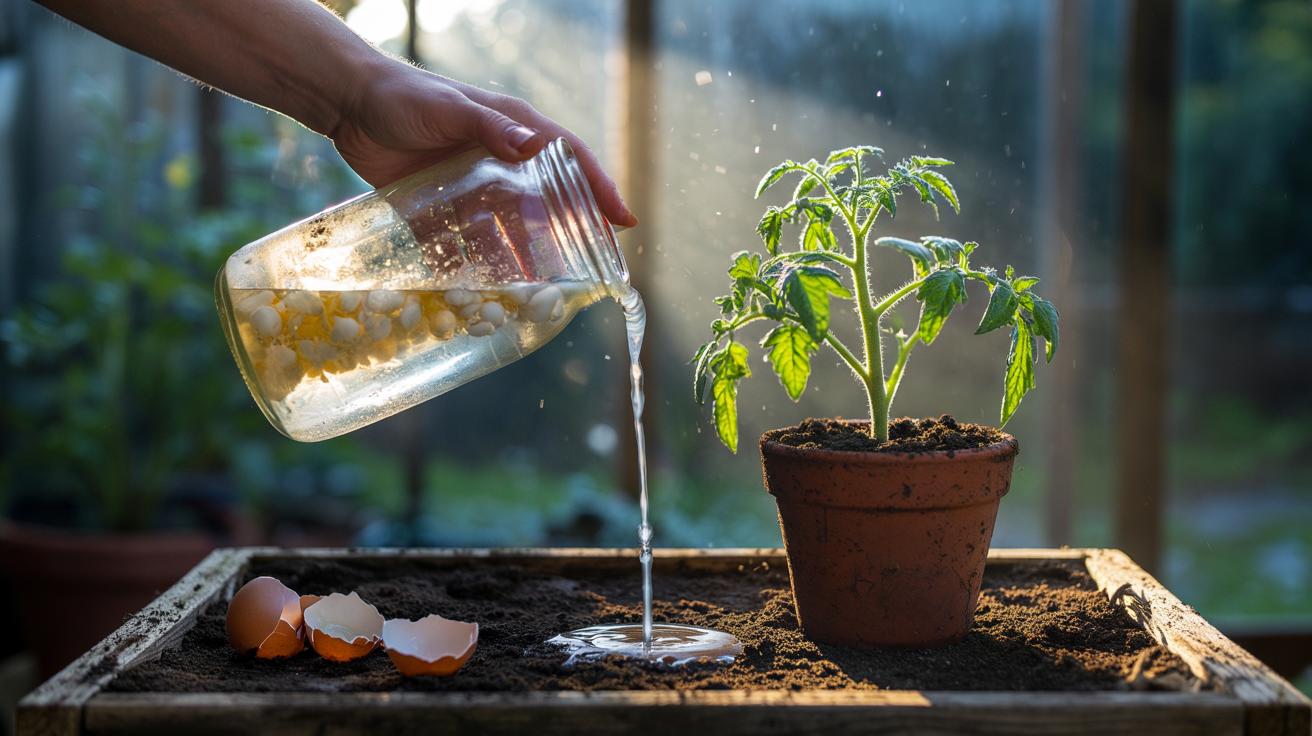
Start in the kitchen. Rinse empty shells to remove clinging albumen. Always heat-treat shells to reduce the risk of pathogens: boil them for 5–10 minutes or bake at low heat until dry and brittle. Crush coarsely to increase surface area. Place the pieces in a heatproof jar, cover with just-boiled water, and cap. Let steep overnight. Strain in the morning. The resulting eggshell water should be clear to slightly milky; if there’s an off smell, discard and start again.
How to use it? Apply as a slow, thorough soil drench around the root zone. For seedlings and houseplants, begin with a 1:1 dilution with plain water; for established outdoor plants, full strength is fine. Frequency matters: every two to four weeks is plenty. Do not foliar-spray on edible leaves or blossoms. Target crops include tomatoes, peppers, courgettes, aubergines, roses, and pelargoniums. Avoid drenching acid-loving plants such as blueberries, azaleas, and camellias; the mild alkalinity can nudge them the wrong way. If your local water is very hard, cut usage to occasional top-ups or skip entirely.
Two pro tips. First, pair eggshell water with organic matter: compost or a balanced feed supplies nitrogen, potassium, and phosphorus that the infusion lacks. Second, keep notes. If leaf edges crisp, growth stalls, or you notice lime build-up on the soil surface, reduce frequency. Good horticulture is iterative—observe, adjust, repeat.
Myth-Busting and Practical Limits
Let’s puncture a few myths. Eggshell water does not “fix” blossom end rot overnight. That disorder often stems from erratic moisture disrupting calcium transport, not the absolute absence of calcium in soil. Improve watering first; then consider supplements. Nor is this a substitute for a complete fertiliser. It provides no meaningful nitrogen or potassium, the workhorses of leafy growth and fruiting. Treat it as a micronutrient nudge and pH buffer, nothing more.
What about adding vinegar or lemon to “boost extraction”? Tempting, but risky. Acid can release more calcium into solution, yes, yet it can also swing pH, stress roots, and disrupt beneficial microbes. If you experiment, dilute heavily and test on one plant first. Similarly, burying whole shells is slow to pay off; they may persist for seasons. Finely crushed or pre-steeped shells deliver faster, gentler benefits. In containers, results are clearest: a small, contained ecosystem responds quicker to inputs than open ground.
Finally, be regionally smart. Much of southern and eastern England runs on hard water. Your kettle tells the tale. In such homes, eggshell water often adds little; compost and steady irrigation do more. In Scotland, Wales, and soft-water pockets, the effect can be noticeable, especially for peat‑free mixes and rainwater-only gardeners. The best strategy is evidence-led gardening: test, compare, and keep what works for your conditions.
In the end, eggshell water is the classic low-cost tweak: small effort, small input, surprisingly steady returns over time. It suits frugal gardeners, container growers, and anyone experimenting with food‑waste alchemy. Approach it with clear eyes and a clean jar, pair it with compost, and let new growth tell you the truth. Feed the soil and the plant will decide what to keep. Where could a gentle mineral top‑up make the biggest difference in your garden, and how will you test it this season?
Did you like it?4.4/5 (27)