In a nutshell
- 🍵 How it works: mild acidity and tannins from tea can chelate iron, unlocking nutrients while rehydration boosts turgor pressure for an overnight lift.
- 🕛 The overnight method: brew a weak brew, cool, water through or bottom-water 15–20 minutes, then add a spoon of spent leaves as micro-mulch; no milk/sugar and limit to every 3–4 weeks.
- 🌿 Choosing tea and water: pick Black for stronger tannins, Green for sensitivity, Rooibos for caffeine-free; match to hard/soft water and avoid perfumed blends or use on succulents.
- 🔬 Limits and safety: this is not a fertiliser replacement; for persistent chlorosis, pair with chelated iron; watch for mould or stains—weaker is wiser.
- 📈 Results and follow-up: expect quick posture recovery from hydration, while greening takes days; observe for 7–10 days and adjust watering and balanced feeding.
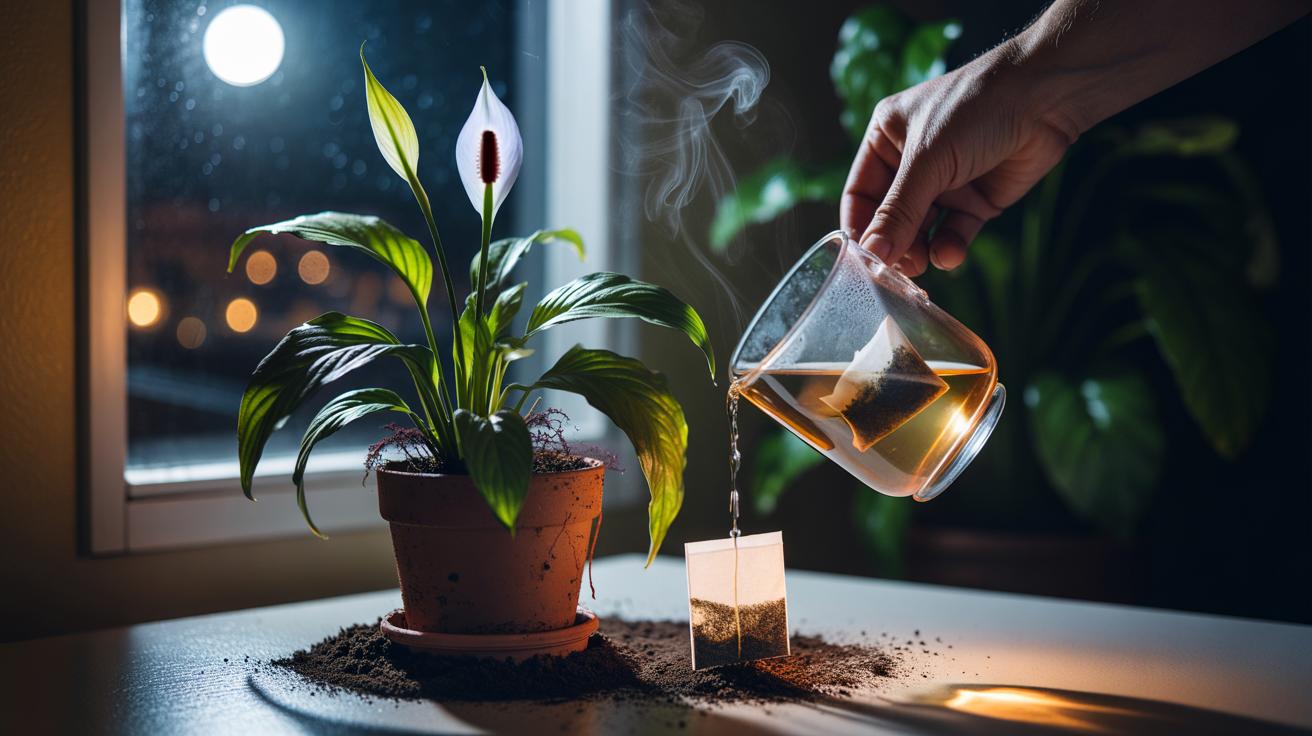
Your spider plant is sulking, the peace lily has flopped like overcooked spaghetti, and the soil looks like red dust from Mars. Enter a humble fix hiding in your kitchen: the tea bag. This simple pouch, soaked and cooled, can nudge nutrients into motion and restore leaf turgor while you sleep. It’s not magic; it’s chemistry and timing. Tannins, trace minerals, and a gentle acidity combine to make iron and other micronutrients easier for roots to absorb. Used well, a tea bag can turn a wilting corner overnight, reviving perky posture fast while laying groundwork for deeper recovery over the week ahead.
Why a Tea Bag Works for Tired Plants
Houseplants often struggle not because iron is absent, but because it is locked up in potting mix with a pH that’s crept too high. Tea brings mild acidity and abundant tannins, compounds that can chelate iron, gently freeing it for uptake. That small pH nudge matters. It shifts the chemistry at the root surface, especially for ferns, pothos, and peace lilies that prefer slightly acidic conditions. Add polyphenols and tiny amounts of potassium and manganese, and you have a temporary tonic that supports chlorophyll and enzyme function without blasting the plant with salts.
There’s also the water effect. A cool, weak tea soak rehydrates root hairs and improves turgor pressure, the force that keeps leaves upright. That’s why the “overnight miracle” is often visible as firmer leaves by morning. Colour takes longer. Nutrient-induced greening is a slower biochemical process, typically days rather than hours. The tea fixes posture fast; improved pigmentation follows with continued care. In short, the bag primes both physics (water balance) and biochemistry (micro-nutrients), a one-two that makes wilting plants look dramatically better, fast.
Spent tea leaves add a micro-dose of organic matter. Worked into the top centimetre of substrate, they help retain moisture and feed soil microbes that, in turn, can make nutrients more available. They are not a fertiliser replacement, but they are a useful adjunct. A tea bag cannot replace balanced fertiliser, but it can unlock iron already hiding in your pot. Used sparingly, this approach is safe, cheap, and surprisingly effective for soft-leaved, shade-tolerant houseplants that crave steady moisture.
The Overnight Method: Step-by-Step and Safety Checks
Step 1: Brew a weak infusion. Place one regular, unflavoured tea bag in 500–700 ml of freshly boiled water; steep 3–5 minutes. Let it cool to room temperature. Aim for a pale amber, not inky brown. Squeeze the bag lightly, then set the bag aside. Do not add milk or sugar. If your tap water is hard, use rainwater or filtered water to avoid pushing pH upward and counteracting the tea’s acidity.
Step 2: Water for turgor. Move the plant to a sink or tray. Slowly pour the cooled tea through the substrate until a little drains out, or bottom-water by standing the pot in a shallow dish of tea for 15–20 minutes. This ensures even rehydration. Expect perkier leaves by morning; if not, check for compacted soil or root issues. Visible lift usually signals hydration success rather than instant nutrient correction.
Step 3: Deploy the bag. Tear the damp tea bag open and tuck a tablespoon of leaves into the top layer of soil, a few centimetres from the stem. Cover with potting mix to deter fungus gnats. This micro-mulch slows evaporation and adds a pinch of organic matter. Skip this step for cacti and succulents, where constant dryness is the priority.
Safety: Use only plain black, green, or rooibos tea. Avoid flavoured blends, essential oils, and chai with added aromatics. Limit to once every 3–4 weeks in routine care, or a single “rescue” dose after heat stress or missed watering. Watch for mould if your home is cool and dim. When in doubt, weaker is wiser. For persistent yellowing between veins (classic iron chlorosis), pair the tea method with a proper chelated iron feed within the week.
Choosing the Right Tea and Water for Your Houseplants
Not all tea is equal in a pot. The goal is mild acidity, gentle tannins, and no perfume. Black tea typically delivers a stronger tannin profile and a slightly lower pH, giving a clearer iron-availability boost. Green tea is softer and often closer to neutral, better for sensitive foliage like calatheas that dislike sharp shifts. Rooibos (naturally caffeine-free) offers polyphenols without bitterness, a safe middle ground for most tropicals. Avoid flavoured or smoky blends—volatile oils can irritate roots. And remember, water chemistry matters: hard water will blunt the effect.
| Tea Type | Typical Brew pH | Key Compounds | Best For | Avoid/Notes |
|---|---|---|---|---|
| Black | ~5.0–5.5 | Tannins, polyphenols | Pothos, peace lily, ferns | Use weak; can stain porous pots |
| Green | ~5.5–6.5 | Polyphenols, mild caffeine | Calatheas, philodendrons | Gentler effect; repeat only monthly |
| Rooibos | ~5.5–6.2 | Antioxidants, no caffeine | General tropicals, seedlings | Low mineral input; pair with fertiliser |
| Spent leaves | N/A (soil amendment) | Organic matter | Moisture retention, microbe support | Cover to prevent gnats |
Match the tea to the plant and water. Soft water plus black tea suits iron-hungry, shade-loving foliage. Neutral green tea is the safer bet for sensitive leaves and soft new growth. For succulents and cacti, skip liquid tea entirely; they prefer dry intervals and mineral feeds. Strong brews risk leaf scorch and salt-like stress, especially under high light. Keep doses weak, infrequent, and observational—watch the plant for feedback over 7–10 days and adjust your regimen accordingly.
Reviving the “iron desert” isn’t about gimmicks; it’s about nudging chemistry back into balance while you re-establish watering rhythm and proper feeding. A tea bag supplies a quick, gentle push—hydration tonight, micronutrient availability tomorrow, resilience over the next week. Used with restraint and observation, it turns a kitchen staple into a quiet horticultural ally. Will you try the weak brew rescue on your most dramatic wilter, or experiment across a few plants and keep notes on which leaves lift fastest and which colours return first?
Did you like it?4.7/5 (24)