In a nutshell
- 🌱 Tea bags create a breathable, damp hydration scaffold that balances moisture, warmth, and air, softening the seed coat and kick-starting the radicle—often within a day.
- 🫖 Use plain black or green tea; brew weakly, cool, squeeze to “damp not dripping,” fold in seeds, bag loosely, and keep at 21–25°C for rapid swelling and first cracks.
- 🔬 Mild acidity and tannins may suppress surface microbes and nudge pH favourably; caffeine isn’t the driver—oxygen access and steady warmth are.
- ⚠️ Avoid perfumed blends and soggy setups; watch for mould and guard against damping-off by transplanting to clean media and maintaining airflow and light.
- 🌿 After sprouting, use free-draining seed compost, bright light, gentle watering, light feeds, deeper potting for stem rooting, and gradual hardening off for resilient seedlings.
Across Britain’s window sills and allotments, a quiet hack is turning patient growers into overnight success stories. Gardeners are slipping tomato seeds into used tea bags, then waking to the first signs of life—the seed coat softening, the radicle ready to emerge. It sounds like folklore. It isn’t. This method works because it balances moisture, mild acidity, and a breathable, sterile-feeling pocket where seeds can hydrate safely and quickly. Results vary, of course, yet the speed boost is real, and remarkably consistent when conditions are right. Small effort. Big payoff. For the price of a brew and a bit of patience, you can watch tomatoes sprout like magic—almost overnight.
Why Tea Bags Accelerate Tomato Germination
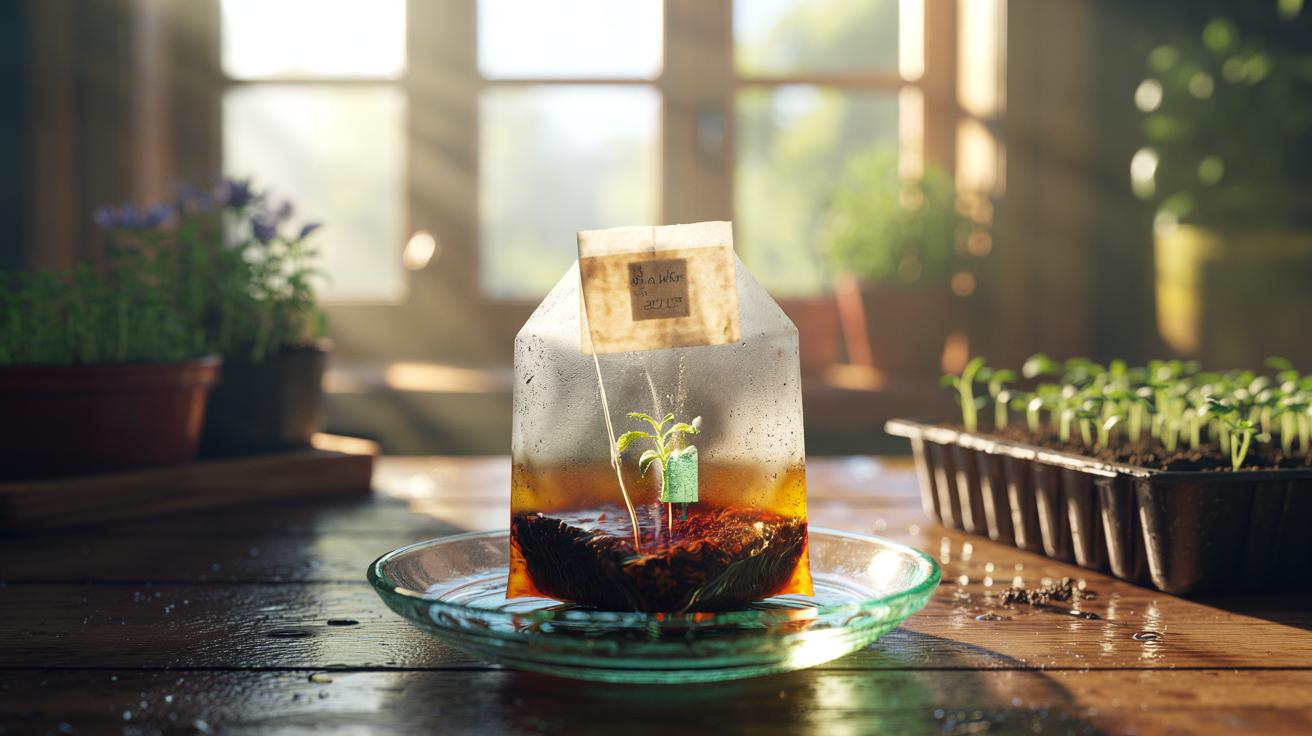
Tea bags create a near-perfect microclimate. The cellulose fibres wick and hold water without drowning the seed, while still drawing in oxygen, a trio that seeds crave: moisture, warmth, and air. The bags cradle seeds in a gentle, breathable matrix, preventing the hard soak-and-suffocate scenario that ruins many kitchen-top experiments. They also keep the seed coat consistently damp, priming it to split cleanly so the embryo can extend.
The chemistry helps. Black and green tea contain tannins and subtle acids that slightly lower the surrounding pH. Tomatoes favour a faintly acidic start, and this mild shift may suppress some surface microbes without acting like a harsh disinfectant. Add trace minerals from the tea leaves and you have a soft primer, not a fertiliser—just enough to steady the seed’s first steps. Do not assume caffeine is the driver; its role here is minimal.
There’s also temperature. A damp tea bag warms rapidly on a radiator shelf or under lights, holding heat evenly. That steady 21–25°C window lowers the time to visible swell. Consistent warmth and oxygen—not magic—explain the “overnight” surprise. Highlight this: a tea bag isn’t plant food; it’s a hydration scaffold that gets the seed to the starting line faster.
Step-by-Step Method for Overnight Results
Start clean. Use plain, unscented black or green tea bags. Brew a weak tea (about 1–2 minutes), then let both tea and bag cool to room temperature. Squeeze gently—damp, not dripping. Place two or three tomato seeds on the flat bag surface and fold the paper neatly so they stay put. Slip the parcel into a labelled food bag with a small air gap, then keep it warm—21–25°C is your friend. Check after 12–24 hours. You’re looking for swelling or the first pale nub of the radicle. Never pour hot tea onto seeds; heat shock will kill embryos.
| Tea Type | Notes |
|---|---|
| Black tea | Reliable; mild acidity; quick wicking. Avoid flavoured blends. |
| Green tea | Slightly gentler; clean aroma; good for delicate heirlooms. |
| Chamomile | Herbal; often used for damping-off prevention; very mild. |
When the radicle peeks out, transplant. Use a sterile seed compost, make a tiny pilot hole, and position the root tip down. Mist, don’t pour. If you smell anything sour or see fuzz, start again; mould spreads fast in enclosed humidity. Keep light bright from day one—tomatoes stretch instantly in gloom. Label everything, because “mystery tomato” is charming until July, then it’s chaos.
Science, Safety, and Common Myths
The tea bag trick isn’t sorcery; it’s physics and plant physiology. The bag’s capillary structure keeps the seed uniformly wet without submersion, avoiding the oxygen crash that triggers rot. Polyphenols can modestly check surface fungi, buying time for the embryo to hydrate and activate enzymes that mobilise starches and proteins. That’s it. No hidden stimulant. No miracle additive. Tea is a starter medium, not a nutrient solution.
Watch the choices. Skip heavily perfumed blends like Earl Grey; essential oils can inhibit germination. Don’t brew strong, either; concentrated tannins may harden the seed coat, doing the opposite of what you want. And remember the clock: “overnight” often means swelling and a first crack, not a full root. Pace yourself. Damping-off remains a risk after transplant, so move seedlings into airy conditions and water from below when possible. Cleanliness matters more than brand or leaf grade.
One final caution: seeds need oxygen. Pressing them deep inside a puddled bag suffocates them. Aim for damp, springy, breathable—not sodden. If in doubt, squeeze, blot, and try again.
From Sprout to Strong Seedling
Sprouting fast is only half the story. To turn that first nib of root into a sturdy plant, maintain bright, close light—LEDs or a sunny south-facing sill—and stable warmth. Pot into a fine, free-draining seed compost. Water lightly at the edges to pull roots outward; sopping centres invite trouble. After the cotyledons open, provide a whisper of balanced fertiliser at quarter strength once a week. That’s plenty. Overfeeding at this stage stalls growth and encourages leggy, brittle stems.
As the first true leaves appear, pot on, burying the stem slightly deeper; tomatoes root along buried stems, building a stronger base. Airflow counts, so give plants elbow room and rotate daily for even growth. Harden off gradually: one cool hour outside becomes two, then three, over a week or so. If nights drop below 8°C, hold your nerve indoors. The aim isn’t speed alone, it’s resilience—compact, dark-green seedlings that shrug off spring’s mood swings.
Keep records. Which tea, how long, what temperature, and how fast the crack appeared. Next season, refine. The best growers iterate.
In short, a damp, unscented tea bag can give tomato seeds a head start by creating a warm, breathable, mildly acidic cradle that coaxes them awake—sometimes in a single night. It’s tidy, cheap, and oddly satisfying. Treat the method as a primer, not a cure-all, and follow through with light, warmth, and cleanliness to turn a spark into a seedling. Ready to try it with the varieties you love—Sungold, Gardener’s Delight, a daring beefsteak—and see which springs first in your kitchen lab?
Did you like it?4.6/5 (29)