In a nutshell
- 🌱 Eggshells deliver calcium carbonate that strengthens root tips, supports orderly cell division, and provides gentle pH buffering, with microporosity that hosts helpful microbes.
- 🧪 Prep matters: rinse, dry, and bake to sterilise, then grind; fine powder releases faster, while a vinegar soak creates a measured calcium acetate solution for targeted use.
- 🪴 Apply smartly: mix into seed media, top-dress pots, or band in beds for tomatoes and brassicas; it’s a slow-release ally, not an instant fix, and solid shells are a no-go in hydroponics.
- 🔍 Cut through myths: shell shards don’t reliably stop slugs, and blossom end rot is often about watering consistency, so eggshells help long term but won’t reverse existing damage.
- ♻️ Sustainability win: reusing shells reduces mined lime and waste, yet they’re not a complete fertiliser; pair with compost or balanced organics and always sterilise to avoid pathogens.
The humblest kitchen scrap can lift a garden from average to thriving. Eggshells, often binned without a thought, carry a quiet power that plants crave. They’re rich in calcium carbonate, gentle on soil life, and easy to work with at home. Used smartly, they help roots branch, strengthen cell walls, and stabilise the rhizosphere so seedlings settle without stress. The trick lies in preparation and timing. Not magic. Not instant. But consistently helpful when integrated into a balanced feeding and watering routine. Here’s how to convert breakfast leftovers into a root-boosting resource, with simple techniques, clear cautions, and credible science that demystifies the myths.
Why Eggshells Power Root Systems
Eggshells are roughly 95% calcium carbonate (CaCO₃) with a small organic matrix. That chemistry matters. Calcium strengthens new cell walls at the root tip, supporting orderly division and elongation, while carbonate gently buffers acidity around root hairs. The result is steadier growth in mixes that tend to sour, especially peat-free substrates or heavily watered containers. Microporosity is a bonus. Tiny pockets along shell surfaces can host beneficial microbes, including organisms involved in phosphorus solubilisation, which in turn supports root branching and nutrient foraging.
Eggshells are a slow-release amendment. That’s the pivotal point many miss. Coarse fragments break down over months. Finer grinds act faster, but still need microbial or mild acid action to release bioavailable calcium. This makes them ideal as a background feed rather than an emergency fix. Expect broader benefits: improved substrate resilience, fewer pH swings, sturdier transplants. On chalky soils, though, the upside narrows. In already alkaline beds, extra carbonate may nudge pH higher than young roots prefer, so focus on targeted use in pots or mixes rather than blanket garden applications.
Preparing Eggshells for Maximum Benefit
Good prep multiplies the payoff. Rinse shells to remove membranes, then air-dry. For safety and speed, bake at 120–150°C for 10–15 minutes to sterilise and embrittle. Once crisp, crush. A rolling pin yields coarse grit; a coffee grinder produces near-powder that integrates well with seed-starting media. The finer the grind, the faster the release and the more predictable the results. Avoid oily residues from frying; fats coat particles and inhibit breakdown.
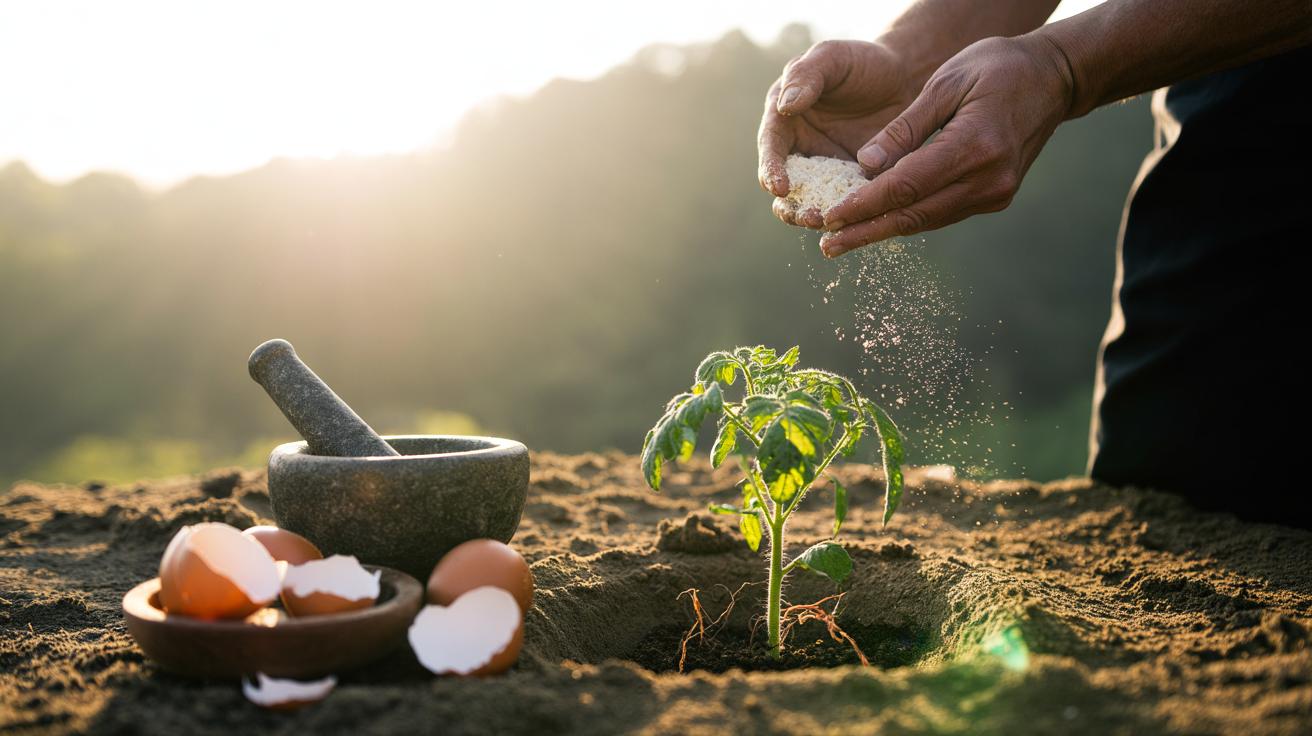
Two simple routes stand out. First, mix fine powder into potting blends at roughly a teaspoon per litre, creating a slow, background supply of calcium that supports root initiation. Second, create a soluble supplement: soak ground shells in household vinegar (acetic acid) until fizzing stops, then dilute that calcium acetate solution heavily in water for cautious use in pots. Keep it conservative; measure pH and avoid drenching. Composting is the low-effort alternative: add crushed shells to the heap to build a calcium-rich humus that later conditions beds without sharp pH swings.
| Preparation Form | Release Speed | Best Use | Key Caution |
|---|---|---|---|
| Coarse Crushed | Slow | Long-term soil conditioning | Minimal short-term effect |
| Fine Powder | Moderate | Seed mixes, potting blends | Don’t overapply in alkaline soils |
| Vinegar Extract | Fast | Targeted calcium top-up | Test pH; avoid over-acidifying |
| Composted Shells | Slow to moderate | Bed preparation | Needs active composting |
Application Strategies in Beds, Pots, and Hydroponics
In seed trays, mix a pinch of fine shell powder into the medium and water evenly. The aim isn’t a calcium flood but steadier root emergence and less substrate souring. For container plants, top-dress with a teaspoon or two of powder per 15–20 cm pot and scratch in lightly, then mulch. Roots will meet a gentle, ongoing supply. In garden beds, broadcast crushed shells before digging, or band along planting rows for tomatoes, brassicas, and peppers. Expect benefits over a season, not a week. Eggshells will not cure overnight calcium disorders, because availability depends on breakdown and moisture.
Mind the myths. Slug deterrence from sharp shell shards is unreliable; trials repeatedly show little difference. Focus instead on barriers or wildlife-friendly predators. On blossom end rot, nuance matters: it’s often driven by erratic watering limiting calcium transport, not a simple deficiency. Eggshells help long term by stabilising supply, but they won’t rescue fruit already affected. For hydroponics, skip solid shells. They dissolve unpredictably and skew pH. If you must DIY, only use a measured calcium acetate solution with EC and pH monitoring, though dedicated hydro nutrients remain the sane, precise option.
Science, Myths, and Sustainability Gains
Evidence bases the practice. Studies on eggshell powder in substrates show rises in exchangeable calcium and modest buffering of acidification under frequent irrigation, which supports root hair density and seedling sturdiness. Soil micrographs reveal microbial colonisation along shell surfaces, a microhabitat that can encourage nutrient cycling. Yet context rules. In high-pH soils, extra carbonate may edge the medium past optimal ranges for iron and manganese uptake. That’s why the best results appear in pots, raised beds, and peat-free mixes where acidity creeps in over time.
Sustainability is the clincher. Every kilogram of shells reused at home replaces mined lime, lowers waste, and keeps value in the loop. They’re free, abundant, and simple to process. Still, treat them with care. Sterilise to avoid pathogen risks, store dry, and don’t mistake shells for a complete fertiliser. They supply calcium with traces of magnesium, not nitrogen, phosphorus, or potassium. Pair with compost, seaweed feeds, or balanced organics to cover the full nutrient profile. Think of eggshells as a structural ally for roots, a pH steady hand, and a quiet contributor to a resilient soil ecosystem.
Used thoughtfully, eggshells turn routine cooking into measurable plant health. They stabilise pH, feed roots slowly, and support a thriving microbiome without fuss or expense. Keep expectations realistic, prepare them well, and place them where the chemistry truly helps. Your seedlings, cuttings, and fruiting crops respond with stronger starts and fewer stumbles. They’re not a cure-all, but they are a dependable ally for long-term root development. Ready to trial a few methods side by side this season and see which preparation unlocks the best growth in your own soil and pots?
Did you like it?4.5/5 (24)