In a nutshell
- ⚡ Static explained: tumbling fabrics trigger the triboelectric effect, especially in dry air; a dense aluminium foil ball acts as a roaming conductor while generating ions that neutralise charges in one cycle.
- 🛠️ How to use: scrunch heavy-duty foil into a smooth 7–10 cm ball (2–3 for large loads), avoid sharp edges, pouch for delicates, and use cooler settings to retain humidity and boost the anti-static effect.
- 📊 Cost and impact: reusable and residue-free, the foil fix typically costs £0–£2, reduces shocks and cling, and keeps technical fabrics free from the coatings left by dryer sheets.
- 🔄 Mechanism in detail: direct contact equalises electrons across garments, while crinkled edges create mild corona discharge that seeds positive and negative ions to cancel local charge patches.
- 🧺 Alternatives: dryer sheets (cationic residue), wool dryer balls (airflow and moisture), and vinegar in the rinse can help, but foil is the fastest, cleanest win—especially for synthetic-heavy loads.
Here’s a small, shiny hack that earns a place in every British laundry room: scrunch a sheet of kitchen foil into a tight ball, drop it in the tumble dryer, and watch static cling vanish. It works in a single cycle, without fragrances, residues, or plastic. What sounds like folklore is grounded in physics, and the explanation is surprisingly elegant. Clothes build charge as they rub and separate; the foil introduces a mobile, shared conductor that lets those charges escape and neutralise. Add a pinch of ion chemistry, and the effect becomes even more robust. Below, the science, the method, and the limits—tested, practical, and genuinely useful.
Why Dryers Create Static Cling
When your laundry tumbles, every cuff, seam, and fibre is rubbing against something else. That friction triggers the triboelectric effect—a charge-swap dance where some fabrics donate electrons while others hoard them. Synthetics such as polyester and nylon tend to grab electrons; cotton and wool behave differently. As garments repeatedly collide then separate, no reliable path to earth exists inside the drum. The result is charge build-up, crackling pops, and stubborn pairing of garments. It’s worse on dry winter days and in super-efficient machines that vent less moisture. Low humidity is static’s best friend, because dry air refuses to carry charge away.
Every time a sock clings to a blouse, you’re seeing an imbalance of electrons. The separation creates an electric field strong enough to glue thin fabrics together. Dryer sheets fight this by coating fibres with a cationic film, making surfaces slightly conductive and slick. But that introduces perfumes and residues. There’s a cleaner route: add a conductor directly to the drum so charges can equalise during the tumble, cutting the voltage spikes that cause cling and those little shocks when you unload.
How an Aluminium Foil Ball Works: The Ion Story
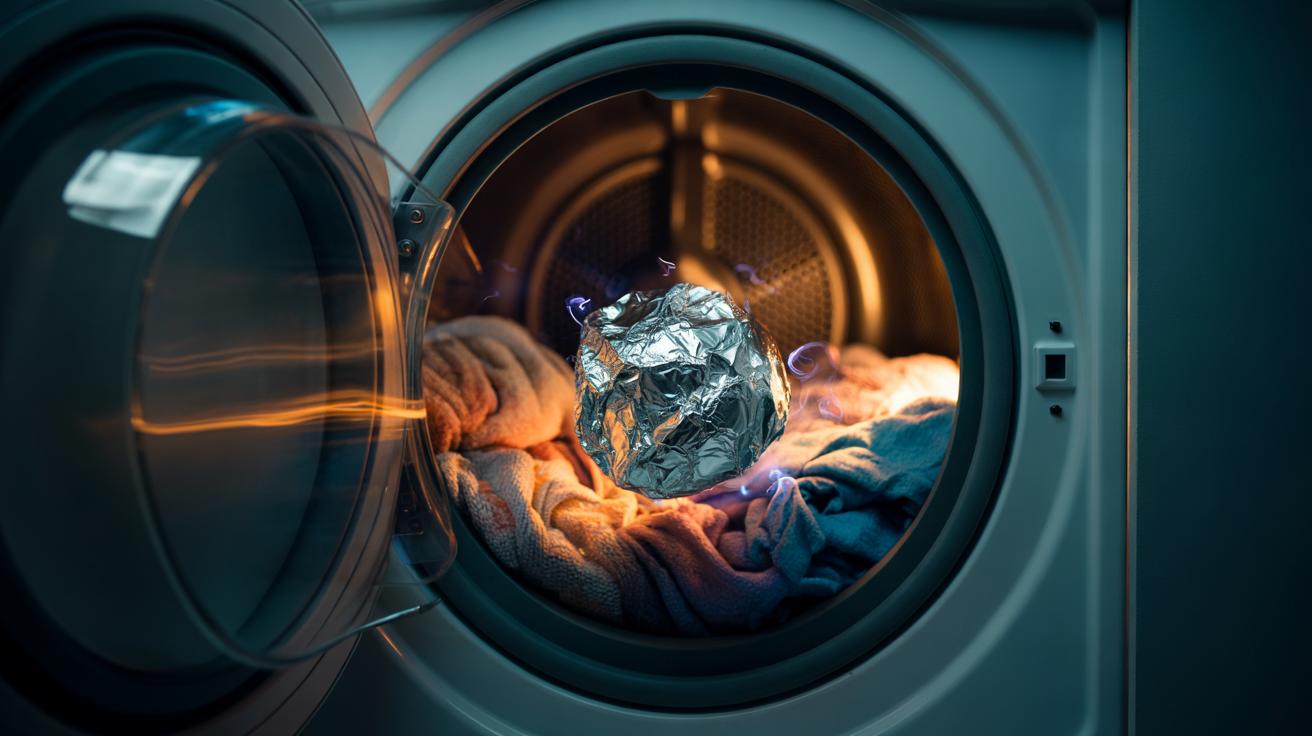
A crumpled aluminium foil ball acts like a roaming lightning rod. As it rolls through the drum, it touches dozens of garments each minute, giving electrons an easy pathway to move and equalise. This shared conductor collapses the voltage differences that make fabrics grab at each other. The ball’s creases matter: microscopic points on the foil concentrate electric fields, nudging the surrounding air into a faint corona discharge. That can produce a trickle of ions—charged molecules—that quickly neutralise spots of excess charge on nearby fibres.
Think of it as two actions at once. First, direct contact: when an electrified sleeve brushes the foil, extra electrons flow into the ball and redistribute. Second, local ionisation: the wrinkled foil’s edges help generate negative and positive ions that drift to cloth surfaces, cancelling charge patches within seconds. Pair this with the drum’s residual moisture, and you have a compact charge-damping ecosystem. The payoff is immediate. One cycle is usually enough to suppress static across a mixed load, especially where synthetics dominate. No perfumes, no coatings, just physics doing housekeeping while the laundry turns.
Making and Using the Foil Ball Safely
Start with a sheet of heavy-duty kitchen foil about 40–50 cm long. Compress it firmly into a sphere 7–10 cm across. Add a second layer and smooth down every edge so nothing sharp can snag. The aim is density, not size alone: a tight, springy core conducts better and lasts longer. For family-sized loads, two or even three balls keep contact frequent. Keep the surface smooth and replace the ball if it tears. Aluminium melts at temperatures far beyond domestic dryers, so heat isn’t the risk—ragged edges are.
Pop the ball in with wet clothes and run your usual programme. If your dryer uses moisture sensors, the foil won’t confuse them in any meaningful way; it simply shares space like a coin in a pocket. You might hear a gentle rattle, but a dense ball keeps noise polite. For delicate silks or open knits, bag the foil with a mesh laundry pouch to avoid abrasion. And a tip for stubborn winter loads: lower heat and slightly longer time raises humidity in the drum, which, combined with the ball, deepens the anti-static effect. Safe, repeatable, and endlessly reusable.
Alternatives and How They Compare
Aluminium isn’t your only ally. Dryer sheets, wool balls, and rinse-additives all tackle static by different mechanisms. Some coat fibres with a conductive surfactant; others boost airflow and moisture to blunt charging. The trade-offs are cost, residues, and sustainability. Below is a quick reference for what helps, and why.
| Method | How It Reduces Static | Pros | Cons | Typical Annual Cost (UK) |
|---|---|---|---|---|
| Aluminium Foil Ball | Provides conduction and mild ionisation; equalises charge | Reusable, no scent, no residue | Light rattle; must keep edges smooth | £0–£2 (reused foil) |
| Dryer Sheets | Cationic surfactants coat fibres, adding conductivity | Convenient, scented options | Residue, single-use waste | £15–£40 |
| Wool Dryer Balls | Increase airflow, retain moisture, reduce friction | Reusable, gentle on fabrics | Variable results with heavy synthetics | £10–£20 (multi-year) |
| Vinegar in Rinse | Alters fibre surface charge before drying | Low-cost, no fragrance | Not always enough for synthetics | £2–£5 |
For most synthetic-heavy loads, a foil ball gives the fastest, cleanest win. It’s also easy to combine strategies: pair wool balls with foil for airflow plus conduction, or run a cooler cycle to keep humidity up while the foil drains charge. If you prefer scented laundry, restrict fragrance to the wash stage and let the dryer stay “neutral”—your electronics and outdoor gear will thank you for the lack of sticky residues.
In plain terms, ions and conductivity tame laundry lightning. The humble aluminium foil ball offers both, acting as a moving discharge point and a common ground that soaks up the jumpy electrons which cause cling. It cuts static in a single cycle, costs pennies, and sidesteps chemical coatings. That’s a rare intersection of science and thrift that holds up week after week. Will you try the foil trick on your next tumble—and, if you already have, what blend of methods gives you the softest, least clingy finish in your home?
Did you like it?4.7/5 (23)