In a nutshell
- 🧪 Scrunched aluminium foil forms micro-serrated, sharp, renewing edges that create stress concentration, causing brittle, crusty stains to fracture and crumble quickly.
- ⚙️ In action, water/soap plus wear produce an alumina-rich slurry, enabling gentle third-body wear that polishes residues while protecting the base metal.
- 🗺️ Use on chrome-plated steel, stainless and unseasoned cast iron; be gentle on enamel; avoid non-stick coatings and fragile finishes; keep work surfaces wet to minimise scratches.
- 🧰 Method matters: prep a wetting layer, start with light strokes, re-scrunch to renew edges, wipe debris often, then rinse and buff for a clean finish.
- 🌍 Practical win: it’s cheap, reusable and cuts chemicals, but always match technique to material to prevent damage and get fast, safe results.
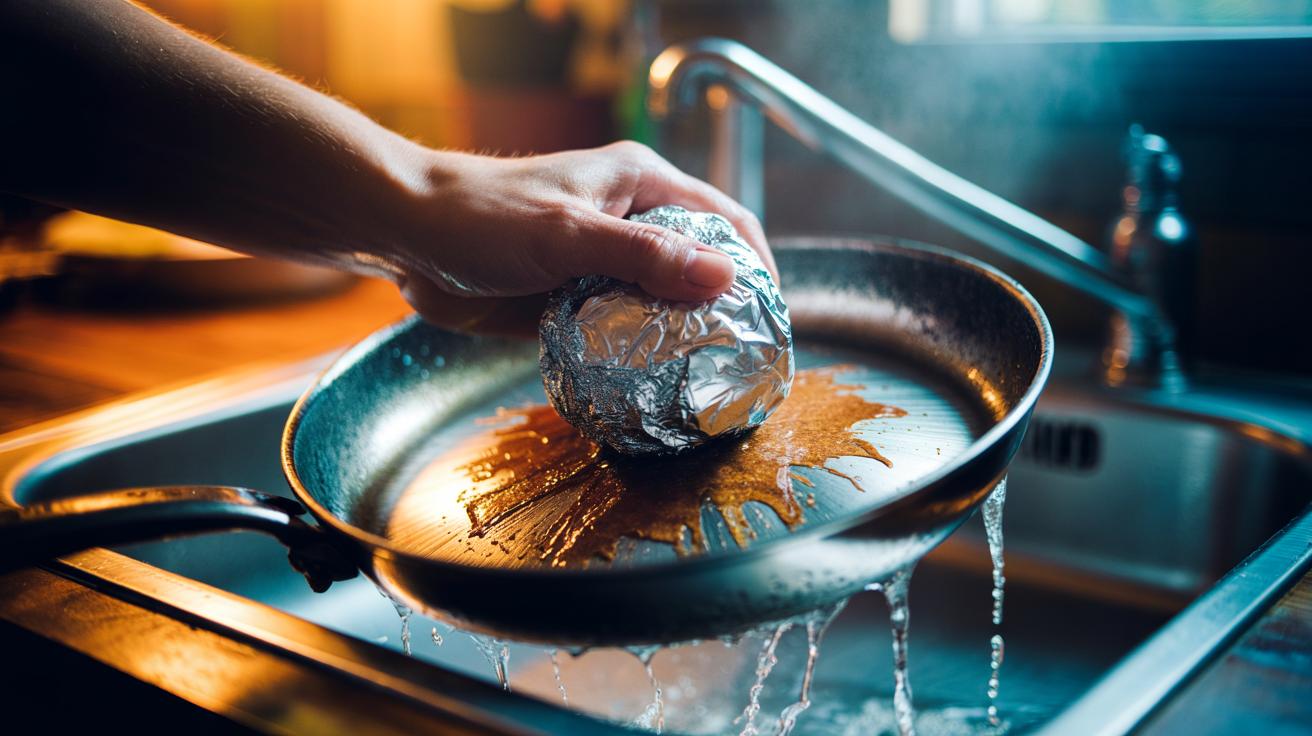
Kitchen folklore loves a quick win, and few tricks feel as instantly gratifying as scrunching a ball of aluminium foil and watching crusty stains give way in seconds. It seems almost magical. It isn’t. It’s mechanics, materials science and a touch of chemistry playing out on your hob, roasting tin or bicycle chrome. The foil’s many sharp, renewing edges slash into brittle grime that sponges and cloths simply skate over. Because pressure concentrates at the tiniest points, stubborn deposits fracture, lift and crumble. Add a dab of water or soap, and what looks like a humble ball of waste packaging turns into a nimble, low-cost scouring tool with surprising finesse.
The Physics Behind Foil’s Sharp Bite
Scrunched foil is a miniature landscape of ridges, kinks and burrs. Those features create micro-serrated edges that focus force into hairline contact points. The result is classic stress concentration. On brittle, carbonised residues, local stress spikes exceed the material’s fracture thresholds, causing flakes to shear away rather than smear. Cloth spreads pressure; foil concentrates it. That difference is decisive.
Because aluminium is soft and highly formable, the ball reshapes as you scrub, constantly exposing fresh burrs. Every pass presents new cutting edges, so effectiveness doesn’t fall off after the first swipe. The surface also develops a faint grey film as microscopic wear occurs. In the presence of moisture, this becomes a fine alumina-rich slurry that behaves like a very mild abrasive polish. It lifts oxidised films and baked-on sugars without the gouging associated with harsher scouring pads.
Friction adds a second boost. Dragging those points across the stain generates tiny heat bursts and vibration. Heat softens greasy residues; vibration disrupts adhesion at the interface. The grime loses cohesion, yet the base metal often escapes damage because its relative hardness and the lubricating film limit deep scratches. It’s targeted aggression, not indiscriminate abrasion.
From Kitchen Hack to Tribology: What Actually Happens
Tribology—the science of friction, wear and lubrication—explains the foil trick neatly. You have three actors: the crust (generally brittle and porous), the base surface (often harder and smoother), and the foil’s asperities doing the cutting. The ideal outcome is third-body wear: the stain becomes debris that lubricates and carries itself away, rather than the base metal wearing.
With a splash of water, ions on the metal surface and the foil’s own oxide form that fine polishing slurry. In effect, the system self-limits. The film reduces friction once the top layer breaks, preventing over-scrubbing. It explains why foil can brighten chrome-plated steel or stainless trims without leaving obvious scuff marks, while still dispatching surface rust and scale. A soapy solution enhances this “polish and float” behaviour by lowering surface tension, allowing the slurry to wet micro-cavities and lift detritus.
Yet it’s not magic, and it’s not universal. On non-stick coatings, which rely on an ultra-thin, low-friction layer, those micro-blades can strip the surface. On seasoned cast iron, foil can peel the polymerised oil you’ve spent months building, even if the iron beneath is safe. Understanding the substrate matters as much as mastering the motion. Light pressure, frequent rinsing and checking progress every few strokes keep the process in that sweet spot where grime yields and surfaces remain intact.
Where It Works, Where It Doesn’t
Before you go hunting stains with a glittering fistful of foil, map the risks and rewards. On hard, uncoated metals—stainless sinks, cast-iron grates, chrome trims—the method shines. On soft coatings and decorative enamels, it can be unforgiving. Use the quick guide below to pick your battles and tailor your approach.
| Surface | Best Use | Benefit | Risk/Warning |
|---|---|---|---|
| Chrome-plated steel | Water + light pressure | Removes rust bloom, brightens | Avoid deep pitting; don’t dry-scrub |
| Stainless steel | Soapy water, with grain | Lifts baked grease, tea stains | Can leave fine swirl marks if aggressive |
| Cast iron (unseasoned) | Water or oil | De-scales without gouging | Removes seasoning if present |
| Enamel | Very gentle, wet | Targets specks and spots | Chipping risk on edges |
| Glass hobs | Soapy film, minimal force | Budges sugar spots | Potential micro-scratch; test first |
| Non-stick coatings | Not recommended | — | Abrasive contact can strip coating |
Match technique to material, not just the mess. If in doubt, test a discreet corner, keep the surface wet, and inspect under good light between passes. The goal is selective fracture of the deposit, not a full-on sanding of the substrate.
How to Use Aluminium Foil Safely and Effectively
First, prep the field. Remove loose debris, then lay a wetting layer—plain water for chrome and stainless, a little washing-up liquid for greasy pans. Scrunch a palm-sized ball of foil: not rock-hard, not flimsy. You want a resilient cluster of edges. Start with light, short strokes and listen; a gritty rasp means you’re breaking the crust, a squeak means you’re onto clean metal and should stop or re-wet.
Work in small sections, wiping away debris regularly to prevent the slurry from turning into a grinding paste. Re-scrunch as you go to renew the burrs. For vertical surfaces like taps, use a smaller ball to control pressure; on flat trays, a larger ball spreads load without dulling the bite. If you’re tackling rust on chrome, keep it moist at all times; the wet interface limits scratching and lets that fine alumina film do its polishing work.
Finish with a rinse and a soft cloth buff to remove residue. On cookware, dry immediately to avoid flash rust around exposed steel rivets. Save the partially used foil ball in a jar for another day—reusing adds a small, practical nod to waste reduction. The tool costs pennies, but technique is priceless.
Aluminium foil doesn’t carry magic; it carries mechanics. Those sharp, renewing edges punch above their weight, cracking brittle grime and letting a gentle slurry smooth the rest. The trick earns its keep in the kitchen, garage and garden—so long as you respect coatings, keep things wet and quit while you’re winning. Next time a pan bears a black halo or a chrome rail blooms orange, will you reach for fancy chemicals, or trust the elegant physics of a scrunched foil ball—and what new surfaces might you safely conquer with it?
Did you like it?4.4/5 (29)