In a nutshell
- 🌟 Crumpled aluminium foil creates thousands of micro-facets that throw erratic glints and motion, confusing birds and light-sensitive insects for an instant, chemical-free deterrent.
- 🦅 Most affected: Pigeons, blackbirds, aphids, whitefly, and flea beetles; cats dislike the noise and feel. Slugs/snails respond less, so pair foil with other controls and match placement to crop.
- 🛠️ Deploy heavy-duty foil as hanging strips, reflective mulch between rows, or stem collars; vary heights and angles, secure edges, and avoid leaf scorch in heat by keeping foil off foliage.
- ✅ Benefits and limits: non-toxic, cheap, reusable and fast to set up, but weaker in low light and subject to habituation—rotate layouts and combine with integrated pest management for sustained protection.
- 🌍 Eco and safety: recycle worn foil, prevent litter for wildlife safety, angle reflectors away from windows and roads, and refresh pieces every 6–8 weeks to maintain sparkle and efficacy.
Gardeners across the UK are discovering a disarmingly simple trick: crumpled aluminium foil that flashes in the sun and sends marauding pests packing. It’s cheap, quick, and oddly elegant in its scrappiness. The science isn’t magic; it’s optics and animal behaviour colliding in your veg patch. When foil is creased, it throws chaotic highlights and moving shards of light that many creatures interpret as danger. That sudden confusion interrupts feeding and scouting, turning curious visitors into swift departures. From seed beds to fruit cages, the method scales easily, requires no chemicals, and can be reused. Here’s how the shimmering deterrent works—and how to deploy it for instant, visible results.
Why Crumpled Foil Works
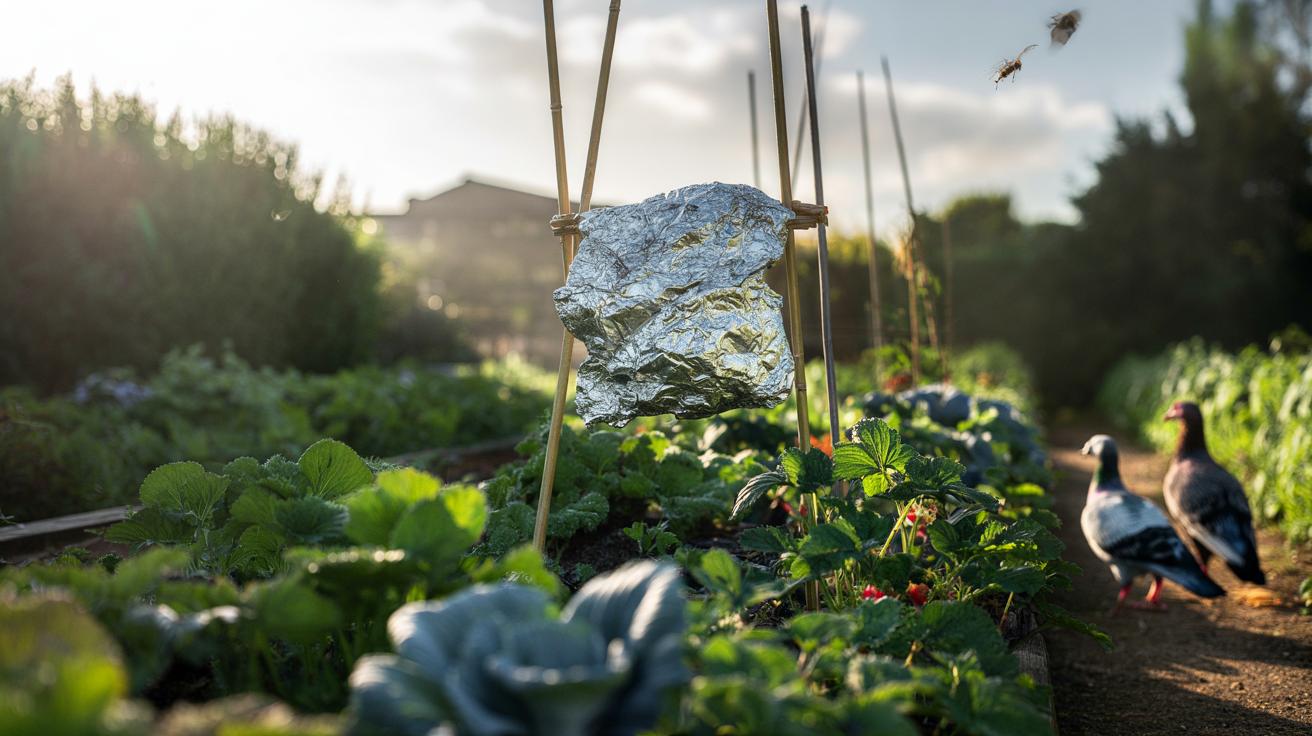
The secret lies in the foil’s micro-facets. Smooth foil reflects like a mirror; crumpled foil transforms into thousands of angled planes. Each catches light differently, producing erratic glints and pulsing flashes when a breeze shifts the surface. For birds and many insects, those unpredictable cues read as threat—either the glimmer of water they instinctively avoid, or the confusing sparkle that masks approaching predators. It is the randomness, not just the brightness, that makes pests think twice and back off.
There’s also a polarised light effect. Some insects, notably aphids and thrips, navigate using light patterns; reflective scramble can distort those signals, disrupting landings on host plants. In practice, gardeners report fewer pecks on seedlings, fewer scouting visits by pigeons, and reduced insect settling on reflective-mulched beds. Another factor is motion. Even a light wind turns foil strips into fluttering “flags,” faking movement that nervous species misread as life. When the garden looks alive with shimmer and motion, many invaders decide the energy cost of investigation isn’t worth the risk. That instant hesitation buys crops vital time to establish and flourish.
Pests Most Affected and Where to Use It
Not all pests fear the sparkle equally. Birds—pigeons, blackbirds, sparrows—are typically the first to give ground, abandoning freshly sown rows and soft fruit when faced with jolting reflective patterns. Small, light-sensitive insects also waver, from whitefly around brassicas to flea beetles on rocket. Cats dislike the crinkly noise and unstable footing, so foil mats can protect seed trays. Slugs and snails are less reliably deterred; combine foil with traps or barriers for them. Match the foil format to the pest and the crop and you’ll see faster, cleaner results.
| Pest | Placement | Format | Notes |
|---|---|---|---|
| Pigeons, blackbirds | Seed beds, strawberries | Hanging strips, flutter lines | Space at 1–2 m; add movement |
| Aphids, whitefly | Brassicas, cucurbits | Reflective mulch between rows | Best in bright light |
| Flea beetles | Rocket, radish | Crumpled collars | Combine with fine mesh |
| Cats | Raised beds, trays | Flat, crinkled sheets | Noise/feel deters digging |
Bird strikes near windows? Avoid placing foil where glints could lure birds into glass; keep reflectors low and within plant canopies. Deer and rabbits are mixed responders: glare helps, but scent and netting remain stronger options. Rotate layouts every fortnight to prevent local habituation. Change the angles, change the story—new sparkles mean new uncertainty for would‑be raiders.
How to Deploy Foil for Maximum Effect
Start with heavy-duty foil. Tear into strips 2–3 cm wide and 30–60 cm long, scrunch lightly, then stretch so the surface keeps ridges and facets. Hang strips from canes or fruit-cage wires at different heights, ensuring free movement. For reflective mulch, crumple full sheets, flatten gently by hand, then lay shiny side up between rows, pinning with pegs or stones. Cut small slits for stems; keep foil off tender leaves to avoid heat scorch during heatwaves.
Create simple collars for cabbages and courgettes by wrapping a loose ring of crumpled foil at the stem base—light dances at ground level, confusing both flyers and crawling scouts. On balconies, twist foil into spirals around support strings for tomatoes; each gust spins a shifting halo. Secure every edge—flapping litter helps nobody, and wildlife safety comes first. Check after storms, replace torn sections, and wipe dusty foil to revive its sparkle. In low-light seasons, add movement with fishing swivels or tie strips near wind chimes. If neighbours are close, angle reflectors inward to minimise stray flashes, preserving peace as well as peas.
Pros, Limits, and Eco Considerations
The advantages are immediate: non-toxic, affordable, adaptable to any bed shape. You can fashion new deterrents in minutes, adjust them mid-season, and remove them without residue. A roll outlasts multiple sowings. Still, it isn’t a silver bullet. Under thick cloud, the effect weakens; at dusk, birds regain confidence. Some pests acclimate to static patterns. Keep the system dynamic—shift lines, re-crumple surfaces, and vary heights to sustain uncertainty.
Blend foil with integrated pest management: fine mesh over brassicas; sacrificial nasturtiums to draw aphids; hygienic pruning; vigilant watering. For slugs, use beer traps or ferric phosphate, not just shine. Environmental notes matter. Choose recycled-content foil if available, collect offcuts, and rinse and recycle when battered. Avoid placing strips near roadways where glare may distract drivers, and never string lines close to overhead cables. Expect to refresh pieces every 6–8 weeks as oxidation dulls reflectivity. In hot spells, lift or perforate mulch to prevent soil heat spikes around shallow roots. With a mindful setup, the tactic remains a bright, low-impact ally in the garden.
The crumpled-foil strategy isn’t folklore; it’s a nimble use of light and motion that leverages animals’ risk calculus in our favour. It buys seedlings breathing space, shields ripening fruit, and does it without sprays or fuss. For small urban plots and rambling allotments alike, a few shimmering strips can tilt the balance from nibbled to nourished. Ready to experiment with a roll and a pair of scissors—where will you place your first glinting sentries, and which pest will you challenge to blink first?
Did you like it?4.6/5 (29)