In a nutshell
- ⚡ A crumpled aluminium foil ball neutralises static electricity in seconds by acting as a conductor, countering the triboelectric effect that makes synthetic fabrics cling.
- 🧺 How to use: crumple an A4 sheet into a springy ball (one for medium loads, two for large), toss into the drum, and enjoy a chemical-free, low-effort fix that lasts for weeks and suits sensitive skin.
- 🛠️ No dryer? Still works: rub a garment with aluminium foil or a metal hanger, add a fine water mist, or use a touch of moisturiser on tights while boosting room humidity for quick anti-static relief.
- 🔒 Safety first: a springy foil ball is safe for laundry machines, won’t cause microwave-style arcing, makes only light taps, and avoids residues from dryer sheets and heavy fabric softeners.
- 💷 Cost and eco edge: costs pennies per load, is highly reusable, and compares favourably to disposable products—delivering fast results without added fragrance or waste.
We’ve all experienced it: you pull a shirt from the tumble dryer and it clings to your torso like a needy cat. The culprit is static electricity, and the cure is surprisingly simple. A crumpled ball of aluminium foil tossed into the drum can sweep away that charge in seconds. No perfumes, no residues, no faff. Just shiny metal doing quiet, effective work. It’s the kind of everyday hack that feels like cheating physics—but it’s actually using physics properly. Here’s how a bit of kitchen drawer ingenuity stops the crackle and cling, why it’s safe, and when to use alternatives.
Why Clothes Crackle: The Science of Static
Static builds when fabrics rub and separate, exchanging electrons in what scientists call the triboelectric effect. Synthetic fibres such as polyester and nylon are repeat offenders because they hold charge well, especially in dry air. That’s why winter washing often sticks like cling film, while damp summer days are kinder. When garments exit the drum charged up, they tug at hair, spark slightly as you pull them apart, and lift dust. Nothing’s haunted—your laundry is just acting like a tiny battery.
Enter aluminium foil. Metal is a superb conductor, so a foil ball offers an easy path for those free electrons to move and neutralise. As the drum spins, the foil brushes fabrics, collecting charge and redistributing it harmlessly against the metal drum. No fragrance, no coatings, just a discharge. In practical terms, that means cling drops, crackle quietens, and fibres hang naturally within seconds. The result isn’t magic; it’s simply charge equalisation. And because foil doesn’t shed chemicals, the method is especially welcome for sensitive skin and baby clothes.
How to Use Aluminium Foil in the Tumble Dryer
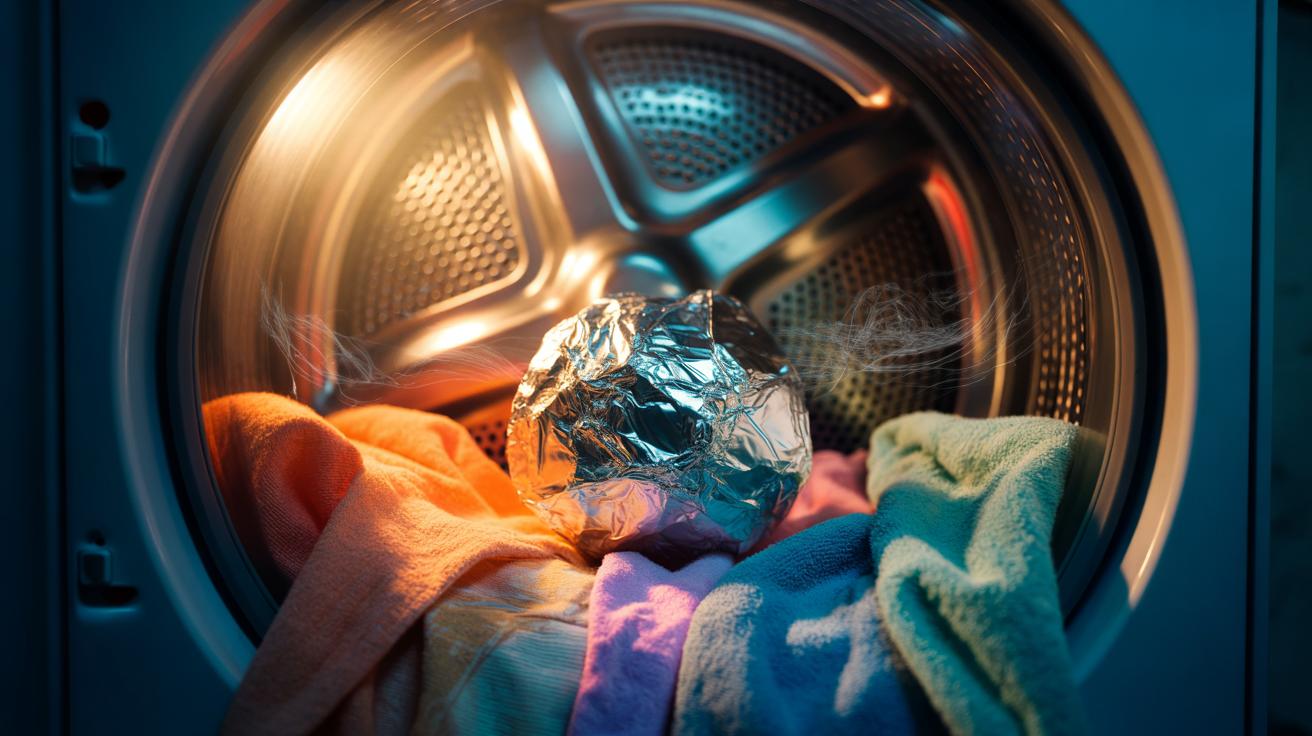
Start with a sheet about the size of an A4 page. Crumple it loosely into a sphere roughly the diameter of a cricket ball. Not tight as a marble, not floppy like tissue—think springy. For medium loads, one ball will do; for large, use two. Pop the ball(s) in with your wet clothes and run your usual programme. The foil will last for weeks of cycles; when it loses bounce, refresh with a new sheet. That’s the entire method—all speed, zero chemicals.
Keep a few sensible notes in mind. Don’t wrap clothes in foil, just add the ball to the load. If you dry very delicate items—silk, embellished garments—use a cool setting or air-dry to avoid mechanical stress, with or without foil. If your dryer manual has specific warnings, follow them. And don’t confuse dryers with microwaves: foil is fine in a tumble dryer drum, but never in a microwave oven. For households trying to cut single-use products, foil makes a strong, reusable alternative to dryer sheets and liquid fabric conditioner aimed at static control.
| Option | Time to Work | Cost per Load (approx.) | Residue/Fragrance | Reusability |
|---|---|---|---|---|
| Aluminium foil ball | Seconds | £0.01–£0.02 | None | High (weeks) |
| Fabric conditioner sheets | Seconds | £0.10–£0.20 | Fragrance and softeners | Single-use |
| Liquid conditioner | Wash cycle | £0.05–£0.12 | Coating on fibres | N/A |
| Air-dry with humidifier | Hours | £0 | None | N/A |
Quick Fixes Without a Dryer
No tumble dryer? The foil trick still helps. Rub a lightly crumpled aluminium foil sheet over the outside of a clinging garment to siphon off charge. Focus on hems and sleeves where static grabs worst. You can also touch clothes with a clean metal hanger, which acts as a conductor; run it down the inside of skirts and trousers. It takes under a minute and restores the drape fast.
Boost room humidity if possible. A mist of water (very fine spray) on the inside of a garment changes the surface conductivity and calms static without leaving spots. For tights, a tiny dab of unscented hand moisturiser rubbed on palms, then patted onto legs, reduces cling under dresses. Avoid over-drying on radiators, which bakes in static; leave a cup of water nearby to nudge moisture levels. And if you’re commuting, stash a purse-sized square of foil in your bag—one quick swipe in a loo cubicle can salvage a dress that suddenly clings like ivy.
Is It Safe for Laundry and Machines?
Short answer: yes, used sensibly. Tumble dryer drums are metal, earthed, and designed to handle zips, buttons, and coins when life gets messy, so a soft foil ball is tame by comparison. It won’t scratch tempered drums or glass doors when it’s properly crumpled and springy. There’s no risk of microwave-style arcing because you’re not bombarding the foil with radio waves—just warm, moving air.
Concerns typically revolve around noise and wear. Expect an occasional gentle tap; it’s no louder than a stray press-stud. Replace the ball once it compacts too tightly, as springiness helps it roam the drum and contact fabrics. If you use fragrance boosters or heavy softeners, know they coat fibres; foil removes static without adding layers that may reduce towel absorbency or release micro-residues. Environmentally, it’s thrifty: a single sheet reused for weeks beats a box of disposable sheets. For those with sensitive skin or newborns, the absence of perfumes is a quiet win.
Static was never a mystery; it was a small mismatch of charges waiting for a conductor to set things right. A scrunched ball of aluminium foil offers that path, fast and for pennies, while cutting down on chemicals and waste. It’s satisfying because it works instantly, and because it demystifies a daily annoyance with simple science. Tomorrow’s load could be the softest, calmest wash you’ve had all year—with nothing but kitchen foil to thank. Will you try the foil fix this week, or do you have a go-to anti-static trick you rate even higher?
Did you like it?4.6/5 (27)