In a nutshell
- ⚡ Static arises from the triboelectric effect in dry air: synthetics charge up as fabrics rub, isolated from the drum, causing cling and shocks.
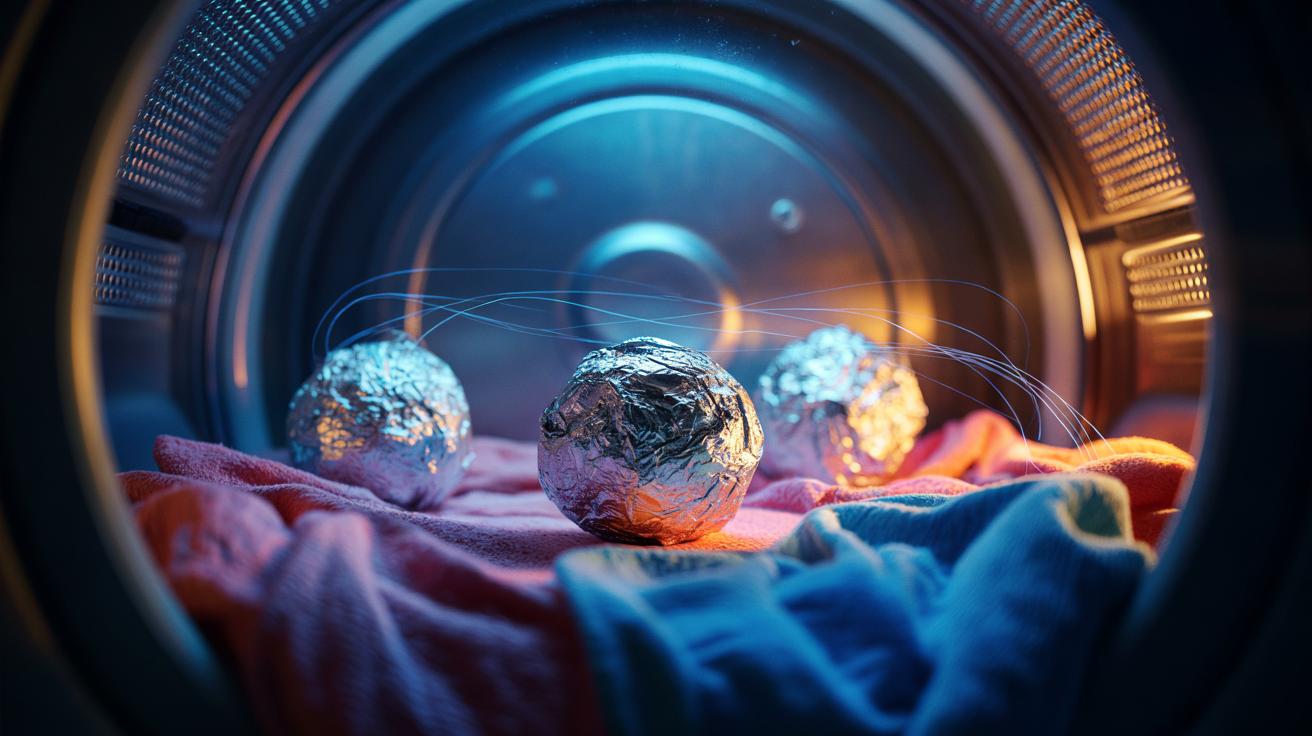
- 🧪 A crumpled aluminium foil ball is highly conductive, roaming through the load to equalise charge like a mini Faraday helper, eliminating the voltage that causes sparks.
- 🛠️ How-to: make 2–3 palm-sized balls (about 6–7 cm diameter) from 45–60 cm foil, tuck in sharp edges, and tumble with damp clothes; re-crush or recycle when flattened.
- ♻️ Versus alternatives: foil is cheap, reusable, and chemical‑free compared with dryer sheets and liquid softeners (residue risks); wool dryer balls improve airflow but only moderately cut static.
- 💡 Extra tips and safety: reduce overdrying, lower heat for synthetics, pre-tumble to shed pet hair; avoid delicate or metal-adorned garments and check warranty notes on “foreign objects.”
You toss in a load of laundry, press start, and 60 minutes later your jumpers snap and crackle with static electricity. It’s irritating. Sometimes painful. A crumpled ball of aluminium foil promises a fix so quick it feels like a magic trick. There’s good physics behind it. Clothes charge up as they tumble; metal levels those charges out. No perfume, no residue, no fuss. In a humid British winter the problem eases, but on crisp days it bites. Conductive metal inside the drum gives those surplus electrons a safe escape route, turning a sparky finish into a smooth one you can actually fold without the fireworks.
What Causes Static in Your Dryer?
Static comes from contact, separation, and dry air. As fabrics rub in a tumble dryer, electrons shift between materials along the triboelectric series. Polyester and acrylic tend to become negatively charged; cotton and wool often swing positive. Separate them quickly in parched air and the charge can’t leak away. It builds. Then it bites. That tiny snap you feel is a micro discharge — brief, bright, and annoying. Dryers accelerate this cycle. Heat removes moisture that would otherwise help conduct charge to ground. Synthetic fibres are worst because they’re smooth, hydrophobic, and insulative.
The drum itself is metal, but clothes rarely maintain continuous contact with it. They cartwheel. They cling to each other instead, trapping charge in a fabric-to-fabric ecosystem. Add zips and studs and it gets spikier. Static is a symptom of isolation: charged surfaces with nowhere to send their surplus. That’s why softeners and sheets try to add a thin conductive or lubricating layer. Reduce friction, increase leakage, and the crackle fades. But there’s a cleaner way.
How Aluminium Foil Discharges Clothes Safely
Aluminium is highly conductive. Crumpled into a smooth ball, it turns into a roaming contact point that taps each garment thousands of times per cycle. Every touch shares out charge and equalises potentials. Think of it as a mobile, miniature Faraday helper: not a cage, but a friendly node that drags the whole load towards the same electrical state. When things are at the same potential, the urge to arc disappears. Simple, fast, elegant. Metal doesn’t “absorb” electricity — it redistributes it until there’s no voltage left to spark.
The sphere matters. Sharp edges concentrate electric fields and can snag fabric. A tight, palm-sized ball (about 6–7 cm diameter) keeps edges tucked away while maximising surface contacts. Three balls work better than one because they increase the number of touch points and reduce clumping. You’ll hear a soft clatter. That’s normal. There’s no residue, no perfume, and the foil won’t melt at dryer temperatures. If you’re worried about special finishes — sequins, delicate silk, metallic prints — bag them or air-dry. For normal mixed loads, the result is immediate: fewer tangles, near-zero static, and easier folding.
Foil vs Alternatives: Costs, Safety, and Sustainability
Dryer sheets trade a small static fix for fragrance and a waxy film that can gum up lint filters. Liquid softeners leave similar residues in your machine and on clothes. Wool dryer balls are solid for airflow and fluff, but only modest on static in ultra-dry conditions. An aluminium foil ball is cheap, re-usable, and chemical-free. It won’t scent your washing. It won’t mask pet odours. It just moves charge. That clarity is its charm. If you want neutralisation without additives, metal is the most direct tool for the job.
| Method | How It Works | Reusability | Chemicals/Scent | Notes |
|---|---|---|---|---|
| Aluminium foil balls | Conductive contact equalises charge | Weeks to months | None | Use 2–3 balls; keep edges tucked |
| Dryer sheets | Coating reduces friction, adds slight conductivity | Single use | Fragrance, softeners | Can coat lint screens; recurring cost |
| Wool dryer balls | Separates items, improves airflow | Months+ | None | Moderate static reduction only |
| Vinegar rinse | pH and ions affect fibre charge | Per wash | None | Mild effect; use in wash, not dryer |
On cost and waste, foil wins if you already own a roll; three small balls cost pennies and outlast stacks of sheets. Environmentally, fewer chemicals down the drain is a plus. Just recycle worn balls when they compress flat. Sensible caveat: check your manual if your machine’s warranty mentions “foreign objects”. It rarely does, but it pays to know.
Practical Guide: Making and Using Foil Balls
Pull about 45–60 cm of kitchen foil. Crumple gently, then compact firmly into a sphere roughly the size of a satsuma. Add a second layer to hide any sharp corners. Make three. That’s the sweet spot for most 7–9 kg UK drums. Pop them in with damp clothes, not an empty drum. They’ll ride the load, touch everything, and shed charge as they go. If a ball loosens over time, re-crush it. When it goes pancake-flat, retire it to the recycling bin and make another.
Care tips are straightforward. Don’t use with garments that have warnings against metal contact or with delicate, snag-prone lace. If you own heat-pump or condenser models, the method still works; the thermodynamics differ, not the triboelectric dance. Avoid mixing foil balls with coins, keys, or loose hardware, which should never be in a dryer anyway. Noise should be a soft patter, not a clang — if it’s loud, your balls are too big or too hard. Pair with lower heat and shorter cycles for synthetics; less overdrying means less static in the first place. For pet hair, run a quick 10-minute foil-ball tumble before the main dry to knock off clingers.
Static isn’t mysterious. It’s a charge imbalance waiting for a conductive handshake. A trio of aluminium foil balls provides that handshake on repeat, touch after touch, across a messy, mixed load. Clean, cheap, repeatable. No perfumes. No coatings. Just physics you can hear and feel. If you’ve been battling cling and crackle all winter, this change takes seconds and pays back for months. Will you try the foil experiment on your next tumble, or is there another static-busting trick you swear by and think we should put to a head-to-head test?
Did you like it?4.6/5 (30)