In a nutshell
- 🔥 The aluminium foil trick speeds ironing by combining thermal reflection and conduction, creating double-sided heat that relaxes fibres faster with fewer passes.
- 🧰 Simple setup: place foil shiny side up under the board cover, smooth it flat, secure tightly, and test on a towel to fine-tune temperature and steam.
- 🧵 Prioritise fabric safety: use a pressing cloth for wool and silk, reduce dwell time on synthetics, and always keep the cover between fabric and foil to avoid shine or imprints.
- ⏱️ Expect real time and energy savings by lowering heat settings, cutting repeat strokes, and ironing garments while they’re still slightly damp or freshly dried.
- ✅ Practical tips matter: descale the iron for crisp steam, keep strokes moving, let the board breathe between sessions, and replace wrinkled or torn foil for consistent performance.
There’s an old kitchen staple sitting in your drawer that can transform a crumpled shirt into a crisp one in less time: aluminium foil. Slide a sheet beneath your ironing-board cover and the routine changes instantly. Wrinkles fade faster. Stubborn creases soften with less effort. The reason is simple thermodynamics blended with everyday practicality. Foil reflects radiant heat back through the garment and spreads warmth along the board, so you’re heating from below as well as above. This double-sided heat means fewer passes and less pressing time. It’s cheap, reversible, and surprisingly effective. Below, I unpack how the trick works, where it shines, when to dial back, and the small safety checks that make a big difference.
Why Aluminium Foil Speeds Up Ironing
Steam lifts fibres. Pressure flattens them. But it’s heat that truly resets the weave. Aluminium foil contributes on two fronts: thermal reflection and conduction. The shiny surface reflects a large fraction of the iron’s radiant energy—often well over 90% in the infrared—back toward the fabric. That reflected energy re-enters from below, so fibres are warmed more uniformly. At the same time, the thin metal sheet conducts heat laterally, evening out hot and cool spots beneath your board cover. The result is a higher effective heat flux into the garment without cranking the thermostat.
This dual action matters with thick cotton, linen, and stubborn seams. Normally, heat escapes into the board’s padding. The foil acts as a mirror, turning that loss into a second pass of warmth. Many home users notice that deep creases relax sooner and that they can lower the iron’s setting by a notch yet achieve a smoother finish. Less contact time also means less risk of imprinting seams or buttons because you aren’t dwelling on one area for long. In short: smoother fibres, reduced time-on-fabric, and fewer repeat strokes.
Step-By-Step: The Foil-Backed Ironing Board
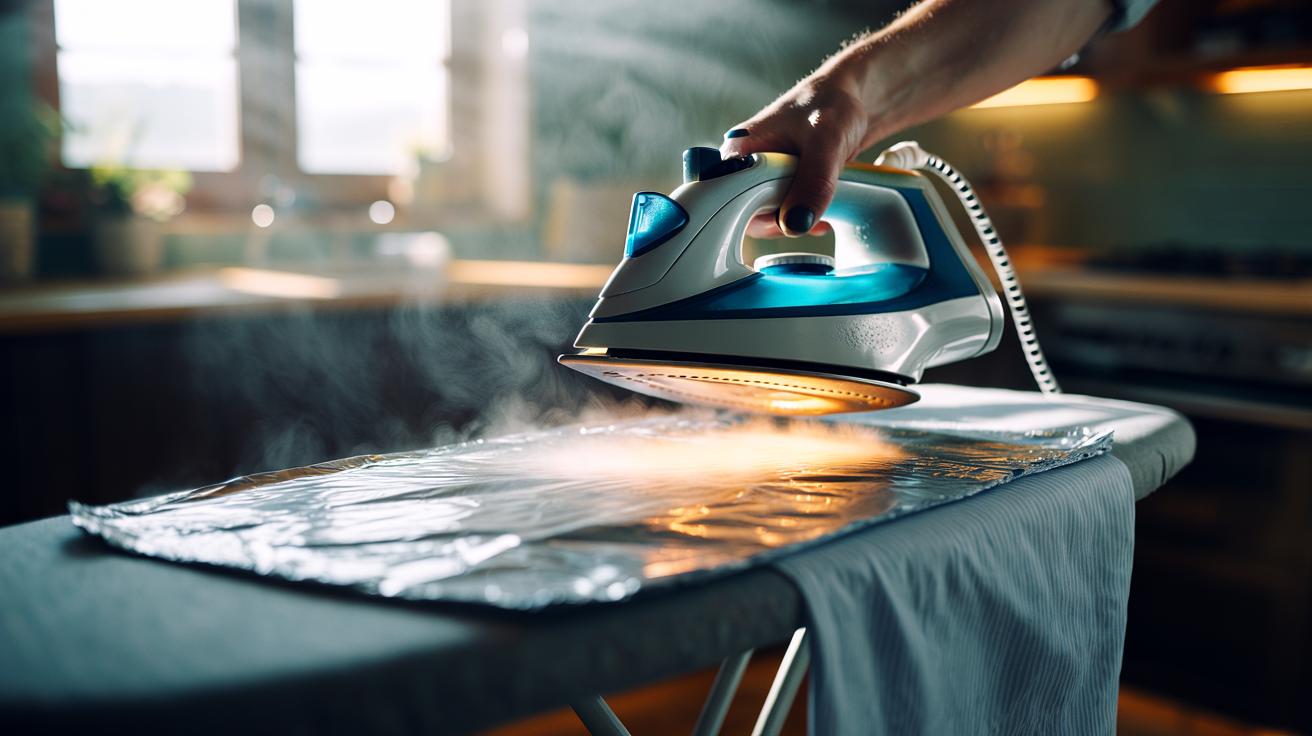
Start with a clean, flat surface. Roll out a single, continuous sheet of aluminium foil wide enough to cover your board top. Place it shiny side up. That shiny face is your heat reflector. Smooth out creases with the flat of your hand—work from the centre outward to avoid ridges that could print onto delicate garments. Wrinkle-free foil equals mark-free fabric. If your board is heavily padded, consider a quick refresh; compacted padding can trap moisture and dull the benefit of reflection.
Secure the foil by replacing the board cover tightly, pulling it taut so the foil doesn’t shift. Test with a tea towel first. Run the iron at your usual setting for cotton and observe how quickly the towel relaxes. You’ll likely find you can drop the dial one step while maintaining speed. For steam irons, purge the soleplate to avoid droplets, then use short, confident strokes. Do not leave the iron face-down unattended; the under-reflection accelerates heating. When you’re finished, let the board cool before folding. The foil can remain in place for multiple sessions, though replace it if it tears, crinkles excessively, or picks up residue.
Fabric Safety and Temperature Tuning
The foil trick is not one-size-fits-all. Delicate fibres like silk or acetate relax at lower temperatures and can show shine if pressed with too much heat and pressure. Wool prefers moisture and a hover-press technique—light touch, plenty of steam, and a pressing cloth. Use the extra heat intelligently: lower the dial slightly and let reflection do the work. Avoid direct contact between foil and garments; always keep a proper board cover in place to prevent metallic imprinting or conductive hot spots.
Test on hems or inside seams first. If your garment has fusible interfacing or heat-sensitive prints, shield with a cotton pressing cloth and reduce dwell time. For synthetics, the foil’s boost can be a blessing—quick smoothing at gentler settings—but melting risk rises if you rush. When in doubt, steam from a short distance and finish with a light touch. Mind moisture: the foil reflects heat but doesn’t absorb water, so lingering steam can condense if the board’s padding is saturated. Let the board breathe between long sessions, and keep strokes moving. Speed is helpful, scorch marks are not.
| Fabric | Recommended Iron Setting with Foil | Steam? | Notes |
|---|---|---|---|
| Cotton | One notch below usual cotton/linen | Yes | Great results; press seams quickly to avoid imprint. |
| Linen | High, or medium-high with foil boost | Yes, generous | Work in sections; foil helps tame heavy creases. |
| Wool | Medium | Yes | Use pressing cloth; lift-and-press, not drag. |
| Silk | Low to medium-low | Light steam | Keep moves swift; avoid shine with cloth. |
| Polyester/Nylon | Low | Sparing | Test first; the foil’s extra heat helps at safer settings. |
| Blends | Low to medium | Moderate | Tune to the most delicate fibre in the mix. |
Energy And Time Savings: Numbers That Matter
Ironing devours time because we chase heat into stubborn fibres. By reflecting warmth back into the garment, foil reduces pass count and shortens the dwell needed to relax yarns. That can translate to practical savings: fewer minutes with the iron drawing power, less steam wasted, and a cooler room because you’re not overcompensating with higher settings. The clever bit is efficiency without extra kit—just a sheet you already own. For families pressing school uniforms, or anyone cycling through linen bedding, the cumulative gain over a week is noticeable.
Keep the benefits consistent with two habits. First, descale your iron so steam delivery is crisp; the foil can’t rescue an iron that spits. Second, de-wrinkle straight from the line or dryer, when fibres are still slightly pliable. That timing compounds the reflection advantage. If you’re eco-minded, consider this a micro-efficiency: a small hack that lowers energy use by cutting idle time and repeat strokes. It’s not a revolution, but it’s material. And unlike many gadgets, it stores flat, costs pennies, and works with whatever iron you already own.
Once you understand the mechanics—reflection from below, smoother heat distribution across the board—the appeal is obvious. Aluminium foil turns everyday ironing into a faster, more forgiving process. You gain speed without the usual trade-offs of higher temperatures or harsh pressure, and you get crisper finishes with less fatigue. Lower the dial, test on a scrap, and let physics carry more of the load. Will you try the foil-backed board on your next pressing session, and if you do, which fabric will you test first to feel the difference?
Did you like it?4.6/5 (27)