In a nutshell
- 🔬 The baking soda + vinegar combo triggers an acid–alkali reaction that releases CO₂ bubbles, providing gentle mechanical agitation to dislodge soft clogs like grease and soap scum fast.
- ⏱️ Quick method: flush with hot water, add 120 g baking soda, pour 240 ml warm vinegar, cap for 3–5 minutes, then hot flush — often restoring flow in under 10 minutes.
- ⚠️ Safety first: never mix with bleach or recent caustic cleaners, avoid boiling water on PVC, and cap the drain briefly to direct fizz downward; approach is generally septic-safe.
- 🛠️ Know the limits: fizz struggles with solid obstructions or long-standing hair clumps — use a plunger, drain snake, or remove the U-bend; multiple gurgling fixtures may signal a deeper stack issue.
- 🛡️ Prevent clogs: fit mesh strainers, wipe fats from pans, and run a weekly hot-water rinse with a small soda-and-vinegar refresh to stop films forming — act early before slow drains become blockages.
Blocked sink. Sudsy bath that will not drain. Few domestic annoyances feel as immediate — or as ripe for a quick fix — as a stubborn plughole. Enter the classic fizz of baking soda and vinegar, the harmless-looking duo that can blitz a clog in minutes. The chemistry is simple, the effect dramatic. Pour, wait, flush. In many UK homes, this low-cost, low-tox remedy clears slow drains in under 10 minutes, buying you time and peace of mind without reaching for caustic gels. It is not magic. It is physics and chemistry working together, pushing bubbles through grime, lifting sludge, and sending it on its way.
Why Baking Soda and Vinegar Work So Fast
The power starts with an acid–alkali reaction. Baking soda (sodium bicarbonate) is alkaline; vinegar (acetic acid) is mildly acidic. When they meet, they rapidly produce carbon dioxide, water, and sodium acetate. Those CO₂ bubbles are tiny pistons. They surge into gaps in greasy films, soap scum, and toothpaste paste, dislodging debris that coats the inner wall of a 32 mm or 40 mm UK waste pipe. Add heat from hot water and you soften fats, allowing the fizz to pry them loose. It’s the combination of chemical neutralisation and mechanical agitation that delivers speed, especially on fresh, soft blockages rather than hard, mineralised ones.
Bicarbonate also has a quiet prelude act. Left to sit, it absorbs moisture, reduces odour, and can buffer acidity inside the trap so that the subsequent vinegar foams more uniformly instead of in one violent spurt. Warming the vinegar slightly slows viscosity and helps it carry deeper. Covering the plughole briefly caps the reaction, focusing pressure down the pipe. The result is a short, energetic burst that mimics a micro-plunge. Not a cure-all, but startlingly effective for the everyday gunk that narrows drains and breeds smells.
A Step-by-Step Method to Clear a Sink in Minutes
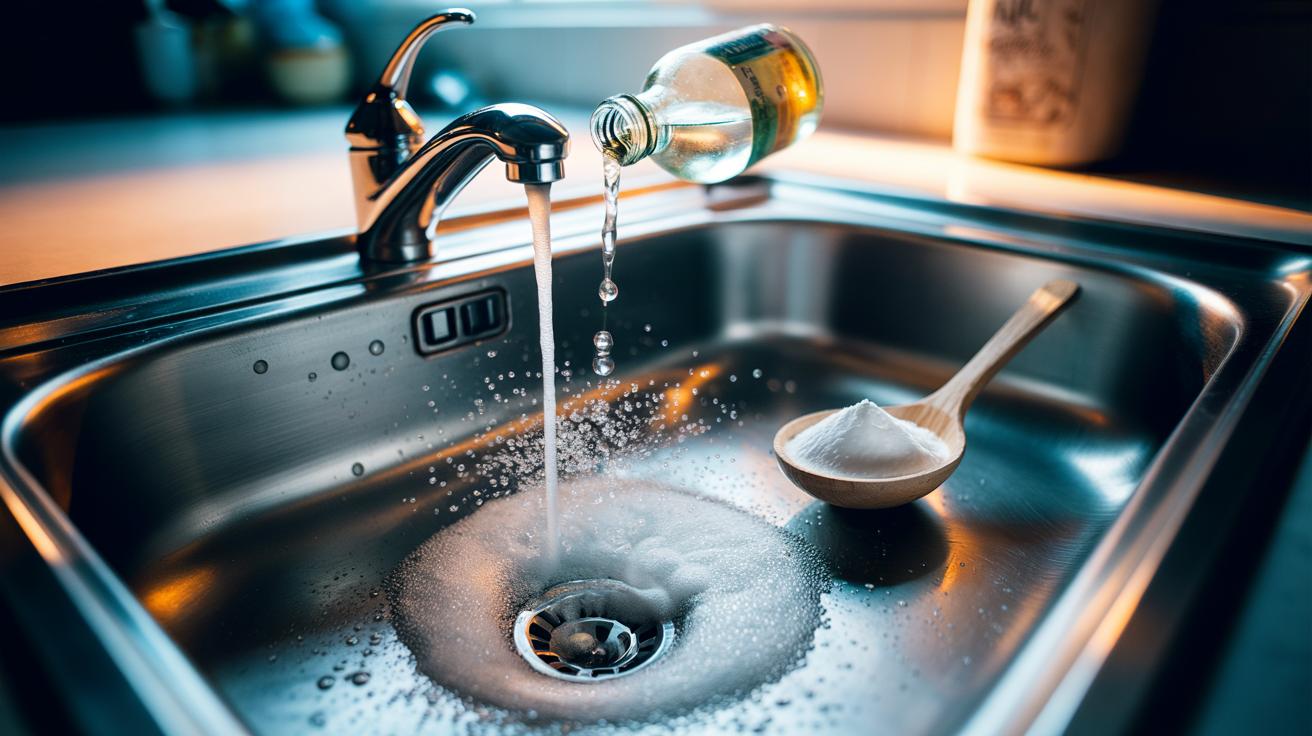
Start with heat. Kettle on, then pour a steady litre of hot (not boiling) water into the drain to soften congealed fats. Tip in 120 g (½ cup) baking soda and nudge it past the grid with a spoon handle. Wait a minute. Warm 240 ml (1 cup) vinegar to hand-hot, then pour slowly. Expect instant fizz and a soft hiss. Put a rubber stopper or a cup over the opening for three to five minutes to drive the reaction downward. In many cases, flow improves within two to three minutes. Finish with another litre or two of hot water to flush loosened debris through the U-bend.
| Step | Quantity | Timing/Notes |
|---|---|---|
| Pre-flush with hot water | 1 L | Softens grease; avoid boiling on PVC |
| Add baking soda | 120 g (½ cup) | Push past grid for contact |
| Pour warm vinegar | 240 ml (1 cup) | Slow pour for even fizz |
| Cap and wait | — | 3–5 minutes to concentrate bubbles |
| Final hot flush | 1–2 L | Rinse loosened debris away |
If the sink is full, bail out first and try a plunger for 30 seconds to break the seal before the fizz routine. For hair-prone showers, thread a simple plastic drain snake after the fizz to hook strands the bubbles have lifted. Never mix this method with bleach or recent caustic drain cleaners; acid can release chlorine or cause vigorous heat. Repeat the sequence once if flow only partly returns, then escalate to manual clearing of the trap.
When Fizz Isn’t Enough: Safety, Limits, and Smarter Prevention
Fizz shines on soft clogs: fresh grease, soap scum, toothpaste, food slurry. It struggles against solid obstructions such as limescale nodules, plastic caps, or years-old hair ropes bound with biofilm. If water stands motionless and the U-bend feels heavy, pop a bowl beneath and remove the trap — a five-minute job on most UK sinks. Check for signs of combined block in shared stacks in flats; multiple fixtures gurgling suggests a deeper issue for a plumber. If you’ve used a lye-based gel in the past 24 hours, skip vinegar; wait or flush thoroughly to avoid heat build-up and caustic splashes.
Prevention is cheaper than heroics. Fit mesh strainers in kitchen and bathroom drains. Wipe pans with a towel before washing to keep fat out of the pipe. Once a week, send a kettle of hot water down, followed by two tablespoons of baking soda and a quick vinegar splash to keep films from re-forming. In hard-water regions, occasional descaling helps, especially on shower wastes. Septic system? This method is septic-friendly compared with harsh chemicals. And remember, a short plunge before the fizz often doubles your odds by loosening the front of the blockage.
There’s a satisfying elegance to a fix that fizzes for minutes and restores flow without harsh fumes or scratched chrome. Used wisely, baking soda and vinegar give you a swift, safe first response, sparing call-out fees and chemical overkill. They will not cure root ingress or collapsed pipes, but for everyday kitchen and bathroom slowdowns, they earn their place under the sink. The real trick is acting early, before a slow drain becomes a standstill. How will you build this quick routine into your week — and which drain in your home deserves a test run tonight?
Did you like it?4.6/5 (24)