In a nutshell
- ✨ Tarnish is chemically bonded silver sulphide (Ag2S); the goal is to remove this thin film while preserving the soft silver beneath.
- 🧪 A baking soda paste works via gentle abrasion: soft, fine particles in a slurry shear off sulphide, with self-limiting action that reduces scratching and protects detail.
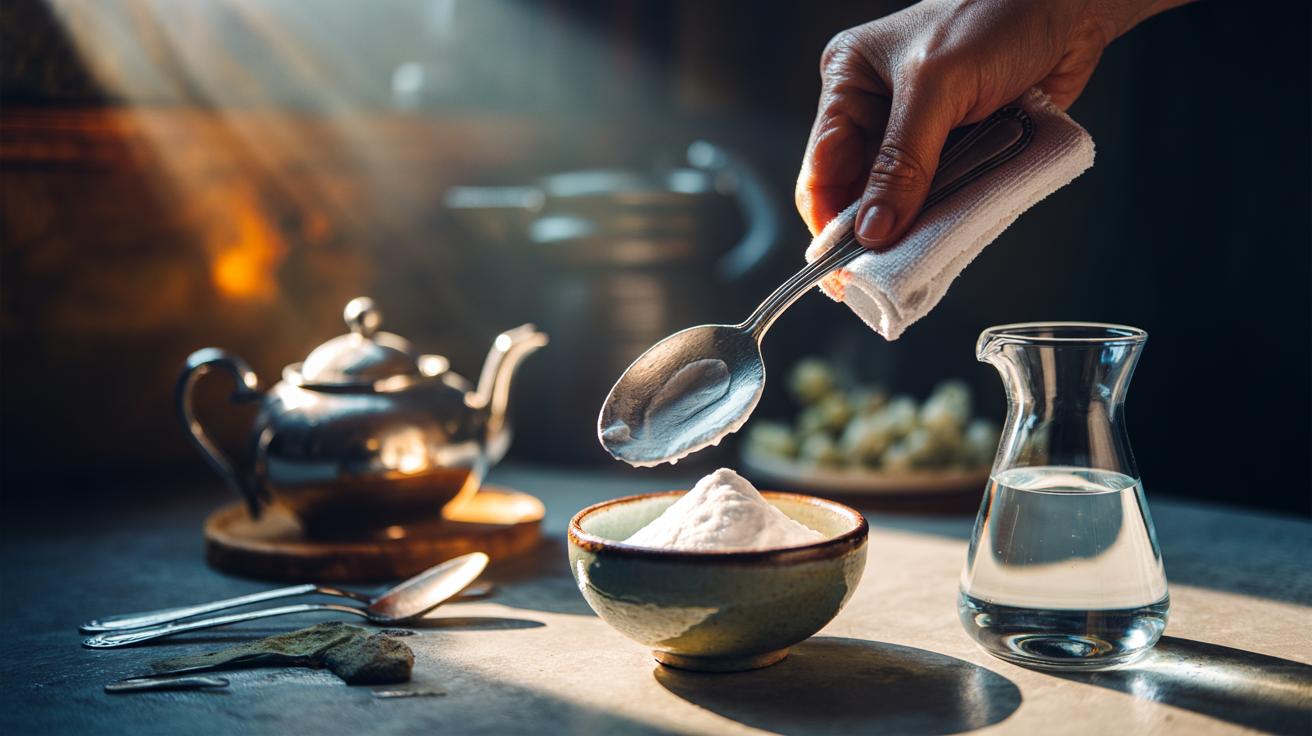
- 🛠️ Method: mix 2 parts baking soda to 1 part warm water (yoghurt-thick), apply with a soft cloth, use light circular strokes, rinse frequently, dry immediately, and stop once the shine returns.
- 🔁 Choose wisely: a controlled paste polish suits most solid silver, while an aluminium-foil bath reduces tarnish quickly on intricate pieces but can strip patina or affect mixed materials—always test first.
- 📦 Aftercare matters: thorough drying, anti-tarnish storage, and occasional light buffing with microfibre keep silver bright and reduce the need for aggressive polishing later.
There’s a homely thrill in rescuing a dull spoon or heirloom locket with nothing more than a pantry staple and warm water. A simple baking soda paste coaxes tarnished silver back to life, and fast. Not magic, but mechanics. The paste’s mild abrasives skim away the darkened film while leaving the metal beneath intact. Tarnish is chemistry; shine is physics. In minutes, a careful rub softens the crust of sulphides and reveals a mirror. The secret sits in particle size, hardness, and technique. Get those right and the transformation is astonishing, not risky. Here’s how, and why, the method works.
What Tarnish Really Is on Silver
Tarnish isn’t grime. It’s silver sulphide (Ag2S), a reaction product formed when silver meets sulphur compounds in the air, foods, wool, or pollution. A thin, stubborn layer grows across the surface, scattering light and making once-bright pieces look jaundiced or nearly black. The layer can be patchy, thicker in crevices and bezels, thinner on exposed rims. It bonds tightly because it’s a new compound, not a deposit that simply wipes away. Understanding the film matters because removal must target the sulphide, not the silver. That’s the crux: lifting the reactive skin while protecting the soft metal underneath.
Left alone, tarnish marches on. Warm kitchens, egg dishes, smoke, even some rubber bands accelerate it. Humidity helps, too. But the underlying silver usually remains sound; it’s just hidden. This is why gentle abrasion is so effective. It doesn’t melt the layer or flood it with harsh chemistry; it shears it off in micron-thin passes. Done well, the process respects fine engraving and original contours. Minimal force, maximum control. You restore reflectivity by smoothing, not gouging, the surface—exactly what you want on cutlery, frames, or jewellery with a sentimental past.
Why Baking Soda Paste Works as a Gentle Abrasive
The power of a baking soda paste lies in its particles. Sodium bicarbonate crystals are soft and diminutive, especially when dampened into a slurry. In that wet matrix, grains roll and slide, behaving like a micro-polishing compound that preferentially abrades the fragile sulphide film. The paste’s mild alkalinity helps loosen grime and oils that hide in pits, improving contact with tarnish. Crucially, the abrasive action is self-limiting: as pressure and movement break the grains, they become even finer, reducing the risk of visible scratching. Abrasion removes the film; finesse protects the silver.
Polishing is light engineering. You’re balancing three variables: particle hardness, particle size, and pressure/time. Smaller, softer particles remove less per stroke but leave a better finish. That’s ideal for silver, a relatively soft metal that can show rash marks from aggressive compounds. Think of the paste as ultrafine sand—only it plucks the tarnish rather than digging trenches. A few minutes of controlled motion smooths microscopic high spots, restoring specular reflection. The result is the signature “pop” of bright silver, achieved without the harshness of scouring powders or the residue sometimes left by strong chemical dips.
How to Make and Use a Baking Soda Paste
Start with two parts baking soda to one part warm water. You’re aiming for yoghurt-thick paste—spreadable, not runny. Wash the silver with mild soap first to strip oils that repel the slurry. Dab the paste on with a soft cotton pad or a clean microfibre cloth. Then work in small circles. Light touch. Short sessions. Let the paste do the cutting; your hands only guide it. Rinse often to check progress and to keep spent particles from grinding around, which can dull the finish.
Stubborn areas? Reapply and wait a minute; time softens the interface. For ornate crevices, use a cotton bud, not a stiff brush. Avoid pads with embedded scouring grains and never use steel wool. Once the dark film lifts and the shine returns, rinse thoroughly with warm water, then dry immediately with a lint-free towel. Moisture invites new tarnish, so finish with a clean, dry buff. Stop as soon as the surface glows—over-polishing thins detail. Store the rejuvenated piece in anti-tarnish tissue or an airtight pouch to slow the next round.
When to Choose Abrasion Versus Chemical Reduction
Not all tarnish calls for rubbing. The aluminium-foil “bath” (aluminium, hot water, bicarbonate, and salt) can reverse sulphide films electrochemically, transferring sulphur to the foil. It’s fast and less mechanical, handy for chains or filigree where cloths can’t reach. Yet that bath can strip desirable patina and isn’t ideal for pieces with mixed metals, glued stones, or lacquer. For display silver or engraved keepsakes, a baking soda paste gives control and preserves character. Choose the method that fits the object’s material, detail, and sentimental value. When in doubt, test a tiny, inconspicuous spot before committing.
| Method | Mechanism | Speed | Risk/Notes | Best For |
|---|---|---|---|---|
| Baking soda paste | Gentle abrasion | Minutes | Low if used lightly | Most solid silver, controlled work |
| Aluminium-foil bath | Chemical reduction | Very fast | May strip patina | Chains, intricate pieces |
| Commercial polish | Fine abrasives + agents | Fast | Varies by brand | Heavier tarnish, professional finish |
| Toothpaste (non-gel) | Mild abrasive | Moderate | Potential micro-scratches | Emergency fixes only |
| Microfibre cloth | Very light abrasion | Slow | Safest | Maintenance polishing |
The quiet beauty of this method is its humility. Pantry chemistry, careful motion, bright results. Baking soda paste doesn’t bully metal; it coaxes shine by smoothing away what shouldn’t be there and stopping before it touches what matters. That restraint preserves lines, hallmarks, and memories. Keep a small jar mixed, label it, and polish little and often rather than rarely and hard. Pair the routine with clean storage and your silver will greet the table with confidence. Which pieces in your home are waiting for a gentle revival, and how will you decide between a paste polish and a quick bath?
Did you like it?4.5/5 (20)