In a nutshell
- ✨ Achieve gleaming tiles in 2 minutes with a simple baking soda paste that safely lifts daily film and restores gloss fast.
- 🧪 Science that saves time: a mild abrasive (Mohs ~2.5) plus gentle alkalinity loosens soap scum without scratching ceramic or porcelain glaze.
- 🧽 Quick method: mix 3:1 (baking soda:water), lightly mist tiles, apply, let sit 60–90 seconds, buff 30–45 seconds, then rinse and dry for streak-free shine.
- 🧱 For stubborn spots: add 3% hydrogen peroxide for grout, or a vinegar spritz for light limescale; avoid natural stone and never mix with bleach.
- 🌿 Eco and cost wins: microplastic-free, low-odour cleaning that costs pennies, reduces packaging, and prioritises simple precautions (gloves, patch tests, keep paste damp).
Two minutes. That’s all it takes to turn tired bathroom tiles from greyed-out to gleaming with a simple baking soda paste and a soft cloth. In homes across the UK, where hard water paints rims of soap scum and faint limescale halos, a mild abrasive approach wins on speed and safety. The trick isn’t brute force; it’s particle physics and a bit of chemistry. The paste’s tiny crystals loosen films without scratching glaze, while its gentle alkalinity nudges grime to let go. Don’t overthink it: a small bowl, a splash of water, and thirty seconds of buffing can reset your tiles. You’ll see the shine arrive before the kettle boils.
Why Mild Abrasives Work on Tile
Think of baking soda as millions of microscopic scrubbers. On the Mohs scale, sodium bicarbonate sits around 2.5—hard enough to polish away greasy films and toothpaste residue, soft enough to leave ceramic and porcelain glazes intact. Those particles act like a precision sander, knocking down the peaks of grime so light can reflect cleanly again. At the same time, the paste is mildly alkaline. That helps break the bond of soap scum—the stubborn combination of fatty acids and minerals that clings to shower walls after every rinse. It’s mechanical and chemical, working together in seconds.
There’s a reason this matters in British bathrooms. Hard water deposits linger, and perfumed sprays often mask rather than move the muck. A mild abrasive cuts through the film without marbling the glaze or dulling the sheen. It also keeps you clear of harsh fumes. One caveat: heavy limescale is primarily mineral. An acid does better there; bicarbonate won’t dissolve it. Use the paste for day-to-day scum and streaks, and bring an acid cleaner to the party only when crusts form. Always test on an inconspicuous patch before the full scrub.
Two-Minute Baking Soda Method, Step by Step
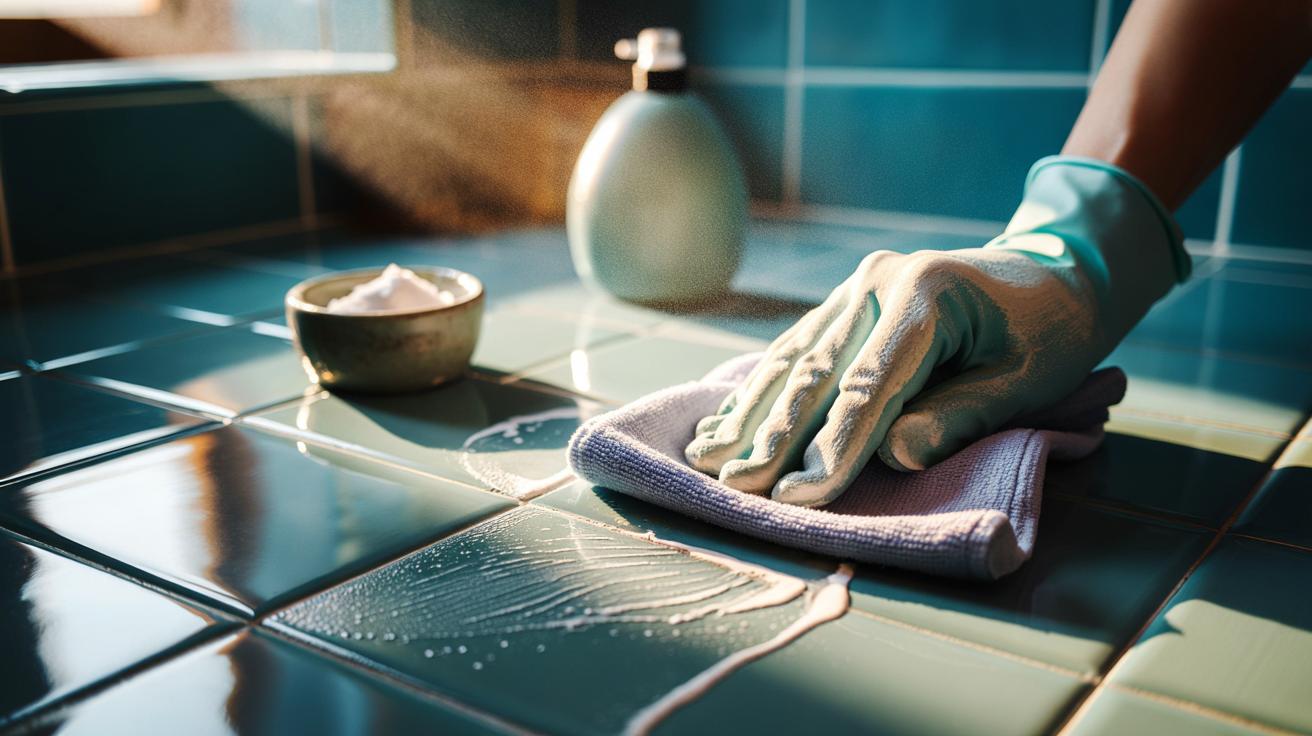
Speed comes from setup. Mix 3 parts baking soda to 1 part water in a ramekin until you get thick yoghurt. Add a small drop of washing-up liquid if you’re facing body oils. Lightly mist the tiles. Key word: lightly. You want the paste to grip, not slip. Apply a walnut-sized dab to a soft microfibre cloth or a non-scratch pad and spread in circles over a 40 cm square. Don’t let the paste dry—keep it slightly damp so particles keep moving.
Now the clock starts. Let it sit for 60–90 seconds while the alkalinity loosens the film. Buff for 30–45 seconds with gentle, even pressure. You’re not scouring a pan; you’re polishing a glaze. Rinse with warm water, then squeegee or towel dry for instant clarity. Stand back. The before-and-after will look like a filter. For taps and edges, wrap the paste in a damp cotton pad and press for a minute, then wipe. Two minutes of contact and light buffing is usually enough for soap scum and toothpaste haze. For vertical shower walls, work in small panels and finish with a quick buff to prevent water marks.
Stubborn Grime, Grout Lines, and Safe Surfaces
Some dirt digs in. For shadowed grout or shampoo drips that have dried like varnish, tweak the mix. A teaspoon of 3% hydrogen peroxide in your paste adds mild bleaching for grout lines. For mineral film near taps, spray a fine mist of white vinegar after pasting—allow a short fizz, then wipe. The reaction won’t “super-clean,” but the effervescence helps dislodge edges. Never combine acids and bleach, and avoid vinegar on natural stone. Use a soft brush on grout; keep the motion along the line to avoid fraying edges.
| Soil Type | Paste Add-On | Dwell Time | Tool | Notes |
|---|---|---|---|---|
| Soap scum film | Plain baking soda | 60–90 sec | Microfibre cloth | Quick buff restores gloss fast. |
| Oily residue | Drop of washing-up liquid | 90 sec | Non-scratch pad | Rinse well to avoid streaks. |
| Grout discolouration | 3% hydrogen peroxide | 3–5 min | Soft toothbrush | Patch test coloured grout. |
| Light limescale haze | Vinegar spritz over paste | 60 sec fizz | Cloth, then rinse | Skip on natural stone. |
Surface safety matters. Ceramic, porcelain, and glass love this method. Acrylic bath panels are fine with a gentle hand. Avoid or take great care with marble, limestone, and travertine; their softness and calcium content make them vulnerable. When in doubt, use plain water and a microfibre cloth first, then a tiny test of paste.
Eco, Cost, and Safety Upsides
Agricultural-grade chemistry in a cardboard box beats a cupboard of perfumed sprays. A weekly paste polish is microplastic-free, low odour, and costs pennies per session. There’s less packaging, fewer propellants, and no harsh fumes fogging a small UK shower room. The bonus is control: you decide texture and strength, not a manufacturer. It’s the cleaner you can tweak in ten seconds. For renters or listed homes with older glazes, that control is gold. You can go gentler for vintage tile, punchier for a student flat’s neglected bath.
Safety still counts. Keep powder away from little hands and curious pets. Wear light gloves if your skin is sensitive, and don’t inhale the dry dust. Never mix the paste with bleach, and don’t follow an acid rinse with bleach either—clean on different days. Rinse tools properly to avoid grit build-up. Store a small labelled jar by the sink for swift touch-ups, and a bigger tub under the basin for full cleans. The result is predictable shine, less waste, and more money left for the weekend shop.
In the time it takes to queue a playlist, a dab of baking soda paste can turn clouded tile into a bright, reflective surface that looks newly installed. The method is simple, the science sound, and the results completely satisfying. Keep it damp, keep it moving, and let the micro-scrub do the heavy lifting. Ready to retire harsh sprays and reclaim your bathroom’s sparkle—what tile trouble spot will you tackle first, and what result are you chasing?
Did you like it?4.6/5 (20)