In a nutshell
- 🧪 Baking soda (sodium bicarbonate) works because its mildly alkaline pH neutralises acidic odours, converting them into less volatile salts for air that smells genuinely fresher.
- 🌫️ Beyond neutralisation, fine particles add adsorption and buffering, gripping odorous molecules and moisture while staying gentler on fibres than harsher bases.
- 🧴 Mix and apply: 1–2 tsp bicarbonate per 500 ml warm water, mist lightly after vacuuming, allow 15–60 minutes dwell, then vacuum for freshness, not fragrance.
- ⚠️ Safety and limits: avoid over-wetting, always patch test wool/silk, and don’t mix with bleach; aged alkaline urine or tarry smoke may need enzymatic cleaners or extraction.
- 🧽 Practical wins: use sprays for stale rooms, food spills, and light smoke acids; escalate to pros if odours persist from underlay or subfloor contamination.
Carpets are memory keepers. They cling to the day’s dinners, wet-dog romps, and the faint tang of spilled wine. When a room smells “stale,” soft fibres are usually to blame. A quick mist of baking soda spray can reset that sensory clock in minutes, because the powder’s gentle alkaline chemistry does what fragrance alone cannot: it neutralises. This isn’t magic; it’s smart household science. A light solution dissolves odour-causing acids, softens volatile molecules, and dampens the conditions they need to linger. Instead of masking scent, you alter it at the molecular level. The result is air that reads genuinely fresher, not perfumed, and a carpet that seems newly laundered underfoot.
Why Alkaline Baking Soda Disarms Odours
Baking soda—better known as sodium bicarbonate—sits at a mildly alkaline pH of about 8.3 when dissolved. Many persistent household smells are driven by volatile organic acids such as acetic acid (vinegar-like), butyric acid (rancid butter), or isovaleric acid (sweat/cheesy). When these acidic molecules meet an alkaline base, they donate protons and become less volatile, often forming benign salts. That shift makes them less likely to leap from carpet fibres into the air. This is the core advantage: chemical neutralisation, not cover-up.
Sodium bicarbonate also behaves as a mild buffer, resisting big swings in pH and minimising damage to dyes compared with stronger bases. There’s a physical effect too. Finely milled particles provide surface area for adsorption, clutching odorous compounds and trace moisture like a sponge. Add a tiny bit of water in a spray and you improve contact, helping bicarbonate reach deep into the pile, around tufts, and into micro-crannies where scents settle. The approach is gentle, fabric-safe for most synthetics and wool blends, and fast—often minutes to noticeable relief—because you’re tackling the chemistry at its source.
How to Mix and Use a Baking Soda Carpet Spray
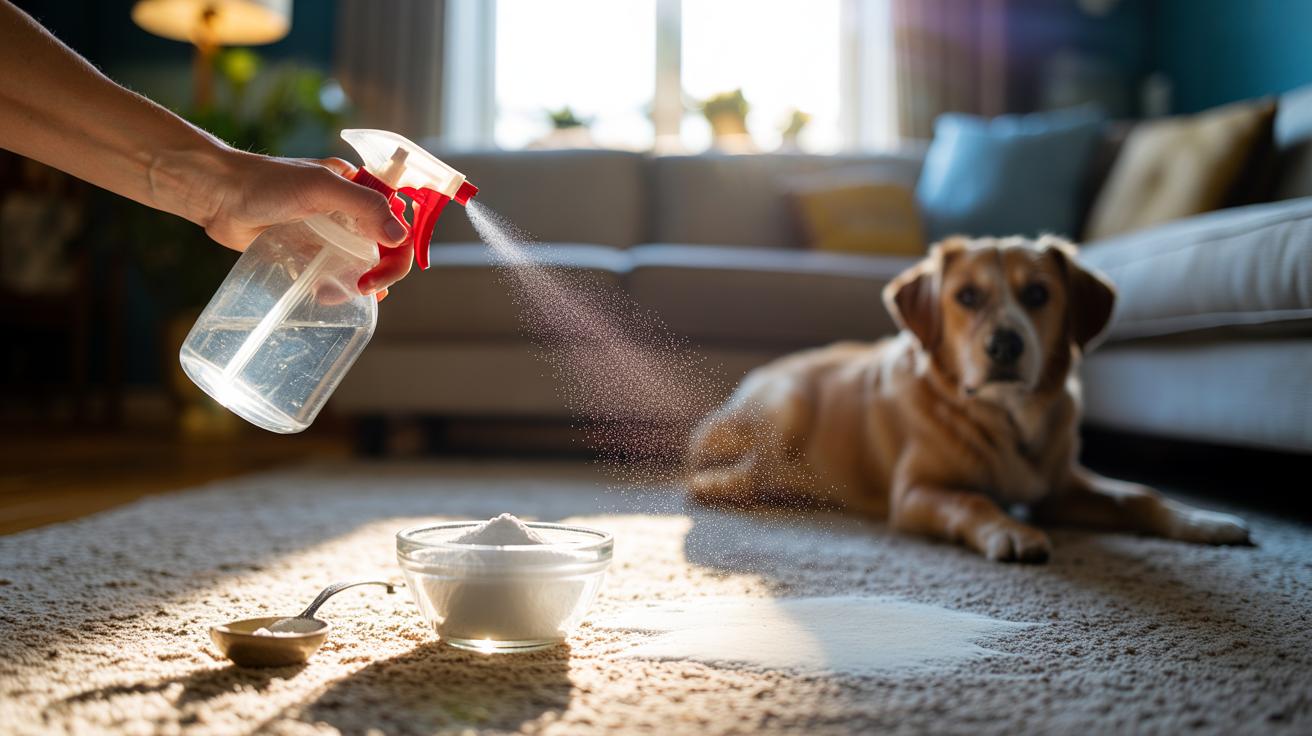
The aim is a light, even mist that wets fibres without drenching the backing. Use warm water to help the powder dissolve. For a standard trigger bottle, add 1–2 teaspoons (5–10 g) of bicarbonate of soda to 500 ml water. Shake until clear. Optional: one drop of unscented washing-up liquid improves wetting; any more can leave residue. Avoid strong dyes or heavy essential oils; both can stain. Always patch test on an inconspicuous corner and check for colour transfer on a white cloth.
| Parameter | Recommendation |
|---|---|
| Mix Ratio | 1–2 tsp bicarbonate per 500 ml warm water |
| Dwell Time | 15–60 minutes before drying and vacuuming |
| Coverage | Approx. 250 ml per 2 m² (light mist) |
| Best For | Sour food spills, sweat, light smoke acids, general stale odours |
Application is simple: vacuum first to remove grit. Mist the carpet lightly—do not soak—then let it dwell. For hotspots, a dab of thicker paste (3 parts bicarbonate to 1 part water) can sit under a glass for 30 minutes to trap volatile fumes. Brush the pile as it dries to lift fibres and speed evaporation. Finish with a slow vacuum pass to collect any residue. Done well, the room smells neutral, clean, and unforced. Freshness, not fragrance.
Safety, Limits, and When to Call a Pro
Baking soda is gentle, but not a cure-all. New pet urine skews acidic, so bicarbonate helps; old urine turns alkaline as urea becomes ammonia, making bicarbonate less effective. In that case, a mild acid pre-rinse (1 part clear white vinegar to 4 parts water) can rebalance pH, followed by an enzymatic cleaner to break uric crystals. For heavy smoke, tar, or curry oils embedded over years, you’ll need hot-water extraction and, sometimes, specialist odour counteractants or activated carbon treatment. If the smell returns after each clean, contamination may have penetrated underlay or subfloor.
Always avoid over-wetting; trapped moisture risks mould and backing delamination. Test wool and silk for colourfastness, as repeated alkalinity can encourage felting or dull dyes. Never mix bicarbonate solutions with bleach or strong oxidisers; it’s unnecessary and potentially hazardous. Keep powders and sprays away from curious pets until dry, then vacuum thoroughly. Sensible steps—patch tests, light mists, measured dwell times—keep you on the right side of safe. The guiding principle is simple: use alkaline action to neutralise, not perfume, and escalate only when chemistry and common sense say you should.
Baking soda sprays earn their reputation because they change the chemistry of smell inside carpet fibres. They calm acids, capture trace moisture, and leave a space smelling like itself, only cleaner. Used with a light hand and a decent vacuum, they’re inexpensive tools that punch above their weight in busy homes and rented flats alike. Yes, there are limits, especially with aged urine or tarry smoke, but those are the exceptions, not the rule. Neutral air beats artificial fragrance every time. Where could a simple, smart alkaline spray make the biggest difference in your home this week?
Did you like it?4.4/5 (26)