In a nutshell
- 🧪 The science: sodium bicarbonate helps neutralise acidic odour molecules and adsorb smells via its porous structure, gently wicking moisture for a drier, fresher carpet.
- 🌙 Method that works: vacuum first, sprinkle 2–6 tbsp/m², brush lightly, leave overnight (8–12 hours), then slow, overlapping vacuum passes; always do a patch test on delicate fibres.
- 🐾 Tough odours: For pet urine, use enzymatic cleaners and dry before sprinkling; for smoke or curry, extend dwell time and finish with a HEPA-equipped vacuum to capture loosened particulates.
- 🛡️ Safety and care: Keep children and pets off treated areas, service filters and bags to prevent fine-powder stress on vacuums, and dose lightly on wool or antiques.
- ♻️ Sustainability and savings: Bicarbonate of soda is biodegradable, fragrance-free, and budget-friendly; pair with shoes-off habits and filter maintenance for consistently fresher floors.
There’s a quiet miracle sitting in your cupboard. Sprinkle it, leave it, hoover it away. For many British households, baking soda offers a fast, frugal way to lift stale smells from tired carpets without harsh chemistry or endless scrubbing. The method is disarmingly simple, yet the reason it works runs deeper than folk wisdom. Overnight, those fine white crystals do the heavy lifting while you sleep, drawing out odours and taming the compounds that make rooms feel stuffy. Here’s how a single ingredient refreshes fibres, what to expect by morning, and the small tweaks that turn a decent result into a truly fresh, walk-on-soft finish.
The Science Behind Baking Soda on Carpets
At the heart of this method is sodium bicarbonate, a mild alkaline salt that interacts with smelly molecules in two complementary ways. First, it helps neutralise acidic odour compounds that often arise from food, drink, or pet accidents. Neutralisation blunts their volatility, making them less likely to reach your nose. Second, baking soda’s porous crystalline structure gives it surprising surface area, so it can adsorb (not absorb) airborne and fibre-bound molecules and hold them in place. That combination—neutralising and trapping—is why a simple overnight dwell can make such a dramatic difference.
Humidity matters. Many household odours persist because moisture keeps malodorous compounds mobile within carpet fibres and underlay. Sodium bicarbonate is hygroscopic, so it gently wicks moisture, creating a drier microclimate that discourages bacterial activity and odour release. It is also non-toxic, fragrance-free, and pH-mild, which means it mitigates smells rather than masking them with perfume. The result is a fresher baseline rather than a scented cover-up. You won’t erase a deep wine spill or a long-standing pet stain with powder alone, but you will disarm the odour signatures that linger long after visible marks have faded.
How to Apply a Baking Soda Sprinkle Overnight
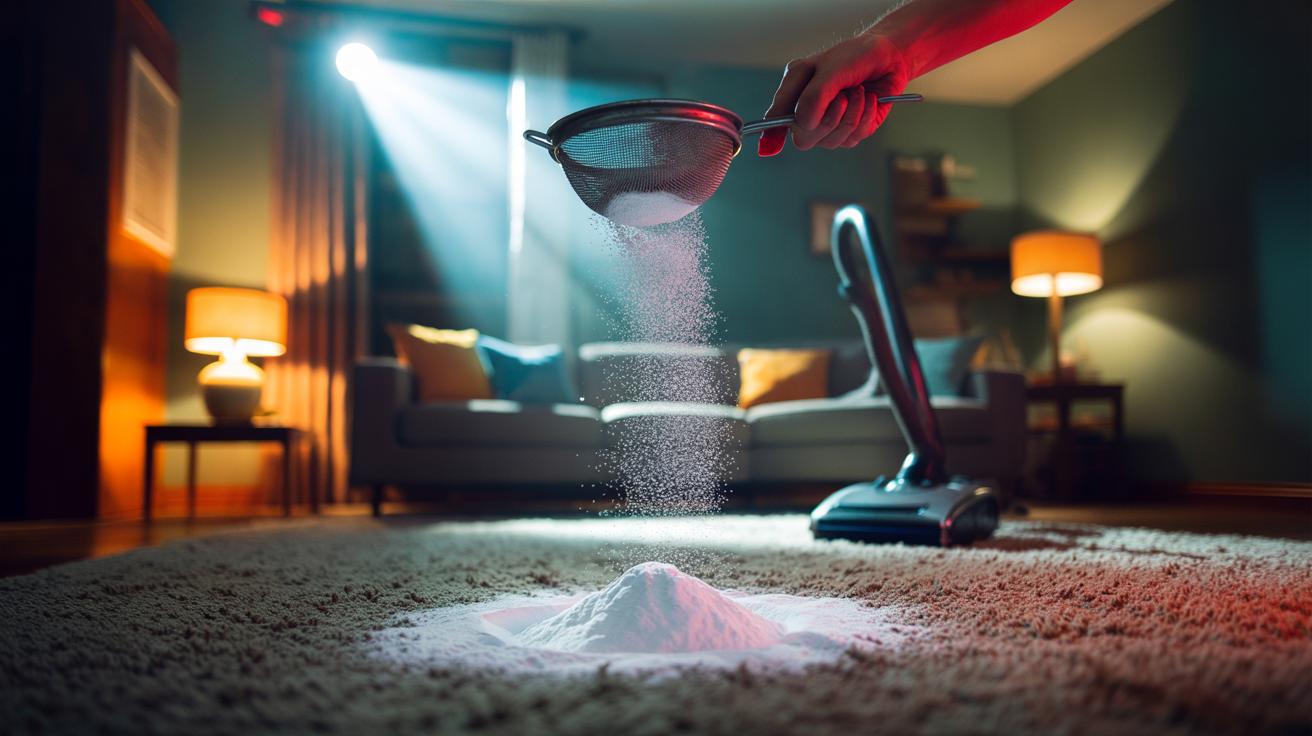
Preparation is everything. Start by dry vacuuming thoroughly to lift grit—two slow passes in perpendicular directions. Using a fine shaker or sieve, sprinkle baking soda evenly across the carpet. Aim for 2–4 tablespoons per square metre on low-pile; up to 6 on deep-pile or in high-traffic zones. Work lightly with a soft brush to nestle particles between fibres without grinding. Crack a window for airflow. Then walk away. Leave the powder undisturbed for 8–12 hours—overnight is ideal—to allow neutralisation and adsorption to occur. In the morning, vacuum slowly, overlapping each pass, and empty or change the bag promptly.
Always perform a small patch test first, especially on wool, silk, or dyed rugs. While baking soda is gentle, over-application can leave residue, and very fine powders can challenge some vacuum filters. If you use a bagless vacuum, clean the cyclone and HEPA filters afterwards to protect suction and motor life. For a boost, repeat the process on consecutive nights, focusing on corridors, doorways, and the area around the sofa where shoes, snacks, and pets converge.
| Carpet Type | Suggested Amount | Overnight Dwell | Notes |
|---|---|---|---|
| Low-pile synthetic | 2–4 tbsp/m² | 8–10 hours | Brush lightly; vacuum twice. |
| Deep-pile/shag | 4–6 tbsp/m² | 10–12 hours | Use a sieve for even spread. |
| Wool blend | 2–3 tbsp/m² | 8–10 hours | Patch test; avoid damp fibres. |
| Rugs with underlay | 3–5 tbsp/m² | 8–12 hours | Lift edges to ventilate if possible. |
Tough Smells: Pets, Smoke, and Spills
Some odours fight back. Pet urine, for instance, contains uric acid crystals that cling to backing and underlay. Baking soda will reduce the sharpness, but enzymatic cleaners are the proper first step: break down the uric compounds, blot thoroughly, dry completely, then apply your overnight sprinkle. Never dust baking soda onto a wet patch and expect miracles; drying comes first or you risk clumping and reduced efficacy. For recurring pet areas, treat two nights in a row and consider a moisture barrier underlay to stop wicking.
Smoke and curry aromas behave differently. They’re oily, airborne, and prone to lodging in pile tips. Here, coverage and patience win. Use a finer sprinkle, increase dwell time, and run a HEPA-equipped vacuum the next morning to capture loosened particulates. For old drink spills that left no stain but a lingering must, raise the pile with a soft brush before sprinkling so powder reaches the inner fibres. Avoid aggressive scrubbing on wool; gentle agitation protects the scales that give wool its resilience. If the odour persists, it may be sitting in the underlay—spot-lifting the rug and dusting both sides can help.
Safety, Sustainability, and Savings
One reason baking soda endures: it’s simple, safe, and cheap. A supermarket box costs pennies per treatment yet delivers results that rival many fragranced powders. There are caveats. Fine powders can stress vacuums if filters are dirty or bags are overfull, so service your machine before a deep refresh. Keep pets and toddlers away from freshly dusted floors to prevent tracking or ingestion, and store the box dry so it doesn’t cake. On delicate fibres and antique rugs, minimalism wins—lighter dosing, shorter dwell, and meticulous vacuuming.
From an environmental angle, bicarbonate of soda is biodegradable, fragrance-free, and avoids the cocktail of solvents common in some deodorisers. It also cuts packaging waste: one carton, many rooms. Financially, the arithmetic is friendly; households can refresh high-traffic areas weekly and whole rooms monthly without denting the budget. Pair the practice with two extras for best results: shoes-off at the door and regular filter maintenance. Do that, and the overnight sprinkle becomes a tidy routine rather than a rescue mission.
Used thoughtfully, baking soda resets indoor air without masking it. It treats the causes—acidic molecules, residual moisture, trapped particulates—rather than layering perfume on top. The method scales from hallway runners to wall-to-wall, and it plays nicely with deeper cleans when needed. Leave it overnight, vacuum like you mean it, and enjoy the morning air. Ready to give your carpets the simplest refresh on the shelf—or do you have a stubborn odour story that needs a tailored plan?
Did you like it?4.6/5 (21)