In a nutshell
- 🍌 Banana peel boot shine delivers instant, chemical-free gloss by laying down natural oils and sugars that fill micro-scratches.
- 🔬 The peel’s lipids, waxy esters, and polysaccharides form a thin film that evens light reflection; thorough buffing prevents tack and dust.
- 🧰 Step-by-step: brush off dirt, rub the pith side lightly, wait ~30 seconds, then buff with cloth or horsehair for a quick mirror-like finish.
- 🥾 Best on smooth, finished leathers (calf, corrected grain); avoid suede/nubuck and be cautious with aniline or patent—this is cosmetic, not deep care.
- 🌱 A zero-waste, low-cost hack that dodges VOCs; pair with periodic conditioning and wax for durability and weather resistance.
In a nation that guards its shoe-care secrets as closely as its tea blends, a humble hack keeps resurfacing: the banana peel boot shine. It sounds like a parlour trick, yet it works with disarming speed and zero solvents. Swipe, buff, go. Commuters swear by it for scuffed Oxfords; hikers reach for it after muddy tracks. The appeal is practical and green. No tin, no chemical haze, no sticky residue when done right. The peel’s natural oils and sugars slick over micro-scratches, lifting the colour and adding high, clean lustre. Here’s how the science stacks up—and how to deploy it without sabotaging your leather.
The Science Behind the Peel Shine
Banana peels contain trace lipids, waxy esters, and polysaccharides such as pectin and starch. Those compounds create a thin, semi-occlusive film that fills tiny abrasions and scatters light more evenly, producing an immediate sheen. There’s also natural moisture and mild acidity, which soften superficial grime so it wipes away cleanly. The white pithy side is the active face—use that side against the leather. Unlike aggressive polishes, the peel doesn’t strip finishes or flood pores, so the effect is instant yet gentle.
On smooth, finished leather the film spreads uniformly. The result? Micro-scratches look muted, colour appears richer, and the surface reflects more coherently under indoor light. It’s not magic; it’s optics and a delicate bio-wax layer. Because the peel’s coating is light, it won’t offer heavy conditioning or real waterproofing. Think of it as a clean, quick boost between proper care cycles rather than a full-service restoration. That distinction matters if you rely on your boots in wet British weather.
One caveat: sugars can tack if over-applied. The fix is simple—wipe and buff thoroughly. A brisk final polish with a clean cloth relevels the film and leaves a dry, satiny feel. Used sparingly, the peel gives shine without attracting dust, and it avoids the solvent smell many people dislike.
Step-By-Step: From Fruit Bowl to Mirror Gloss
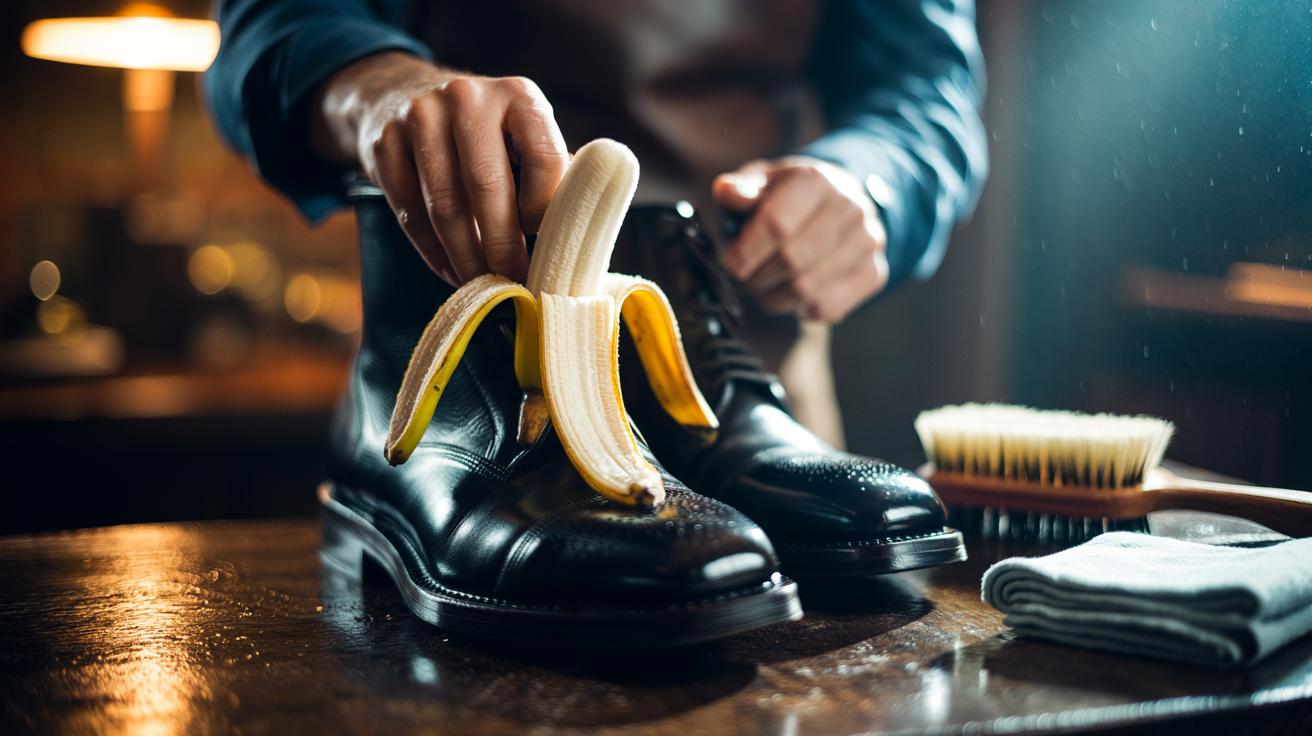
Start with visibly clean footwear. Knock off grit with a soft brush. Choose a ripe banana with a pliable peel; split it and expose the white interior. Test on an inconspicuous area first. Glide the pithy side over the leather in small circles. Don’t drown the surface—less is more. Allow 30 seconds for the micro-film to settle, then buff briskly with a dry, lint-free cloth or, better, a horsehair brush. A second pass on toe caps pushes the sheen toward mirror territory.
For stubborn scuffs, dab the peel lightly, pause, then buff again. Keep the peel away from stitches if you’re fussy about brightening thread tones. Finish with a microfiber polish to level any streaks. If you want extra depth, you can seal with a whisper of neutral wax, but it’s optional. You can get a convincing shine in under a minute, which is why this trick earns a place in office drawers and glove boxes across the country.
| Step | Action | Why It Works | Time |
|---|---|---|---|
| Prep | Brush off dirt | Prevents grit from scratching | 20 sec |
| Apply | Rub pith side on leather | Lipids and pectins form film | 30 sec |
| Settle | Let sit briefly | Even film formation | 30 sec |
| Buff | Cloth or brush polish | Levels shine, removes excess | 40 sec |
Dispose of the peel responsibly—compost if you can—and wash hands. If you notice streaking, you used too much. Simply re-buff. For day-to-day touch-ups, once a week is ample; daily use isn’t necessary and may look overly glossy.
What Leather Loves—and What It Doesn’t
The peel trick flatters smooth calf, corrected grain, and most polished leathers. On these, the finish is sealed enough to accept the bio-wax film without blotching. It also perks up older, dulled pairs where factory finishes have thinned, especially around toe boxes and quarters. Expect an instant cosmetic lift rather than structural care. Think newsroom dash, not cobbler-level renewal.
Avoid suede and nubuck. Their open nap traps moisture and sugars, leaving dark patches and clumps. Caution with aniline leather too—its open pores can take on uneven darkening. Patent leather already carries a plasticised gloss; the peel won’t add much and may smear. If in doubt, patch test inside the heel or under the tongue. White or contrast stitching can brighten slightly; some love the pop, others don’t.
Frequency matters. Occasional use is fine; weekly is safe. If you’re clocking miles in rain, rotate pairs and apply a proper conditioner monthly to restore oils deep within the hide, then protect with a hydrophobic wax. Banana peel shine is a sprint, not the marathon. It keeps appearances polished between long-form care, preserving leather health while still looking newsroom-ready on deadline.
Sustainability and Cost: Small Peel, Big Impact
This is classic zero-waste ingenuity. You’re using a by-product that would otherwise hit the bin, and you’re dodging VOCs and dye-heavy formulations found in some traditional polishes. For students, freelancers, or anyone minding costs, the arithmetic is irresistible. One peel, two boots, instant payoff. It’s the rare hack that is both thrifty and credible. No special kit. No aerosol. Just a fruit and a cloth.
There are limits. The peel doesn’t waterproof, recolour, or fill deep gouges. It won’t rescue salt-crept creases or split welts. See it as a fast, environmentally gentle surface enhancer. If you get residue, you likely over-applied; wipe with a slightly damp cloth, dry thoroughly, then re-buff. Store boots away from radiators to prevent the light film from hardening unevenly. Compost the peel when you’re done—soil microbes will happily reclaim it.
For many, the charm is ritual. A simple, tactile routine that brings leather back to life before a meeting or train. Pair it with periodic conditioning and resoling when needed, and your footwear line-up stays handsome, repairable, and far from landfill. The peel is the nudge, not the full service—efficient, clean, good enough for print.
The banana peel polish has earned its place in Britain’s everyday toolkit: swift, quietly scientific, and pleasantly old-school. It delivers visible shine without chemical fog, and it invites better habits—brushing, buffing, and mindful rotation—so your boots last. Used judiciously, it’s a nimble shortcut that respects the leather beneath. Will you keep a peel handy for emergency gloss, or stick to tins and brushes—perhaps even blend both for a routine that suits your shoes and your schedule?
Did you like it?4.5/5 (24)