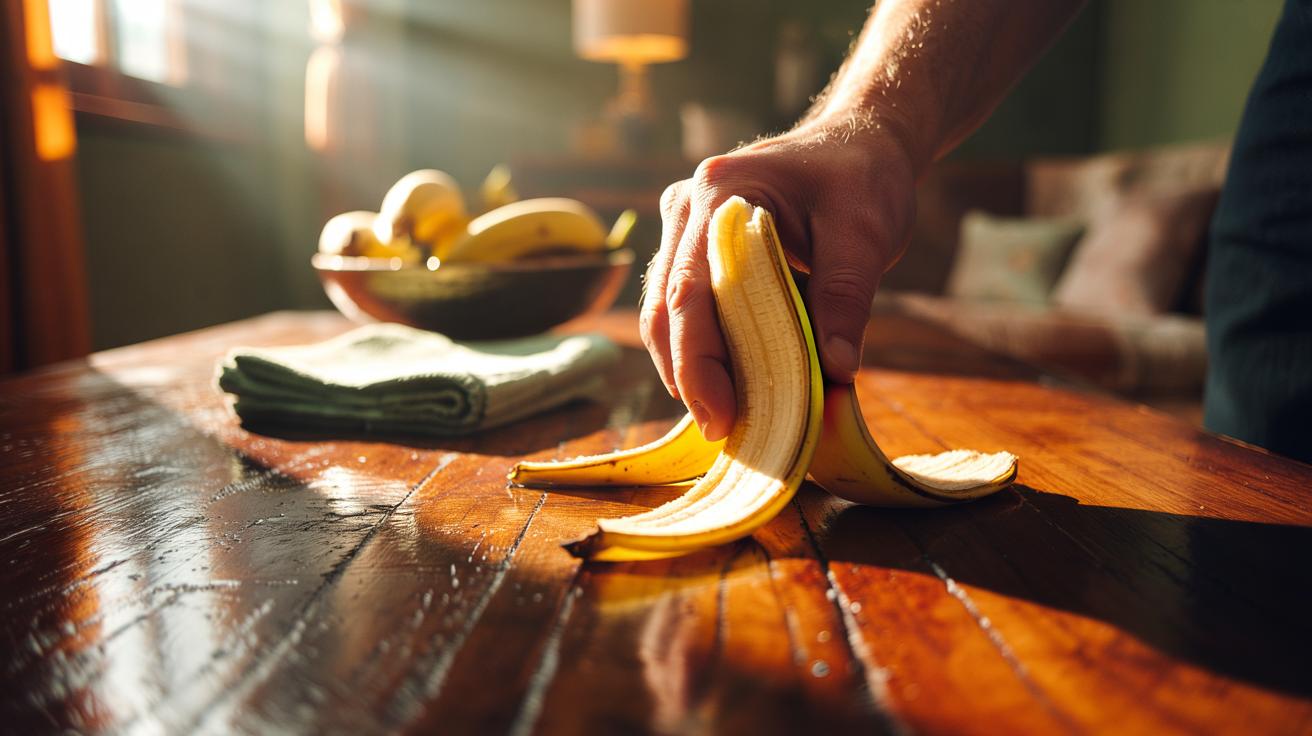
In a nutshell
- 🟡 Banana peel polish uses natural oils and waxes to fill micro-scratches, changing light reflection for instant visual softening on wood furniture.
- 🧰 Step-by-step method: clean surface, test discreetly, rub with the inside of a banana peel along the grain, then buff thoroughly to leave a thin, non-tacky film.
- 🪵 Best on sealed finishes (varnish, lacquer, polyurethane); less effective on raw/oiled wood and can’t fix deep gouges—use wax sticks or professional repair.
- 📊 Table-guided expectations: high effect on hairline scuffs, moderate on light abrasions, low on deep damage, and variable on water marks or older waxed/shellac finishes.
- 🕰️ Maintenance and alternatives: keep dusting gentle, reapply sparingly, and consider beeswax, olive oil–vinegar mixes, or wax repair sticks for longer-lasting protection.
It sounds implausible until you try it: a humble banana peel that buffs away faint scuffs and surface scratches on timber furniture in moments. This quick trick has travelled from internet folklore into British households because it’s cheap, safe, and—when used on the right finish—disarmingly effective. The secret is in the peel’s natural oils and waxy compounds, which sit in shallow blemishes and make them almost vanish by changing how light reflects across the grain. Done properly, it’s a fast, low-risk polish that can revive a tired tabletop between deep cleans. Here’s why it works, when to use it, and the exact method that keeps the sheen without the stickiness.
Why Banana Peels Work on Wood Scratches
Banana peels contain a mix of lipids, natural waxes, and starches. On sealed wood—think varnish, lacquer or polyurethane—these compounds behave like a micro-filler. They slip into micro-scratches and tiny abrasions, smoothing edges that scatter light and make damage stand out. By softening that harsh contrast, the eye reads “less scratch,” even though the wood fibres aren’t truly repaired. It’s an optical win, and it happens almost instantly.
There’s also a small moisture element. The peel’s water content can momentarily swell the finish at the very topmost layer, further blending light scuffs. Crucially, the effect works best on sealed, non-porous wood finishes; the oils sit on the surface rather than soaking in unevenly. Expect diminishing returns with deep gouges or raw timber. Still, for coffee-ring halos, key scuffs, and shallow drag marks, the peel’s waxy film is surprisingly convincing. Think of it as a camera soft-focus filter for your sideboard: quick, flattering, and easily buffed to a gentle sheen.
Step-by-Step: Banana Peel Polish, From Fruit Bowl to Finish
Start with a clean slate. Wipe the piece with a barely damp microfibre cloth to lift dust; dry thoroughly. Take a fresh piece of banana peel—the inside, not the outer skin—and fold it into a comfortable pad. Always test on a discreet area first to check for unexpected darkening or residue on your specific finish.
Working with the grain, glide the peel over the scratch using light, even pressure. Short passes, then longer strokes. You’re laying down a film, not scrubbing. Now switch to a soft, dry cloth and buff. Keep buffing. The aim is to remove excess and leave only a whisper-thin layer of the peel’s natural oils and waxes. If the mark persists, repeat once; more than two passes can lead to build-up.
Finish with a final polish using a clean section of cloth. The surface should feel dry, not tacky, and look subtly richer in colour, with the scuff visually softened. If you want longer-lasting protection, follow with a dab of beeswax or a high-quality furniture polish a day later, once any trace moisture has flashed off.
What It Works On—and What It Doesn’t
The banana-peel method is forgiving, but not universal. It excels on sealed surfaces: varnish, lacquer, and many modern poly finishes. It struggles with raw wood, open-pore oiled finishes, and composites where oils may stain. The trick also has limits: it masks light scuffs; it doesn’t repair crushed fibres or chips. When in doubt, a quick test patch can save an afternoon’s regret.
| Scratch Type | Finish/Material | Banana Peel Effect | Notes |
|---|---|---|---|
| Hairline scuffs | Varnish, lacquer, polyurethane | High—instant visual softening | Buff thoroughly to avoid residue |
| Light surface abrasions | Sealed solid wood, veneered panels | Moderate—good masking | May need two passes |
| Deep gouges | Any | Low—insufficient fill | Use wax sticks or filler |
| Water marks | Old shellac, waxed finishes | Variable | Try heat/cloth method instead |
| Raw/oiled wood | Unsealed timber, pure oil finish | Risk of darkening | Spot-test; consider dedicated oil |
Keep expectations realistic. This is a cosmetic polish, not a restoration. For heirloom pieces, match the repair to the finish—shellac stick for shellac, wax filler for veneer chips, professional refinishing for structural damage.
Care, Longevity, and Natural Alternatives for a Lasting Sheen
A banana-peel buff can look brilliant for days, sometimes weeks, depending on traffic and cleaning habits. Dust gently, avoid harsh detergents, and give surfaces a light dry polish to maintain that even light reflection. If the softening effect fades, a second controlled application is fine. The golden rule: minimal product, maximal buffing.
Prefer a different pantry fix? A sparing blend of olive oil and white vinegar (3:1) can lift dullness on sealed finishes, though it needs thorough buffing to avoid smears. For deeper imperfections, wax repair sticks colour-matched to your timber give a sturdier fill. Walnut meat—another folk favourite—works similarly to banana peel, leaving oils that blend small scuffs on dark woods. For lasting protection, a thin coat of beeswax or carnauba-based polish, applied and buffed properly, seals in sheen without cloudiness. If you’re caring for antiques, always check the finish type first or consult a restorer; the wrong product can flatten a delicate patina.
There’s a certain joy in household fixes that are thrifty, gentle, and oddly effective. Used wisely, banana peel polish is a nimble way to dial down distractions—those hairline scratches that catch the light and the eye—without breaking out sandpaper or solvents. It’s not magic. It’s smart optics powered by natural oils and elbow grease, ideal for sealed, modern finishes and everyday touch-ups. Test, apply lightly, buff like you mean it, and enjoy the glow. Which piece in your home—coffee table, bookcase, or sideboard—would you try this on first, and how would you judge the results under real, changing daylight?
Did you like it?4.5/5 (30)