In a nutshell
- 🍌 Banana peels contain natural oils, wax-like lipids, pectin, and minerals that form a micro-thin film, filling scuffs so light reflects evenly for an instant shine.
- 🧽 Method: dry-dust shoes, rub the inside of the peel in small circles, rest 30–60 seconds, then buff briskly with a clean cloth until the surface feels dry, not tacky.
- 👞 Best for smooth leather (full/top/corrected-grain); avoid suede/nubuck, skip patent, and patch-test vegan leathers or light colours to prevent streaks or darkening.
- ⚠️ It’s a quick, cosmetic fix—not a replacement for leather conditioner or waterproofing; thorough buffing prevents dust attraction and a brief damp wipe removes any fruity hint.
- 🌿 An eco-friendly, no-polish stopgap between full care sessions, delivering rapid, solvent-free gloss with nothing more than a peel and a cloth.
Britain loves a thrifty hack, and few are thriftier than the kitchen cast-off that turns scuffed brogues into boardroom-ready footwear. The humble banana peel, greasy with gentle plant lipids and packed with minerals, can leave leather looking newly minted. It’s not magic; it’s materials science at the breakfast table. Rub, wait, buff — and watch a dull finish pop to a glassy gleam. What’s happening is simple: the peel’s natural oils and wax-like compounds slick the surface, filling micro-scratches so light reflects evenly. No tin of polish. No harsh solvent smell. Just a fruit skin, a cloth, and a minute of elbow grease.
The Science in the Skin: Natural Oils and Micronutrients
Banana peels are a quiet cocktail of lipids, starches, pectin, and trace minerals such as potassium. Those lipids behave like a light wax, creating a thin, flexible film on leather. This film smooths the grain, filling microscopic valleys where scuffs scatter light. The effect? Increased specular reflection and a fast, convincing shine. Pectin and sugars add a tacky slip that helps the film spread before buffing consolidates it. A touch of acidity in the peel can also lightly cleanse oxidised grime without stripping dye.
Leather, being porous and protein-based, welcomes these mild emollients. They soften the surface just enough to improve flexibility, which reduces the appearance of creases. Because the peel’s oils are lightweight, the result is a bright finish that doesn’t feel greasy when properly buffed. Think of it as a micro-thin conditioner and brightener rolled into one. It won’t replace deep nourishment from a dedicated cream, but it mimics the quick-gloss of traditional waxes surprisingly well — minus the solvents and synthetic fragrances.
There’s a caveat. Sugars can attract dust if residue remains. Always buff until the leather feels dry to the touch, not tacky. And avoid delicate finishes like suede or nubuck, which will darken and mat with any moisture or oil application.
How to Polish Shoes With a Banana Peel
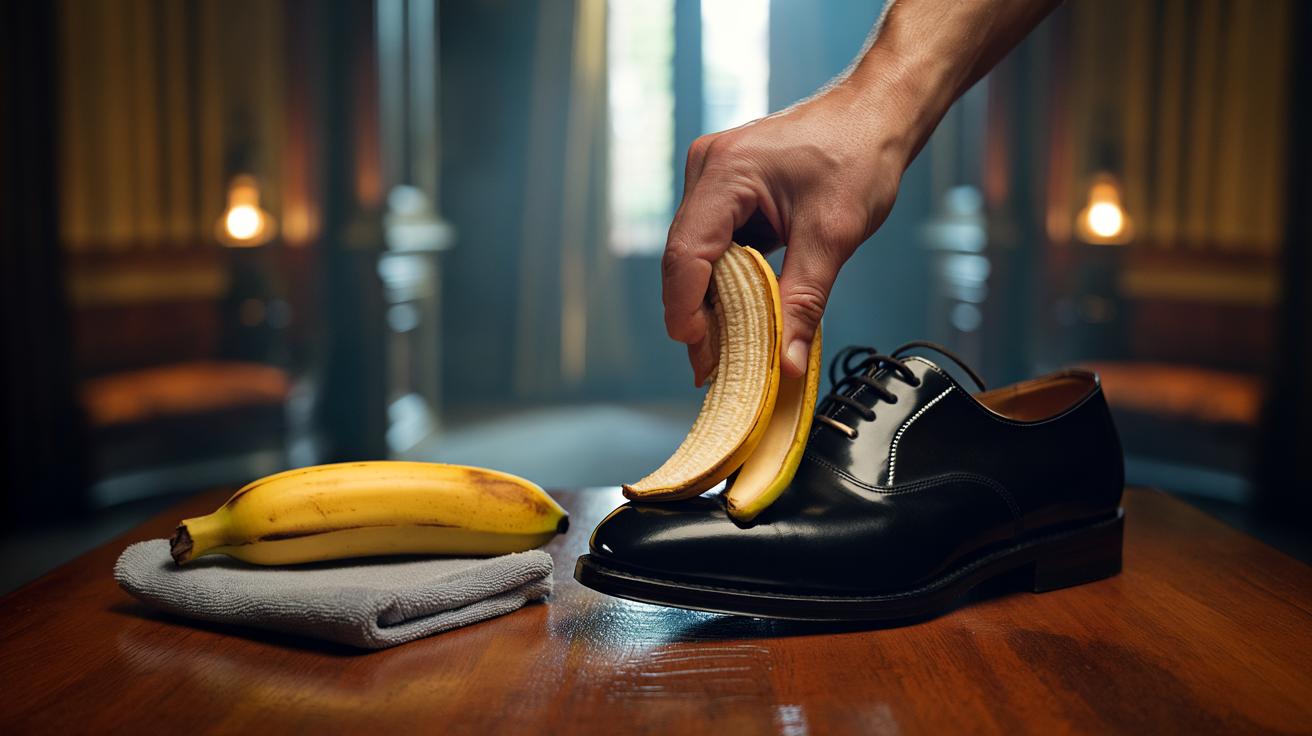
First, dry-dust the shoes. A soft brush or cloth lifts grit that would otherwise scratch the surface. Split the banana and use the inside of the peel, not the fibrous outer skin. Work in small circles, applying light pressure; you’re spreading oils, not soaking the leather. Target toe caps and quarters where scuffs concentrate. You’ll notice a faint haze forming — that’s the preliminary film. Leave it for 30–60 seconds to settle. No longer; you don’t want sugars to dry on the grain.
Now buff. Use a clean cotton rag or microfibre cloth, moving briskly to generate a hint of warmth. The friction helps align the lipid film, transforming haze into gloss. Buff until the shoe feels crisp and dry, which means residue is gone and the finish will resist dust. If needed, repeat once for extra pop. A touch on edge welts can neaten the whole silhouette, but keep it away from raw stitching if you’re wary of darkening threads.
Care notes matter. Test on an inconspicuous area, especially with light-coloured leathers. This is a quick-shine method, not a long-term conditioner or waterproofing treatment. It plays nicely with standard polishes and creams, acting as a stopgap between full care sessions. And yes, dispose of the peel promptly; nobody wants a fruit bowl aroma lingering in the hallway.
When It Works, When It Doesn’t
The peel trick shines on smooth leather: full-grain, top-grain, and corrected-grain shoes all respond well. Patent leather already has a plasticised gloss; the peel adds little and may smear, so skip it. Suede and nubuck are a hard no, as oils crush the nap. Vegan leathers made from polyurethane or plant composites vary — some accept a light wipe and buff, others streak. Always patch-test. As for colours, black and dark brown camouflage any tiny residue best; pale tan needs a lighter touch and an extra buff.
There are limits. Banana peel shine is cosmetic and short-term. It doesn’t feed the fibres like a proper leather conditioner, nor does it offer serious weatherproofing. If you walk through rain, use a wax or cream later to restore protection. Watch for dust attraction: if the finish feels tacky, you haven’t buffed enough. Done correctly, the surface will feel dry, slick, and clean — not sweet or sticky. Concerned about odour? A final pass with a slightly damp cloth, then a dry buff, removes any hint of fruit.
| Surface | Result With Banana Peel | Notes |
|---|---|---|
| Smooth full-grain/top-grain | Instant shine | Buff thoroughly; great for scuffs |
| Corrected-grain | Good gloss | Test first on heavily pigmented finishes |
| Patent leather | Minimal change | Risk of smearing; use patent cleaner |
| Suede/nubuck | Do not use | Oils crush nap; stains likely |
| Vegan leather (PU/plant) | Mixed | Patch-test; may streak |
So the banana peel’s secret isn’t old wives’ lore, but the predictable behaviour of light oils and film-formers on a textured surface. With a minute’s work you can rescue tired boots or coax back the confidence of a pair of Oxfords before a meeting. Used smartly — and buffed properly — it’s a handy, low-waste fix that earns a spot in any shoe-care arsenal. Will you keep a peel to hand for emergency shine, or do you swear by traditional polish and the ritual that comes with it?
Did you like it?4.6/5 (25)