In a nutshell
- 🍌 The inner banana peel’s natural oils, waxes, and polysaccharides condition leather, soften micro-creases, and restore a subtle lustre—a quick refresh, not a full restoration.
- 🧭 Method: brush off dirt, test first on a hidden spot, wipe with the peel in light circular strokes, then buff with microfibre to remove sugars and finish; air-dry for ~10 minutes.
- ⚠️ Caveats: avoid suede and nubuck; patent gains little; pale leathers may darken. If sticky, you used too much—rebuff. Use as a between-polish refresher, not a replacement for cream or balm.
- 🌱 Sustainability: upcycle a food scrap for a low-impact, budget-friendly shine, cutting single-use wipes and reducing reliance on petroleum-based polishes.
- 📊 Care plan: pair banana wipes for weekly touch-ups with periodic cream polish or beeswax balm and cedar shoe trees to maintain suppleness, colour, and durability.
There’s a quietly brilliant trick circulating among cobblers and careful commuters alike: use the inside of a banana peel to wipe down tired leather shoes. It’s quick. It’s cheap. It’s oddly satisfying. The inner skin carries gentle natural oils and waxy compounds that lift scuffs and feed parched grain, leaving a subtle lustre that looks like you’ve spent twenty minutes with polish and a brush. For busy mornings, it’s a small ritual with big impact. No mess, no chemical odour. Just a peel, a cloth, and a little patience. Done right, the method brings leather back to life, without masking its natural character.
Why Banana Peels Work on Leather
Leather is skin. It responds to oils and conditioning in much the same way ours does, by softening and reflecting light when properly nourished. The inner side of a banana peel contains trace lipids, plant waxes, and polysaccharides that act like a mild balm. These components settle into micro-creases, reduce the visual contrast of light scuffs, and encourage a quiet gleam rather than a flashy sheen. Short-term, you’ll notice the surface feels smoother to the touch; long-term, careful use can stave off dryness between deeper conditioning rounds with cream or balm.
There’s also a light astringent action from plant acids that lifts grime without stripping finish. You’re not repainting the shoe; you’re resetting its surface. Think of the banana peel method as a refresh, not a full restoration—it’s a maintenance moment that preserves rather than replaces proper care. The result depends on the leather: full-grain and corrected-grain respond best, while patent finishes gain less from the treatment. Done sparingly, it’s deceptively effective and surprisingly consistent.
Step-By-Step: The Peel-and-Polish Method
First, brush away dust with a soft horsehair brush or microfibre cloth. Dirt is the enemy of shine; rub it in and you’ll create scratches. Always test on an inconspicuous area first. A discreet patch on the heel counter or tongue lets you check for darkening or streaks. Choose a ripe-but-firm banana: too green, and you’ll get little oil; too soft, and you risk residue.
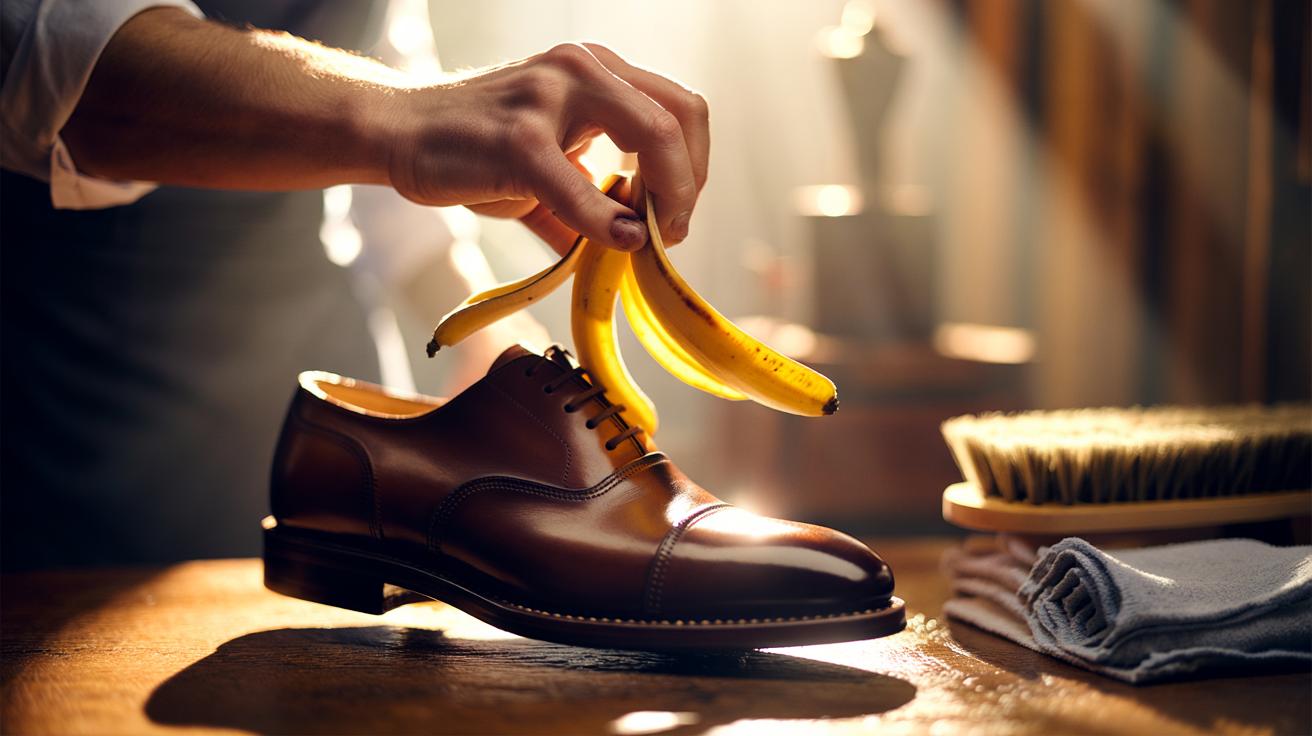
Peel the fruit and work with the inner skin. Using small circles, glide the peel across the leather. Light pressure only—let the natural oils do the heavy lifting. Focus on toe caps and quarters where micro-scuffs gather. After a minute per shoe, swap to a clean, dry microfibre cloth and buff briskly. This removes sugars that can attract dust, while burnishing the surface to a gentle lustre. If you need a touch more glow, repeat a second pass and buff again, keeping layers thin. Finish by airing the shoes for ten minutes so any moisture evaporates. Shoes look fresher. They feel supple. Job done.
Care, Caveats, and Longevity
There are limits. Avoid suede and nubuck entirely—the peel will flatten nap, mark the surface, and prove maddening to reverse. On very pale leathers, test for darkening; the peel’s moisture can slightly deepen tone, which some love and others don’t. Patent leather, already sealed, won’t benefit much and may streak. If you detect stickiness, you used too much or didn’t buff enough. Go back in with a dry cloth until the surface feels clean and dry.
Frequency matters. Use the banana trick as a between-polish refresher, not a weekly crutch. Every month or two, restore with a proper cream polish or leather balm to replenish oils at depth and keep creases from cracking. Store shoes with cedar trees to draw out moisture and maintain shape; it multiplies the effect of any shine routine. Odour concerns? A quick buff eliminates most scent, and a few minutes of air finishes the job. Respect the leather, keep layers whisper-thin, and the results will look natural rather than glossy and contrived.
Sustainability and Cost: A Smart Swap
As household hacks go, this one’s disarmingly eco-friendly. You’re upcycling a food scrap into a low-impact shoe care step, cutting down on single-use wipes and reducing reliance on petroleum-based polishes. It’s not a replacement for a well-made balm—those still win for nourishment and colour depth—but it bridges the gap with zero faff and near-zero cost. For students, commuters, and anyone trying to reduce plastic in the bathroom cabinet, that’s persuasive. In a cost-of-living squeeze, a free, fast route to respectable footwear is hard to argue with.
| Method | Key Active | Finish | Darkening Risk | Ideal Frequency | Cost/Impact |
|---|---|---|---|---|---|
| Banana Peel Wipe | Plant oils, waxes | Subtle lustre | Low–Medium (test first) | Between polishes | Free; low waste |
| Cream Polish | Waxes, conditioners | Rich shine | Low (colour-matched) | Monthly | ££; recyclable tins |
| Beeswax Balm | Natural wax + oils | Protective glow | Medium on pale skins | 6–8 weeks | ££; durable |
The table makes the choice plain: banana peels excel at quick refreshes, commercial products excel at deep conditioning and long-wear resilience. Use both wisely and you’ll keep creases supple, colour even, and water beading off the toe. The trick is balance—let the peel brighten the week, and let a proper polish secure the month.
Used with restraint, banana peel wipes deliver a convincing, camera-ready lustre with almost no learning curve. You’ll still need a proper conditioning cycle to protect welt, vamp, and toe box over the long haul, but this hack tackles the daily scuffs that make good shoes look tired. It keeps leather lively and delays the day you reach for heavy wax. Your commute becomes your shine stand; your fruit bowl becomes your toolkit. Will you give this free, natural method a spin on your next pair—or will you stick to tins and brushes alone?
Did you like it?4.6/5 (21)