In a nutshell
- ⚡ Use a dryer sheet to neutralise static, making pet hair on clothes, sofas and car seats release in seconds.
- 🧭 Quick method: choose unscented or lightly damp sheet, hold fabric taut and sweep in one direction, working seams and edges first, then finish with a lint roller.
- 🛡️ Safety: patch-test delicate fabrics; avoid suede, silk blends, DWR outdoor gear; pick fragrance-free if sensitive; never use on pets.
- 🌿 Eco alternatives: damp rubber glove, microfibre cloth, wool dryer balls, or a light DIY antistatic spritz (water + vinegar) for reusable, low-chem results.
- 🚗 Practical wins: tackle zones (collars, seams, headrests), swap sheets as they load, store a few in your glovebox or hallway for fast, on-the-go clean-ups.
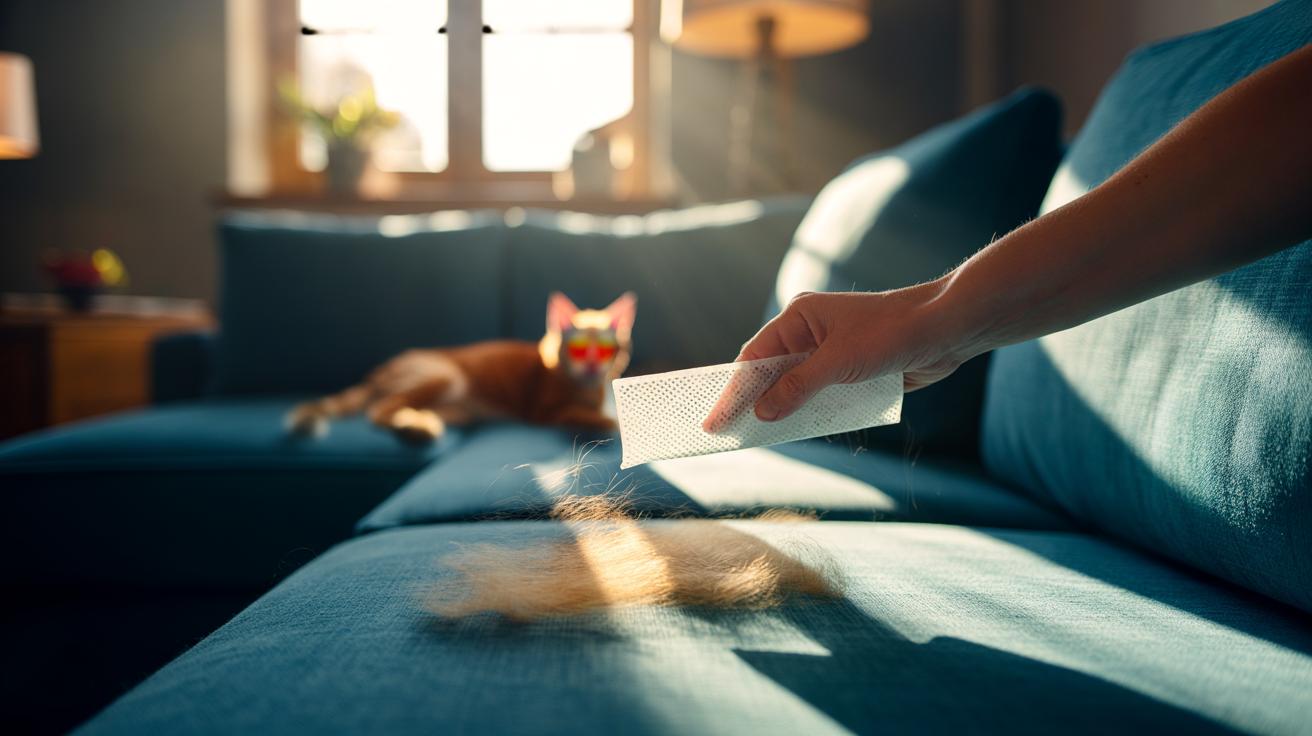
Pet hair clings to sofas, coats, and car seats like it pays rent. You brush. You shake. It returns. There’s a faster fix hiding in your laundry cupboard: the humble dryer sheet. Swipe one across fabric and the static charge collapses; hair leaps off in clumps. It’s quick, cheap, and surprisingly effective. This is a seconds-long rescue for last-minute dashes out the door. From Labradors to long-haired cats, the result is the same—less fluff, fewer sneezes, and clothes that look instantly presentable. Here’s why it works, how to do it properly, when not to, and smart alternatives if you prefer reusable kit.
How a Dryer Sheet Lifts Pet Hair in Seconds
Dryer sheets are coated with cationic softeners that tame static. Rub one lightly over a hairy jumper or cushion and the micro-thin layer it deposits reduces the charge that makes fur cling. The sheet also adds a whisper of friction, gathering hair into tidy rolls you can pluck away. The magic is simple: cancel static, loosen grip, lift the fluff. On woven upholstery, the effect is immediate. On wool coats or fleece blankets, you’ll see hair bunch and detach almost theatrically, as if repelled by a magnet in reverse.
Moisture helps. A barely damp (not wet) dryer sheet improves conductivity and stops fine strands from re-floating. Think light mist, not soak. Press gently, then sweep in one direction to avoid driving fur deeper into fibres. If you can, hold the fabric taut for a cleaner pass. This trick shines on polyester, cotton blends, and most car interiors. Velvet and open-weave linens respond too, though they prefer shorter, lighter strokes. For speed, small circular motions on cuffs, lapels, and headrests work brilliantly.
Why “works in seconds”? Because you’re neutralising the cause of cling, not just moving hair around. The coating bonds at the surface level and breaks the electrostatic loop that keeps pet hair glued to synthetic fabrics. That’s why the same swipe that tidies a sofa can tidy a boot mat. It’s a tidy, targeted intervention: low effort, high return, minimal faff. For everyday mess between deep cleans, it’s hard to beat.
Step-by-Step: The Fast Dryer-Sheet Technique
First, choose your sheet. Unscented is best for allergy-prone households, scented if you like a light fresh note. If tackling a heavy shed on a coat, give the sheet the quickest spritz of water. It should feel cool to the touch, never soggy. Lay the garment flat or hang it. Hold the fabric taut with one hand and glide the sheet with the other, top to bottom. Short sleeves and collars first. Then broader panels. Shake off trapped clumps outdoors or into a bin.
For sofas and cushions, work in zones. Edges and seams collect the worst of it, so start there with small strokes. Move to the centre in overlapping passes, as if you’re mowing a lawn. Flip cushions and repeat. In cars, prioritise headrests, bolsters, and the area where pets sit. Finish with seat belts and boot liners. Swap to a fresh corner of the sheet as it loads with fluff. If the glide feels draggy, a new sheet will speed things up.
Final polish: use a lint roller or a strip of masking tape to nab stray stragglers, then brush fibres back with a clean, dry microfibre cloth. Dispose of the used sheet responsibly and wash hands—softener residues can feel slightly waxy. Store a few sheets in a zip bag by the door, in the glovebox, or in a dog-walking caddy. That way, last-minute fixes take 30 seconds, not five minutes.
Safety, Surfaces, and When to Skip It
Most modern dryer sheets are fabric-safe, but a quick patch test on a hidden corner is sensible, particularly with suede, silk blends, and heirloom textiles. Some sheets leave a faint sheen on ultra-matte fabrics; gentle pressure helps avoid this. Avoid screens, lacquered wood, and piano-black plastics—softener films can smear. If in doubt, test, don’t guess. On open pile velvets, keep strokes light and single-direction to prevent crush marks.
What about health? If you’re sensitive to fragrance, pick fragrance-free sheets. Keep used and unused sheets out of reach of pets; they are not chew toys and can cause digestive issues if swallowed. Don’t use them directly on a pet’s coat. Ever. For allergy households, the quick win is genuine: less hair means fewer dander traps. Ventilate if you’ve used a strongly scented product. And never “refresh” a gas hob cloth with a dryer sheet—residues and heat are a poor mix.
Times to skip: antique textiles, performance outdoor gear with DWR coatings, and new dark denim that crock. For those, use a dry microfibre cloth or a rubber glove instead. Remember, this is a spot-cleaning shortcut, not a substitute for deep cleaning. Regular vacuuming with a pet tool and periodic washing will keep build-up under control and make each dryer-sheet pass faster.
Smart Alternatives and Eco-Minded Choices
Prefer reusable options? A slightly damp rubber glove works wonders on upholstery; drag your hand and watch fur gather in ropes. A microfibre mitt achieves a similar sweep with no chemicals. In the tumble dryer, a damp microfibre cloth or wool dryer balls can dislodge hair from blankets before it reaches your sofa. Try a DIY antistatic spritz—distilled water with a teaspoon of white vinegar—and follow with a microfibre wipe. Light moisture plus gentle friction is the winning formula. For the greenest take, choose compostable or plant-based sheets, or limit single-use to emergencies and rely on washable tools day to day.
| Method | Time | Best For | Pros | Caveats |
|---|---|---|---|---|
| Dryer sheet | Seconds | Coats, car seats, sofas | Ultra-fast, portable | Single-use, fragrance sensitivity |
| Rubber glove | 1–3 mins | Upholstery, rugs | Reusable, no residue | Less effective on fleece |
| Microfibre cloth | 1–4 mins | Clothing, cushions | Washable, gentle | May need antistatic spritz |
| Dryer balls | Cycle time | Blankets, throws | Hands-free, reusable | Needs a tumble dryer |
Whichever route you choose, consistency wins. A quick pass after each wear or drive stops the avalanche before it starts and keeps lint rollers in reserve for travel. Store tools where you’ll use them—by the front door, next to the sofa, in the boot. Make it easy and you’ll actually do it. If you’re on the fence, test the dryer-sheet trick on the hairiest offender in your home and time it; most readers report under a minute from first swipe to clear fabric. Which surface in your space most deserves a 60-second rescue today?
Did you like it?4.5/5 (28)