In a nutshell
- 🍝 Chefs’ secret: a single anchovy melts into oil, vanishing visually while delivering concentrated umami that makes sauces taste deeper—not “fishy.”
- 🔥 Method that works: dissolve 1–2 fillets in olive oil, add garlic and chilli, then emulsify with pasta water; finish off-heat with herbs and restrained Parmesan.
- 🐟 Smart pairings: amplify tomatoes, olives, capers, greens, or even butter-based sauces; add crunch with pangrattato; use tidy anchovy paste for speed.
- 🛒 Choose wisely: oil-packed (ready, balanced), salt-packed (intense, rinse), or colatura di alici (liquid umami); store fillets under oil in the fridge and seek MSC-certified options.
- 💡 Big payoff: instant, restaurant-level depth and gloss from a cupboard staple—small fillet, huge flavour upgrade for any weeknight pasta.
There’s a quiet trick chefs lean on when a bowl of midweek pasta needs the kind of depth you normally get after hours at the stove. It isn’t truffle. It isn’t butter. It’s the humble anchovy—a small preserved fish that melts into oil and vanishes, leaving behind a concentrated savoury charge. Drop one fillet into your pan and the sauce turns from flat to symphonic within a minute. Even anchovy sceptics are converted because the flavour isn’t “fishy”; it’s a rounded, restorative umami that makes tomatoes taste riper, garlic sweeter, and cheese more complex. One ingredient. Fast transformation. Serious results.
Why Anchovies Are the Secret Weapon
Chefs rave about anchovies because they are a compact delivery system for naturally occurring glutamates and nucleotides, the building blocks of umami. When you warm a fillet in olive oil, it dissolves into an invisible seasoning that amplifies everything around it. This is not about making pasta taste like fish. It’s about adding bass notes, the savoury resonance that restaurant sauces achieve with stocks and reductions. For home cooks, that potency is priceless on a Tuesday night.
Think of anchovies as you would salt—only cleverer. A single fillet brings salinity, but also complexity and a whisper of brine that brightens tomatoes, steadies chilli heat, and flatters greens such as cavolo nero. The effect is similar to a splash of soy in a stew or a Parmesan rind in soup: subtle, structural, indispensable. It’s why classic Italian sauces—puttanesca, aglio e olio with breadcrumbs, bagna càuda—depend on them.
Used judiciously, anchovies enhance dairy-based sauces too. Stir one into warm cream before tossing with mushrooms, or fold through brown butter for a nutty, caramel depth. What you taste is fullness, not fish. And that’s the point: a professional-tasting sauce, made in moments, with almost no extra effort.
How to Use Anchovies Like a Pro
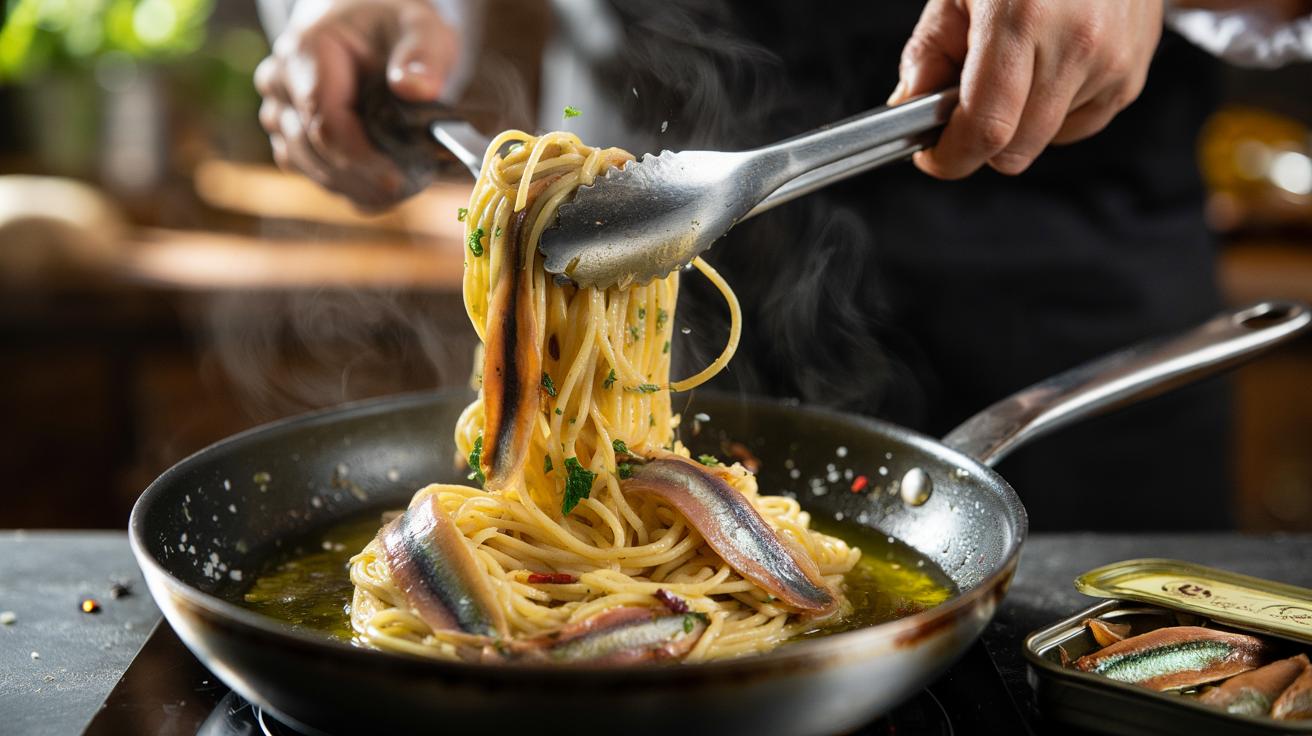
Start your pan with olive oil over low heat. Add 1–2 anchovy fillets per portion for subtlety, 3–4 for a bolder hit. Use a wooden spoon to mash them gently; in 60–90 seconds they’ll disappear into the oil. Now build the flavour base: garlic, a pinch of chilli flakes, perhaps lemon zest. Keep the heat calm—burnt aromatics taste harsh and will overshadow the anchovy’s clean savouriness.
Deglaze with a splash of white wine if you like, then add a ladle of pasta water to create an emulsion. The starch locks the anchovy-infused oil into a glossy sauce that clings to spaghetti or orecchiette. This is the moment your pasta goes from slick to silken. Toss vigorously, off the heat, with parsley and a restrained grating of Parmesan to avoid over-salting. Taste, then season; you’ll likely need less salt than usual.
Want crunch and perfume? Make pangrattato: fry breadcrumbs in the same anchovy oil until golden, then scatter over the finished dish. For speed, anchovy paste is a tidy shortcut—squeeze in half a teaspoon at a time. Anchovies also thrive with tomatoes (fresh or tinned), olives, capers, roasted peppers, or earthy greens. They even love butter: stir a fillet into foaming butter for a silky coating sauce. Small move, big pay-off.
Choosing and Storing Anchovies: Types, Quality, and Cost
Not all anchovies are equal. Oil-packed fillets are convenient and ready to melt. Salt-packed fillets are punchier, often superior for purists, but need a quick rinse and pat dry. There’s also colatura di alici, an amber anchovy essence from Campania that works like fish sauce—just a few drops to finish a pan. Quality matters, yet even top-tier jars are economical because you use so little each time. Buy small, store smart, and they’ll transform many meals.
| Type | Flavour | Best For | Saltiness | Guide Price (UK) |
|---|---|---|---|---|
| Oil-packed fillets | Balanced, ready to use | Weeknight sauces, pangrattato | Medium | £2–£5 per tin/jar |
| Salt-packed fillets | Intense, clean | Premium sauces, pizzas | High (rinse before use) | £6–£10 per jar |
| Colatura di alici | Liquid umami | Finishing drizzle, dressings | High (use drops) | £10–£20 per bottle |
After opening a tin, transfer leftover fillets to a clean glass jar, cover completely with oil, and refrigerate for up to three weeks. Anchor a layer of oil on top each time to prevent oxidation. Freeze teaspoons of anchovy paste on a tray, then bag for instant portions. Look for responsibly sourced fish—Cantabrian anchovies and MSC-certified options are widely available in UK shops. They aren’t a luxury so much as an insurance policy: a guaranteed route to depth when dinner needs it quickly.
Anchovies are the quiet engine of great pasta, delivering restaurant-level flavour with minimal fuss and almost no visual footprint. Melt a fillet, build your base, add pasta water, and watch the sauce take on sheen and structure. One ingredient, instant elevation. If you’ve written off anchovies as too salty or too fish-forward, start with a single fillet and taste the difference before you judge. Your cupboard can hold a month of better dinners for the price of a coffee. Which pasta will you transform first—and what will you pair with your anchovy-powered sauce?
Did you like it?4.7/5 (20)