In a nutshell
- 🧼 Cornstarch’s ultra‑fine particles rapidly adsorb oil, wicking grease out of upholstery in about 10 minutes, preventing set-in stains.
- ⏱️ Speed matters: blot (don’t rub), mound with cornstarch, lightly press, dwell 10–15 min, then brush/vacuum; repeat for older stains.
- 🛋️ Works on microfiber, cotton/linen, velvet (brush then vacuum); use caution on leather and follow with conditioner.
- 🧰 After lift: minimal-moisture tidy—mild dish soap solution or 50:50 isopropyl alcohol for sheen; dry upright with airflow to avoid rings.
- ⚠️ If needed, escalate: baking soda, talc (careful with dust), or dry‑cleaning solvent; always check care labels (W/S/WS/X) and patch-test.
Grease and sofas are mortal enemies. One stray drizzle of olive oil or a pizza slice abandoned on the cushion can leave a stubborn halo that laughs at soap and water. Yet there’s an unexpected first responder sitting in your baking cupboard: cornstarch. Its ultra-fine particles behave like a dry sponge, drawing oil up and away from fibers before it hardens into a permanent shadow. Speed is everything: the earlier you act, the cleaner the outcome. In trials on cotton, polyester blends, and microfiber, cornstarch lifted fresh spills in roughly ten minutes, and older marks with a couple of passes. It’s cheap. It’s gentle. And it works without flooding your sofa with water.
Why Cornstarch Eats Oil Before It Sets
Think of cornstarch as millions of tiny scoops. Each grain offers massive surface area for adsorption, the process where molecules cling to a surface rather than soaking into it. On contact, the ultra-fine powder nestles into the weave, meeting oil across countless microscopic edges. That huge interface creates a pressure gradient that encourages capillary wicking—oil migrates from fabric to powder because the powder presents more free “parking spaces” for it than the compressed fibers do.
The granules also clump as they capture oil, forming visibly darker patches you can brush or vacuum away. That clumping is your progress bar. It’s physical, not chemical: you are not dissolving grease; you are relocating it. No water, no spread, no rings. This matters because liquids push oil sideways, forcing it deeper along fibers and into cushion underlayers, where oxygen and time oxidize it into a stubborn residue.
Because cornstarch is inert and scentless, it’s safe for most upholstery, including microfiber and cotton-linen blends. On velvet or napped fabrics, it sits on the tips, still effective. Leather is different; use cautiously. And remember: fresh stains lift dramatically faster than 24-hour-old ones, which may need two rounds.
A Ten-Minute Method That Actually Works
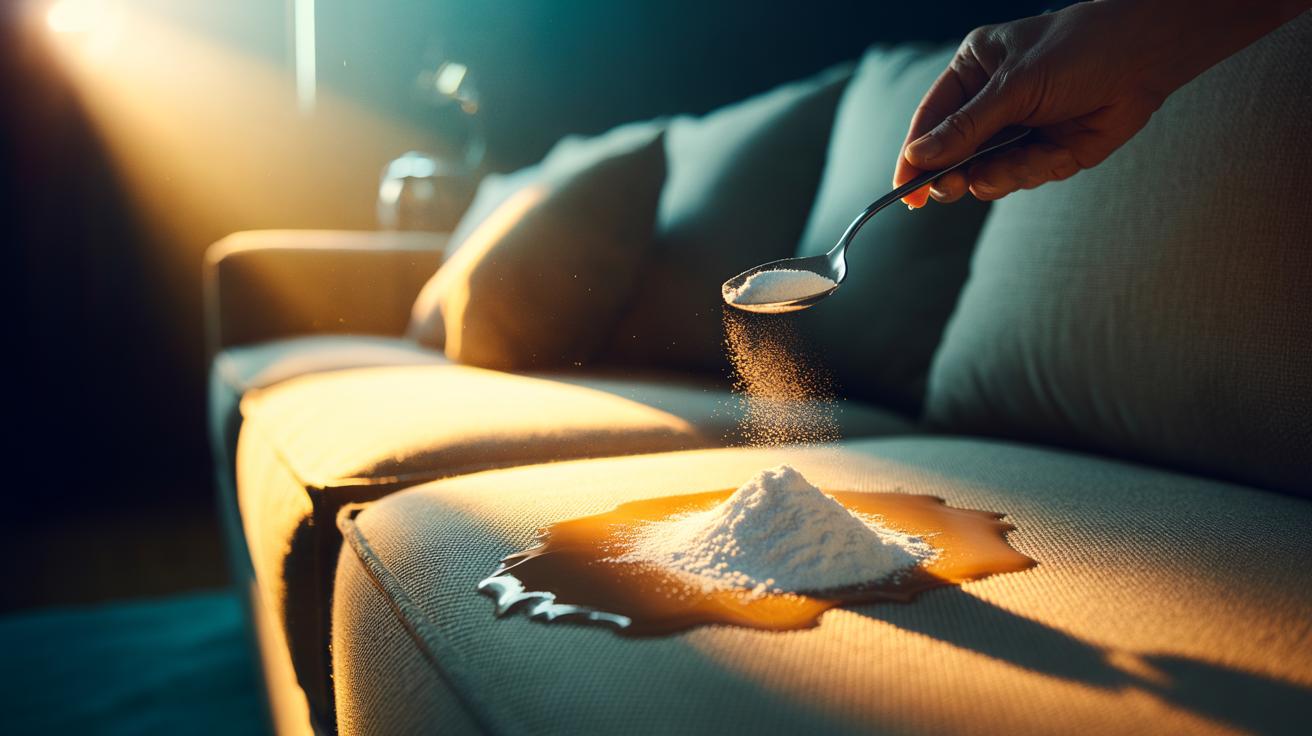
Blot first. Use a dry, white cloth to lift wet oil without rubbing. Press. Lift. Rotate. Stop as soon as the cloth shows minimal transfer. Now cover the mark with a generous mound of cornstarch—about 1–2 tablespoons for a palm-sized stain. Feather the edges by another 2–3 cm to catch any invisible halo. Lightly press with the back of a spoon to seat powder into the weave, but don’t grind.
Wait 10 minutes. Watch for darkening patches; that’s oil moving up. On heavier spills, give it 15. Hands off during dwell time—the powder needs stillness to wick effectively. Then remove: on flat-weave fabrics, vacuum with an upholstery tool using short, overlapping passes. On velvet or chenille, use a soft brush first to lift clumps, then vacuum to finish. If residue remains, repeat the powder once more rather than rushing to liquids.
Two fast tips save disasters. First, isolate cushions from the spill side; don’t let oil sink into the foam core. Second, keep the room airflow gentle; drafts can scatter powder. The reward for patience is visible: the cornstarch lifts as a slightly greasy dust that leaves the fabric lighter and cleaner, often in a single round.
What to Do After the Powder Lift
Sometimes a faint ring lingers, especially on tightly woven cottons or textured polyesters. Address it with minimal moisture. Mix a drop of mild dishwashing liquid (non-bio, dye-free) in 100 ml lukewarm water; dab on with a barely damp cloth, working from the outside inward. Blot dry with a fresh towel. For body-oil sheen on armrests, a 50:50 solution of isopropyl alcohol and water on a microfiber cloth flashes off quickly and tightens the fabric’s appearance.
Keep water light; heavy wetting drives oil deeper. Stand cushions upright to dry and run a fan across, not at, the surface. For velvet, steam lightly from a distance and brush the nap in one direction. If odor remains after food spills, repeat a quick cornstarch pass; it often lifts residual fatty compounds that carry smell.
| Fabric | Powder Dwell Time | Notes |
|---|---|---|
| Microfiber/Polyester | 10–15 minutes | Vacuum thoroughly; alcohol spot-clean if needed. |
| Cotton/Linen | 10–20 minutes | Repeat powder for older stains; minimal water after. |
| Velvet/Chenille | 10–15 minutes | Brush first, then vacuum; steam to reset nap. |
| Leather/Faux Leather | 5–10 minutes | Wipe off gently; follow with leather cleaner/conditioner. |
When Cornstarch Isn’t Enough: Alternatives and Cautions
Old, oxidised grease, dye-laden sauces, or motor oils may outlast one pass. Try a second cornstarch round, then escalate. Baking soda performs similarly but is slightly coarser; it’s good on textured weaves. Talc is very fine and highly effective but use with care to avoid inhalation. For stubborn residues, a small amount of dry-cleaning solvent (look for petroleum distillate-based spotters) applied to a cloth—not the sofa—can break bonds without spreading water.
Check the care label: W, S, WS, or X. “W” tolerates water-based cleaning; “S” prefers solvents; “X” means vacuum only. Always patch-test in an unseen area before any liquid step. Avoid enzyme cleaners on wool or silk. Keep powders away from open flames and reduce airborne dust; cornstarch is a fine organic powder, so tidy application matters. On dark fabrics, vacuum meticulously to prevent pale haze. Leather needs a different path: blot, cornstarch for minutes, wipe, then balance with a dedicated leather cleaner and conditioner to prevent dryness.
Cornstarch turns a panic moment into a plan. A quick blot, a snowy mound, ten patient minutes, and the scary shadow fades. The method costs pennies, protects delicate fabrics from watermarks, and buys time before any deeper clean. The golden rule is simple: act fast, keep it dry, and lift—don’t rub. With a bag of cornstarch at hand, pizza night no longer threatens your sofa. What’s your most notorious grease spill, and which fabric are you brave enough to rescue with the powder-first approach?
Did you like it?4.6/5 (20)