In a nutshell
- 🫙 Transform glass jars into sculptural storage with frosted spray, paint-dipped bases, and hardware-style knobs; group by height and finish to avoid clutter.
- 🗺️ Curate paper ephemera—maps, scores, magazine covers—into refined gallery walls using float mounts, simple frames, and colour-led themes for affordable art.
- 🧵 Reimagine textiles: turn tea towels into cushions, scarves into tapestries, and fabric offcuts into plant pot sleeves; keep a consistent colour story for cohesion.
- 🔧 Use hardware-store materials like copper pipes and timber offcuts to build shelves, rails, bookends, and candle platforms with clean proportions and honest finishes.
- 🌱 Embrace a sustainable, budget-friendly design mindset: edit, unify colour and texture, respect proportion, and let patina and authenticity add character.
Look closely at your home and you’ll find a treasure trove hiding in plain sight. The jam jar, the stray tile, the retired scarf—each is a material waiting for reinvention. With a little curiosity, you can turn everyday objects into distinctive pieces that feel bespoke and intentional, not improvised. It’s thrifty. It’s sustainable. It’s also a creative antidote to cookie-cutter interiors. What you already own can become tomorrow’s conversation starter. Below, smart ideas pair craft-level finishes with attainable techniques, ensuring projects look polished rather than makeshift. Choose one, or mix several, and watch your space gain personality, texture, and a story worth telling.
From Glass Jars to Sculptural Storage
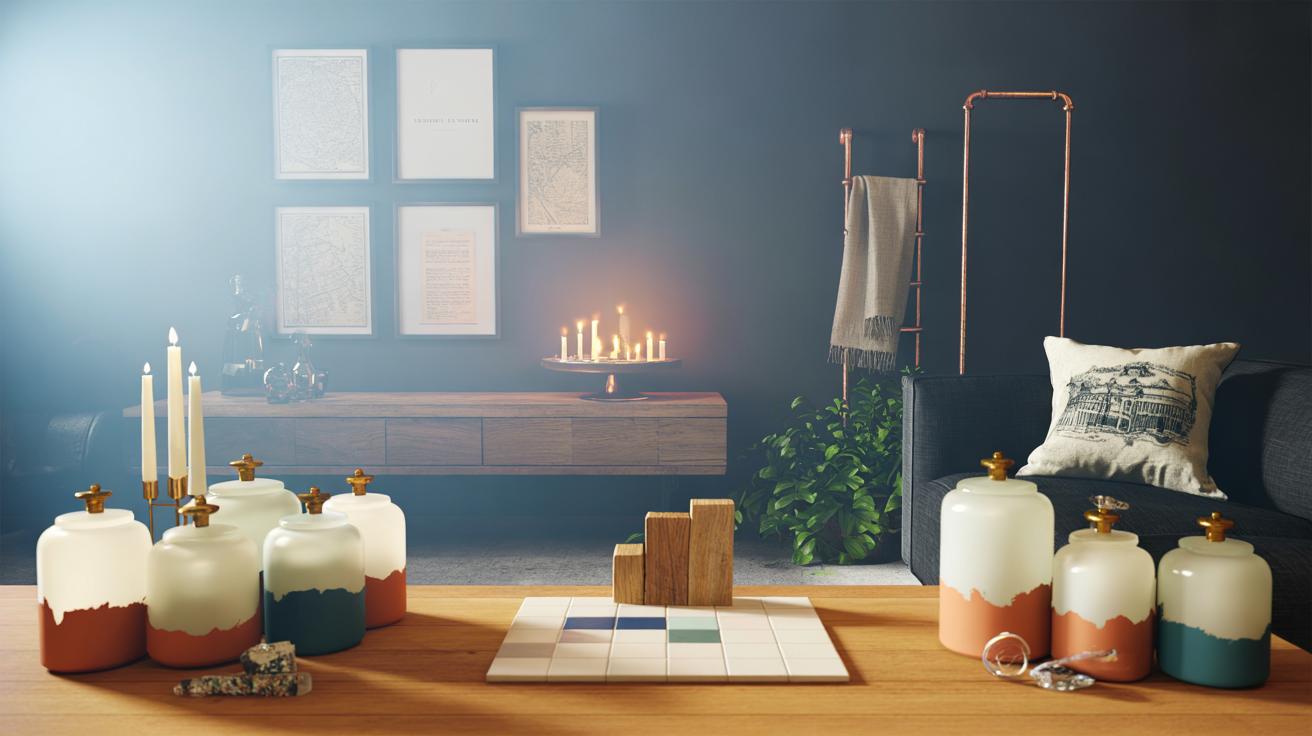
That cluster of empty pasta and jam jars? They’re a ready-made family of cylinders. Varying heights look deliberate when unified by finish. Start by soaking off labels, then mist the exteriors with frosted glass spray or dip bases in leftover matt paint for a minimalist colour block. Add a knurled cabinet knob to a cork lid for a satisfyingly tactile handle, turning humble vessels into centrepiece storage for cotton pads, matches, or dried herbs. Keep the palette consistent and the textures varied. A mix of matte, satin, and clear glass adds quiet drama on a bathroom shelf or kitchen ledge.
Think function, too. Fill one jar with white sand to anchor taper candles for a supper table that feels coastal, not kitsch. Wrap another with twine and a subtle leather strap to fashion a wall-hung bud vase—two picture hooks and you’re done. For a sculptural twist, bind three jars with a brass ring or surplus hose clamp, creating a clustered utensil holder that behaves like a single object. It’s practical. It’s graphic. And it moves as your needs change. Groupings read as design, singles as clutter; let that rule guide your display.
| Jar Type | Finish | Accessory Use | Approx. Time |
|---|---|---|---|
| Small jam jar | Frosted spray | Bathroom cotton pad pot | 20 minutes |
| Tall pasta jar | Paint-dipped base | Kitchen utensil holder | 30 minutes |
| Medium pickle jar | Twine wrap + leather strap | Wall bud vase | 25 minutes |
Books, Maps, and Magazines as Wall Art
Paper ephemera has soul. That near-forgotten Ordnance Survey map, a vintage music score, or sun-faded magazine cover can outshine pricey prints when framed with intent. Choose simple oak or black frames, then float-mount pieces on off-white card to give them breathing room. Negative space is the luxury you can afford. Curate by colour family—sea blues, brick reds—or theme, such as transport graphics or botanical plates. A tight edit makes walls feel composed rather than chaotic. And because paper is light, re-hangs are painless when you fancy a seasonal change.
Try a linear gallery above a sofa, all frames aligned at the top for a crisp horizon. Or lean a stack of framed magazine spines on a mantel for a relaxed, atelier mood. For a modern twist, bind three battered paperbacks with a leather strap and stand them as a sculptural book block—an instant pedestal for a small fern or ceramic bowl. If pages are delicate, scan and print copies to preserve the originals. Command strips keep walls pristine in rentals. Let patina show; authenticity is the point. Slight creases telegraph history, not neglect, and add warmth to clean-lined rooms.
Textiles Reimagined: From Tea Towels to Cushions
Textiles are the quickest route to softness, and most homes already host an untapped stash. A graphic tea towel becomes a cushion cover with two seams and an envelope fold—no zips, no fuss. Choose natural fibres like linen or cotton for a high-end hand. Keep patterns bold on the sofa, and quieter in a bedroom where textures do the talking. Old scarves transform into wall tapestries when clipped to a simple dowel and hung wide; their drape softens hard edges and absorbs sound. When fabric looks deliberate, it elevates everything around it.
Beyond soft furnishings, think utilitarian chic. Cut a retired denim shirt into pocketed utensil rolls for a freestanding kitchen cart, or edge frayed throws with bias tape for a neat, tailored finish. A leftover curtain panel can become a breezy table runner with hand-frayed ends—pull threads for a controlled fringe. For a tiny budget but big impact, wrap plant pots with fabric offcuts and secure with starch or Mod Podge, creating removable sleeves that refresh with the seasons. Consistency of colour story keeps the look cohesive, even when patterns vary. Small repeats create rhythm; large prints deliver punch.
Hardware Store Heroes: Copper Pipes and Timber Offcuts
Industrial components are catnip for design lovers. Copper pipe, sold by the metre, forms elegant frames for shelves, magazine racks, and towel ladders. Pair with timber offcuts for warmth, or painted MDF for a contemporary note. Cut pipe with a basic tube cutter, dry-fit elbows and tees, then glue for rigidity. A wall-mounted rail near the door hosts keys, masks, a dog lead—everyday clutter elevated to a tidy vignette. Leave copper to mellow into a rich patina, or seal it to freeze the shine, depending on the mood of your scheme.
Got spare tiles? Line a shallow tray with four mismatched ceramics for a coffee-station trivet that feels boutique-hotel. Or glue two identical offcuts together, edge with sandpaper, and you’ve made a minimal bookend with surprising heft. Build a simple candle platform from a sanded plank and four short copper risers; the shadow line makes it appear to float. These are quick projects but they earn their keep. Good proportions are key—aim for slender uprights and generous negative space. When materials are honest, restraint does the styling for you.
Homes feel richer when we shape what we already own into pieces with purpose, story, and style. The trick is editing, then finishing: unify colour, respect proportion, choose one tactile detail that says “crafted, not crafty.” It’s also kinder to your wallet and the planet. Start small, learn the materials, then scale up to bolder statements as confidence grows. Design is a habit, not a single project. Which everyday object in your home is quietly asking for a second life, and how might you transform it into a stylish accessory that speaks in your voice?
Did you like it?4.6/5 (25)