In a nutshell
- 🍋 A cut lemon’s citric acid dissolves limescale, chelates calcium/magnesium, and its peel’s limonene lifts grease while neutralising odours for a fast, natural shine.
- ⏱️ Two-minute method: quick rinse, optional fine salt on the cut face, rub all sink areas, 60–120 seconds dwell, hot rinse, and microfibre buff; finish taps with the peel-side for fingerprint resistance.
- ⚠️ Safety and surfaces: great on stainless steel, chrome, and ceramic; test composites; avoid marble/limestone and raw iron; never mix with bleach; rinse chemicals first and consider gloves for sensitive skin.
- 🔁 Alternatives: a 5–7% citric acid spray mimics lemon strength; vinegar works but smells stronger—yet the cut lemon wins on convenience, built-in applicator, and biodegradable “packaging.”
- 💷 Practical perks: fast, frugal, and plastic-free; delivers odour-neutral freshness and visible brightness with minimal effort—ideal for quick, repeatable everyday cleaning.
There’s a scene repeated in kitchens across Britain: a once-proud stainless sink gone dull with limescale, tea tannins, and greasy fingerprints. Then a cut lemon arrives, briskly rubbed across the bowl, and brightness returns in minutes. It sounds like a hack. It’s chemistry. Citric acid, the natural cleaning agent in lemons, dissolves mineral deposits, loosens soap scum, and refreshes odours with an easy, zesty swipe. The method is fast, frugal, and plastic-free. No spray bottle needed. No harsh fumes. For everyday build-up, two minutes of contact is enough to shift the lot and leave steel gleaming. And the fragrance? Clean without the chemical fog.
What Makes Lemon a Sink Supercleaner
The magic is in the molecule. Citric acid lowers the surface pH to around 2, an acidic environment that attacks stubborn carbonate-based deposits. Think chalky rings and kettle-like film around the plughole. Citric acid also acts as a gentle chelating agent, binding with calcium and magnesium ions so they rinse away instead of re-sticking. That’s why dull haze vanishes with so little scrubbing. It isn’t just polishing; it’s dissolving the problem.
There’s a bonus on grease. The peel contains limonene, a natural solvent that helps lift fatty residues from washing-up and cooking. The lemon’s pulp adds a soft, non-scratch texture, distributing acid evenly while the juice creeps into seams and around the drain basket. On stainless steel and chrome, that means a quick route to clarity. On the nose, acids neutralise lingering sink odours. One fruit, many jobs. This is why two minutes feels almost unfairly effective.
Compare it with acetic acid in vinegar: similar descaling power, but stronger smell and slower degreasing. Powdered citric acid works too, yet the cut lemon excels in convenience—metered dose, built-in applicator, and biodegradable packaging that composts itself. Minimal kit. Maximum shine.
Two-Minute Method: From Slice to Shine
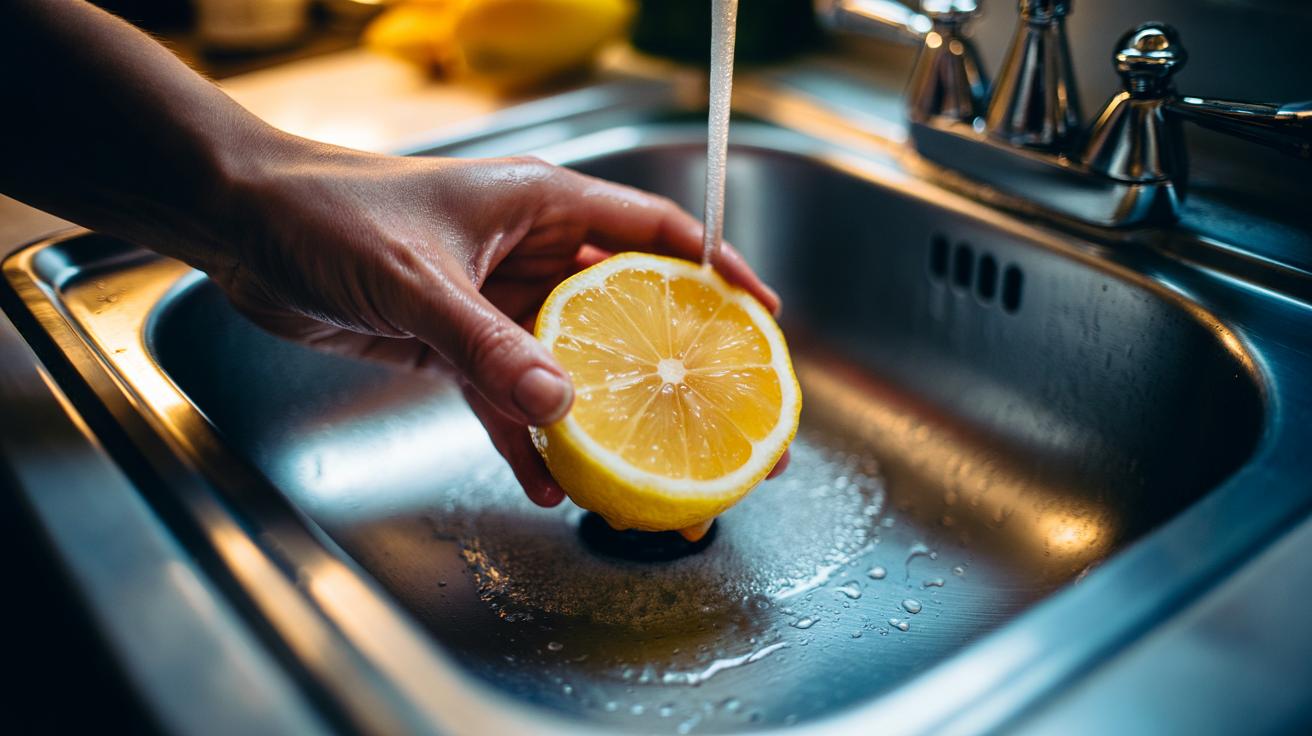
Start with a quick rinse to knock loose crumbs and soap strands. Halve a fresh lemon. If stains are stubborn, sprinkle a pinch of fine salt directly on the cut face; it boosts bite without scratching. Now rub the lemon over the sink—bowl, corners, tap base, overflow slots—squeezing lightly as you go. You’ll see a light foam where acid meets alkaline scale. Let the juice sit for 60–120 seconds to work on mineral build-up and tea shadows.
After the brief wait, give a swift second pass with the same lemon half, focusing on the drainer grooves and around the waste. Rinse with hot water. Buff dry with a microfibre cloth for a showroom glint. For extra sparkle on the tap, a final swipe with the peel-side (oily and slightly waxy) helps repel fresh fingerprints. Time spent: about two minutes of contact, one minute of finish. Done.
Safety is simple. Never mix lemon with bleach or chlorine-based cleaners. Rinse away any chemicals first. Avoid prolonged contact on natural stone (marble, limestone), cast iron, and unsealed wood; acids can etch or dull. On stainless steel, limit dwell time on scratches and rinse well. Sensitive skin? Wear gloves. If you’ve got a fancy black composite sink, test a discreet corner. Most will be fine; caution earns peace of mind.
Surfaces, Safety, and Science at a Glance
Not every surface wants citrus. The rule of thumb is easy: if acid etches the stone on your patio, it can etch the stone at your sink. Stainless and chrome love citric. Soft metals sulk. When in doubt, spot test and keep the contact short. The table below summarises the essentials for a fast, confident clean without collateral damage.
| Topic | Guidance |
|---|---|
| Best Surfaces | Stainless steel, chrome, ceramic sinks, glass, silicone seals (short contact) |
| Use With Care | Enamel, anodised aluminium, black composite granite (test first, brief contact) |
| Avoid | Marble, limestone, travertine, unsealed concrete, raw iron |
| Contact Time | 60–120 seconds for daily grime; up to 5 minutes on heavy scale (monitor) |
| Do Not Mix | Bleach or chlorine products—rinse first, then use lemon |
| Finish | Hot rinse, microfibre buff to prevent water spots |
If you prefer a bottle, a 5–7% citric acid solution mimics lemon strength. Spray, wait two minutes, wipe. Still, the cut fruit stays unbeatable for speed and aroma. It’s naturally portioned, leaves odour-neutral freshness, and handles both limescale and grease in one move. That fusion of descaling and degreasing is the quiet secret behind the “instant shine” effect people swear by after a single pass.
In a cost-of-living squeeze, the humble lemon is a thrifty workhorse. It rescues dull sinks, trims plastic under the sink, and keeps cleaning routines short enough to actually happen. No mystery, just reliable chemistry meeting everyday mess. Two minutes, one fruit, bright results. The question now is yours: will you stick with sprays, or try a zesty experiment at the tap and see how much brilliance a single citrus slice can unlock in your kitchen?
Did you like it?4.4/5 (21)