In a nutshell
- 🔬 The science: eggshell is mainly calcium carbonate (Mohs ~3), a friable micro-abrasive that lifts carbonised residue without scratching stainless or enamel; don’t mix with vinegar, which dissolves the abrasive.
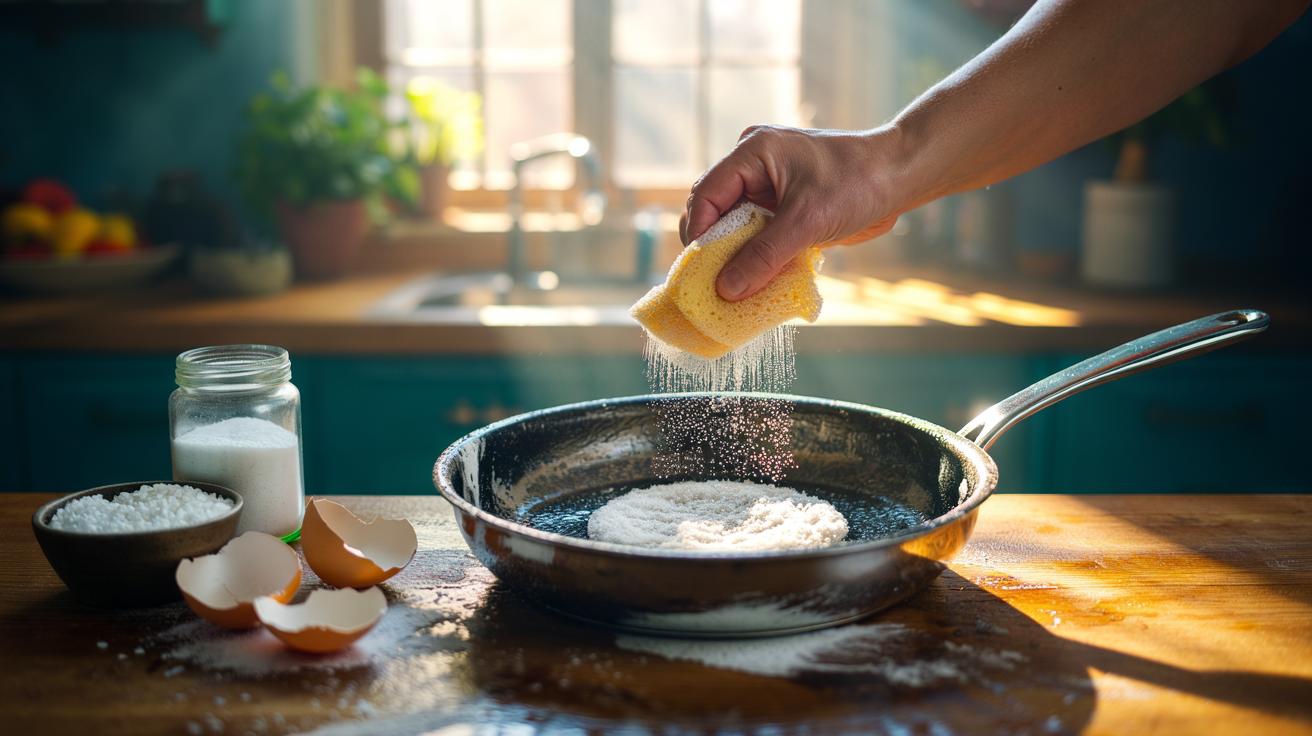
- 🧽 How-to: Rinse shells, remove membranes, sterilise (bake 120°C for 10–15 min or microwave to dry), crush to powder, and store dry; wet the pan, add a drop of washing-up liquid, sprinkle powder, scrub lightly in circles, then rinse—use a paste and short dwell for tougher scorches.
- ✅ Best uses: Stainless steel, enamel, ceramic dishes, glass lids, and oven trays; it’s effective on undersides and stains—always test first and keep a water–soap buffer to protect glossy finishes.
- ⚠️ Avoid/caution: Nonstick coatings (any abrasive shortens life); go gently on soft aluminium; on cast iron, limit to spot work to preserve seasoning.
- 🌍 Benefits: Non-toxic, cheap, and eco-friendly; repurposes waste, reduces plastic pads and harsh chemicals, and delivers fast, controllable cleaning that shifts from coarse to fine as you scrub.
Every home cook has stared down a pan welded with last night’s dinner. You reach for steel wool, then wince at the risk. Here’s the surprising fix hiding in your bin: the humble eggshell. Ground into a fine powder, its calcium carbonate acts as a gentle, controllable micro-abrasive that lifts carbonised residue without shaving your cookware. It’s cheap. It’s non-toxic. It works fast. Use it right and you can scrub stubborn, caked-on mess in minutes without leaving tell-tale scratches. From stainless steel saucepans to enamel roasting trays, this simple, smart trick turns breakfast leftovers into a cleaning ally—one that’s kinder to your pans and to the planet.
Why Eggshell Works: The Science of Gentle Abrasion
The magic sits in the shell’s mineral core: calcium carbonate in the calcite form. On the Mohs hardness scale, calcite sits at roughly 3, softer than stainless steel and enamel, yet hard enough to disrupt brittle, burnt-on films. Unlike jagged, fixed abrasives, crushed eggshell fractures as you scrub, creating ever-finer particles that glide rather than gouge. This friability turns the shell into a micro-abrasive that exfoliates grime while sparing sound metal beneath. Add a little water and a drop of washing-up liquid and you’ve built a slurry that cushions the particles, reduces friction spikes and keeps the action controlled.
There’s chemistry at play, too. Calcium carbonate is alkaline and non-reactive with most cooking residues, so you avoid the etching that strong acids or caustic cleaners can cause. For maximum scrubbing power, don’t mix eggshell with vinegar—acids fizz with carbonates, dissolving your abrasive just when you need it. Think of it as an eco-friendly equivalent to commercial scouring powders, but one that breaks down as it works, easing from coarse to delicate in a single session. The result feels paradoxical: thorough cleaning without the tell-tale haze of over-scrubbing.
Step-by-Step: From Breakfast Shell to Pan-Safe Scrub
Start clean. Rinse shells to remove membranes, then sterilise them: bake at 120°C for 10–15 minutes or microwave in short bursts until dry. This kills microbes and banishes any eggy odour. Cool completely. Crush by hand with a rolling pin inside a tea towel for a coarse grit, or blitz briefly in a blender for a fine powder. Store in a dry jar and you’ve got a free, replenishable cleanser on tap. Dry shells are crucial—moisture clumps the powder and dulls its effectiveness.
To use, wet the pan lightly and add a drop of washing-up liquid. Sprinkle a teaspoon of shell powder, then work with the soft side of a sponge in small circles. Short, steady passes. No pressing like a maniac. In 60–120 seconds you’ll feel the drag ease as residue lifts. Rinse, check the sheen, repeat if needed with a fresh pinch. For a nightmare scorcher—burnt sugar, caramel or starch—make a paste with a few drops of water and let it sit for two minutes before scrubbing. Always test on an inconspicuous area first, especially on unknown finishes. Finish with a hot rinse and a towel dry to prevent water spots.
What to Clean—and What Not To
Crushed eggshell excels on stainless steel pots, enameled roasters, ceramic baking dishes and tempered glass lids. It’s brilliant on the underside of pans, where scorches show but you’re less worried about a mirror finish. It can revive oven trays and lift tea tannins from mugs. Steer clear of delicate nonstick coatings—any abrasive can shorten their life. On bare aluminium, proceed cautiously: aluminium is softer than calcite, so polishing marks are possible. Cast iron is robust; the shell won’t harm the iron itself, but it can thin the seasoning. Use it for spot work or on the exterior only.
| Abrasive | Approx. Hardness (Mohs) | Best For | Avoid On |
|---|---|---|---|
| Eggshell (CaCO₃) | ~3 | Stainless steel, enamel, ceramic, glass | Nonstick, soft aluminium finishes, fresh seasoning |
| Baking soda | ~2.5 | General light scouring, odour control | Severe carbon build-up |
| Steel wool | ~4–5 (effective cut) | Heavy rust and carbon on bare metal | Enamel, nonstick, polished stainless |
| Salt | ~2–2.5 | Cast iron maintenance with oil | Glass, soft plastics |
One last safeguard: avoid dry scrubbing on glossy surfaces; the water-and-soap buffer matters. If you’re cleaning copper or brass, expect a slight matte finish that polishes back with a proper metal polish. When in doubt, use less pressure, more time and a finer grind. The point is control—exactly what repurposed eggshell gives you over harsher pads and gritty powders.
There’s satisfaction in turning kitchen waste into a tool that genuinely performs. Eggshell powder cleans with finesse, spares your cookware, and trims the shopping list—no mystery sprays, fewer plastic scouring pads, less fuss. The chemistry is simple, the method repeatable, and the results visible after a single rinse. If a job needs bite, you can scale the grit; if it needs care, you let the powder break down and float the residue away. Ready to try it on tonight’s pan and save tomorrow’s breakfast from a scratched skillet—what will you tackle first, and on which surface will you test your new micro-abrasive trick?
Did you like it?4.5/5 (20)