In a nutshell
- 🧺 Why it works: Dryer sheets deposit cationic surfactants (QACs) that reduce static and surface moisture, while fragrance microcapsules and odour-binding cyclodextrins neutralise smells continuously.
- 🚪 Slow release in wardrobes: Closed spaces enable steady diffusion; friction, small humidity spikes, and brief airflow when doors open trigger controlled fragrance and odour capture all week.
- 📍 Placement tips: Placement matters—clip a sheet to a hanger or breathable pouch near the rail; air damp coats first; consider two sheets for synthetics-heavy rails.
- ⚠️ Risks and fabrics: Avoid residue on silk, satin, and technical sportswear; choose fragrance-free or plant-derived options if scent-sensitive; keep out of reach of pets and allergy-prone skin.
- 🌱 Greener tweaks: Rotate with bicarbonate of soda, cedar, and activated charcoal; reset stubborn odours using an enzyme-rich detergent, vinegar soaks, and fresh air before maintenance with sheets.
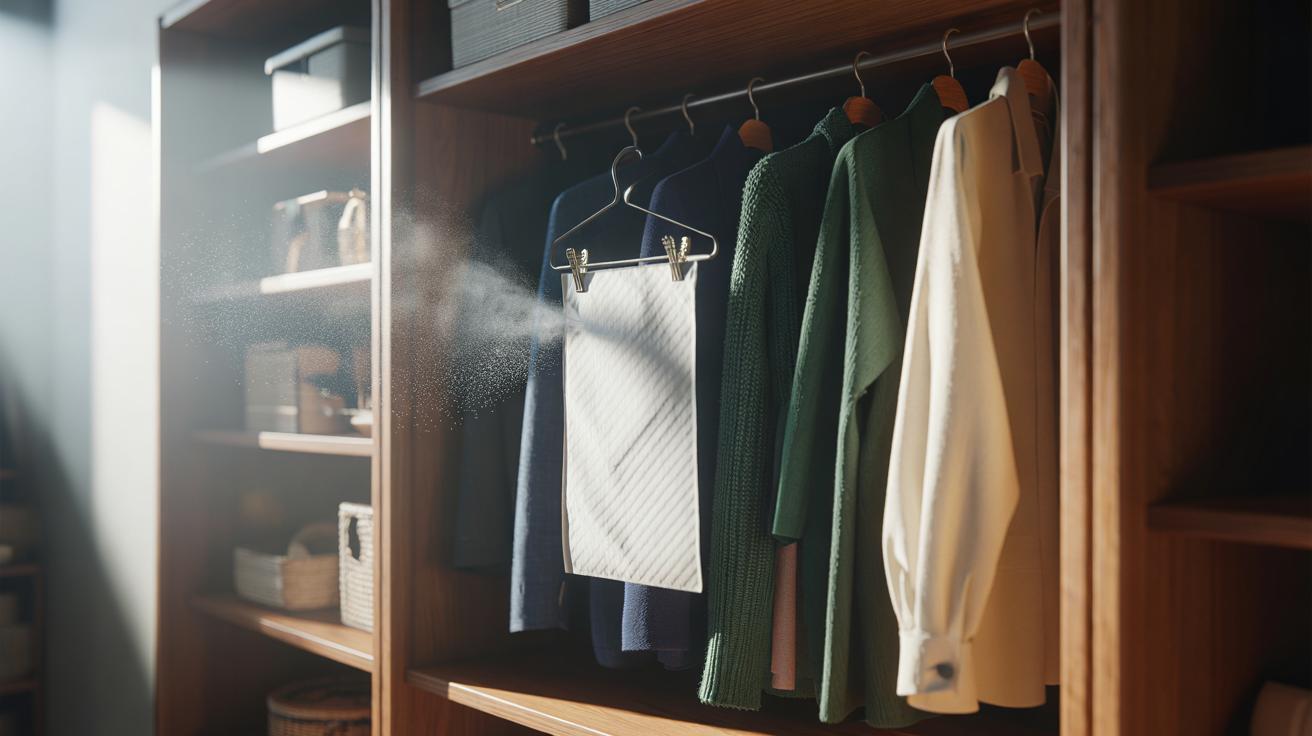
Here’s a wardrobe trick with the quiet efficiency of a well-cut blazer: put a single dryer sheet among your hanging outfits and they’ll smell crisp for days. It looks like a hack. It’s chemistry. Inside that thin veil lurk fabric softener actives and fragrance technologies designed to keep working long after the tumble cycle stops. In the still air of a cupboard, they tick along, neutralising whiffs from commutes, pubs, and damp drizzle. The result is continuous freshness without rewashing. Below, the science of why it works, how to deploy it smartly, and the pitfalls to dodge if you’ve sensitive skin, delicate fibres, or a nose that prefers subtlety over shouty scents.
How Dryer Sheets Keep Wardrobes Fresh
At the core of a dryer sheet sits a blend of cationic surfactants—often quaternary ammonium compounds (QACs)—that carry a positive charge. Fabric fibres tend to carry a slight negative charge; opposites attract. The softener layer transfers off the sheet, coats fibres, and reduces static cling. That same thin coating also slows bacterial growth by limiting moisture on the fibre surface, which helps curb the biochemical party that produces stubborn odours. It’s not a disinfectant, but it tilts conditions in your favour. Then there’s scent engineering. Many modern sheets use fragrance microcapsules: teeny beads that cling to fabric and pop with mild friction—grabbing a sleeve, putting on a jumper, even brushing a coat against a door.
Some formulas include odour-binding hosts—think cyclodextrins—which trap malodour molecules in a ring-shaped cage. Rather than simply masking smells, they lock them away, while the gentler top notes do the public relations. In a closed wardrobe, evaporation is slow, so perfume molecules release in a steady trickle instead of one heady burst. That’s why a single sheet can keep working all week: the chemistry is paced, not rushed, by the calmer microclimate behind your doors.
From Tumble Dryer to Hanging Rail: Slow Release in Closed Spaces
Wardrobes are miniature microclimates. Limited airflow. Slightly elevated humidity after you hang up a coat from a drizzly walk. Those conditions are perfect for slow scent diffusion. The softener coating and microcapsules don’t dump all their fragrance at once; they respond to friction, temperature changes, and tiny humidity spikes. Every time you open the door, airflow nudges volatile aroma molecules into motion. Close the door and the release tapers again. Porous materials—wool, cotton, viscose—behave like gentle sponges, holding onto both fragrance and a portion of malodour culprits, so that the odour-binding chemistry has something to work on. Synthetics can be trickier; their hydrophobic surfaces cling to body oils, which can shelter smells. The sheet helps, yet not always perfectly.
Placement matters more than you’d think. Don’t bury the sheet in a pocket where airflow is nil; clip or tuck it on a hanger, or slip it into a breathable cotton sachet so the actives can mingle with the air. If you share a wardrobe, consider one sheet near coats and another by knitwear for even coverage. The goal is a quiet, even release rather than a concentrated hotspot that overwhelms your favourite scarf.
| Factor | What It Does | How to Optimise |
|---|---|---|
| Airflow | Moves fragrance and odour molecules | Place sheet near door or central rail |
| Humidity | Triggers slow release of volatiles | Let damp coats air 10 minutes first |
| Friction | Breaks microcapsules on fabrics | Occasionally fluff or rotate garments |
| Fibre type | Affects odour adsorption and release | Use two sheets for synthetics-heavy rails |
Practical Tips, Risks, and Greener Tweaks
Start small. One dryer sheet will usually manage a single-door wardrobe or a rail of 10–15 garments. Tuck it into a breathable pouch or peg it to the rail; replace weekly. For heavy-use weeks—gym kit, smoky pubs—double up. If you’re scent-sensitive, choose fragrance-free softener sheets that still carry cationic actives, or opt for products using plant-derived softeners and lighter essential oil blends. Always test on a less-loved garment first. Some finishes, especially on silk, satin, or technical sportswear, dislike residue. Those fabrics rely on moisture-wicking treatments; a softener film can blunt that performance and trap odours instead of fighting them.
Allergies and pets? Keep sheets out of reach and avoid direct skin contact if you’re reactive to QACs or perfumes. Environmentally, use sparingly; a little goes a long way. Consider rotating with low-tech allies: bicarbonate-of-soda sachets to absorb smells, cedar blocks for moths and a dry aroma, or a small pouch of activated charcoal for deep deodorising. For set-in odours, step beyond masking: launder with an enzyme-rich detergent, pre-soak in diluted white vinegar, and let sun and fresh air do their old-fashioned, highly effective work. You’ll return the wardrobe to a neutral baseline—after which a single sheet becomes maintenance, not a crutch.
There’s quiet genius in a product designed for spin cycles that thrives equally well in the hush of a cupboard. Fabric softener chemistry—cationic coatings, odour-binding agents, and time-release fragrance—creates a low, steady hum of freshness that suits British weather and British wardrobes alike. Use it with a light touch, mind your fabrics, and pair it with proper laundering rituals when life gets a bit pungent. Freshness is a habit, not a one-off trick. How will you tune your wardrobe—placement, products, and routine—to keep your clothes smelling as sharp as they look next week and the week after?
Did you like it?4.6/5 (21)