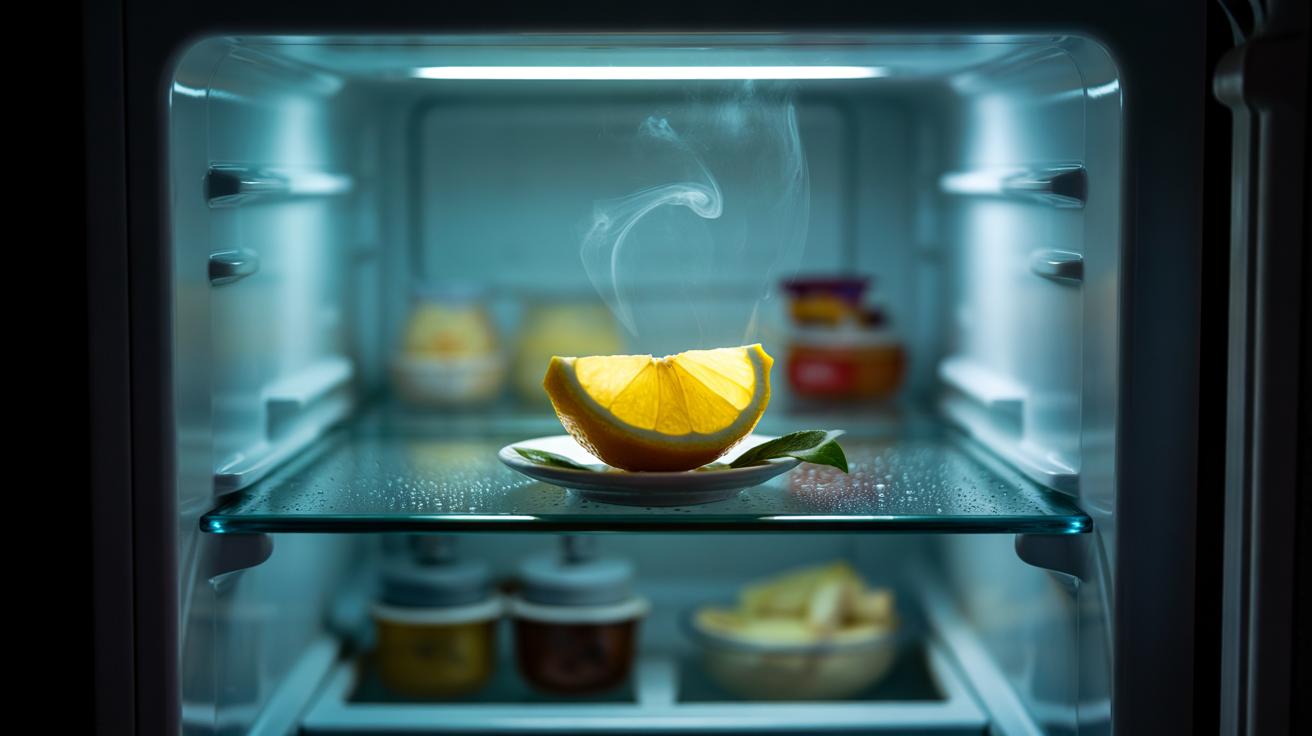
In a nutshell
- 🍋 A simple lemon wedge works fast: citric acid lowers pH, protonates amines, chelates metals, and peel oils like limonene brighten aroma—often cutting fridge odours within hours.
- 🧪 How-to essentials: set the wedge cut-side up on a dish, score the peel for more vapours, and replace every 3–4 days; add a pinch of salt to wick moisture but do not pair with bicarbonate of soda in the same container.
- 🧼 Know the limits: it discourages microbes but is not a disinfectant; it can’t fix spoiled food, blocked drains or worn seals—start with a proper clean, then use lemon as a finisher.
- 🔁 Smart alternatives: rotate bicarbonate of soda, activated charcoal, coffee grounds and vinegar; separate zones so mechanisms don’t cancel, and match each method to the odour type and timeframe.
- 🧊 Best practice: position wedges near trouble spots without crowding airflow, keep foods covered, use a “use-first” box, and expect noticeable gains in 2–6 hours, better again overnight.
A single lemon wedge can rescue a smelly fridge faster than you might expect. It’s a trick your gran knew, now backed by modern chemistry. The secret is citric acid, a natural compound that neutralises many stubborn odours and slows the microbes that make them. It works quietly, within hours, and costs pennies. Place the cut fruit on a small dish, tuck it beside leftover containers, and let nature do the heavy lifting. The result? A crisper chill, fewer off-notes, and food that doesn’t smell like last night’s curry. Simple. Sustainable. Surprisingly effective.
What Makes Lemons Work: The Chemistry of Freshness
Open a fridge and the first whiff tells a story. Amines from fish, volatile sulphur compounds from onions, and the sweet-sour tang of fermenting produce tend to linger. A lemon wedge changes that story. The juice contains citric acid, which lowers local pH and can protonate amines, damping their volatility and perceived smell. At the same time, citric acid’s chelating prowess ties up metal ions that catalyse stinky oxidative reactions. That reduces the formation of rancid notes in fats and leftover spills. This is chemistry at work, not just a pleasant perfume.
The fruit’s peel contributes too. Citrus zest releases small amounts of limonene and other terpenes that lend a bright, clean aroma while masking marginal odours. But the mask isn’t the main act. The acid actually changes the environment that odours rely on to survive. In humid chilled air, even a small wedge can condition the microclimate near shelves and drawers. You won’t sterilise your fridge, of course, yet you will see a fast improvement—often within 2–6 hours, and better again overnight—especially when the culprit is alkaline-leaning smells such as fishy amines or stale dairy.
How to Use a Lemon Wedge in Your Fridge
Pick a fresh, firm lemon. Slice a wedge or two and set them cut-side up on a saucer, ramekin, or a jar lid so the juice doesn’t bleed onto shelves. Replace the wedge every 3–4 days or when it looks dry. You’re not scenting the fridge; you’re deploying an active acid source, so freshness matters. For speed, lightly score the peel to release oils. If odours are severe—spilled meat juices, forgotten vegetables—clean surfaces with warm soapy water first, then rinse and dry. The lemon is a finisher, not a cover-up for decay.
Positioning helps. Tuck one wedge near the fridge’s back corner, another in the produce drawer if needed. Keep it away from uncovered, delicate foods like cake or cheese that might absorb aromas. A pinch of coarse salt on the cut face can wick moisture, increasing evaporation area without neutralising the acid. Avoid placing the wedge on marble or porous stone trays; acid etches. And a key caution: do not pair the lemon with bicarbonate of soda in the same bowl. They neutralise each other, dulling both effects. Use them in separate zones, or alternate week by week.
The Science and the Limits: What It Can and Can’t Do
A lemon wedge excels against basic odours (amines) and some sulphuric notes. It also discourages surface microbes by lowering pH, though it’s not a disinfectant. What it can’t do is fix structural problems: a blocked drain hole, spoiled food sealed in a drawer, or a worn door seal that traps moisture. Nor will it erase chemical taints from plastics that have absorbed intense aromas over months. In those cases, dismantling shelves for a deep clean, airing the cavity, and checking the drip tray are essential steps.
Expect the most noticeable improvement within hours, then incremental gains over 24–48 hours as the wedge continues to release acids and terpenes. If odours persist, rotate strategies. Try a full clean with a mild vinegar solution (rinse thoroughly), then deploy the lemon. For smokers’ fridges, fish-heavy diets, or ferment-lovers, increase the number of wedges but keep them corralled on dishes to avoid stickiness. Remember: source control beats scent cover. The lemon is a clever adjunct, not a licence to ignore expiration dates or leaky containers. Used intelligently, though, it’s a nimble, low-waste solution that earns its spot beside the milk.
Alternatives and Upgrades: A Quick Comparison
The lemon trick fits a wider toolkit of low-cost odour fighters. Each has a distinct mechanism and rhythm. Mixing them strategically—without cancelling chemistry—can keep a busy family fridge crisp through the week. Here’s a snapshot to guide your choice and cadence across typical British kitchens, from flatshares to family homes with endless leftovers.
| Method | Main Mechanism | Typical Timeframe | Best Use | Key Tip |
|---|---|---|---|---|
| Lemon wedge | Acidifies air; light terpene masking | 2–24 hours | Amines, light sulphur notes | Replace every 3–4 days |
| Bicarbonate of soda | Adsorbs acidic/volatile compounds | 1–3 days | General background odours | Use open box; keep dry |
| Activated charcoal | High-surface adsorption | Hours to days | Mixed, persistent smells | Regenerate in low oven monthly |
| Coffee grounds | Masking plus mild adsorption | Hours | Short-term refresh | Avoid near dairy; can taint |
| Vinegar cup | Volatile acids compete with odours | Hours | Post-clean freshening | Use briefly; strong scent |
To layer without clashes, place bicarb on the top shelf, a lemon wedge in the crisper, and charcoal near the back fan if space allows. Rotate weekly. Don’t crowd airflow; cold air needs to circulate, or damp spots will breed new smells. A tidy fridge is a fresher fridge. Labels, sealed containers, and a “use-first” basket cut odour at source. The lemon then shines as the last step—polishing the air between door opens, especially after garlicky leftovers or a seafood supper.
One citrus wedge, a plate, and a clear shelf: that’s the entire kit. It’s thrifty, low-waste, and grounded in simple chemistry that turns down the volume on fridge funk without synthetic scents. If you want even more oomph, pair the lemon with better container habits and a monthly deep clean. Your nose will notice, fast. The smallest changes often deliver the biggest freshness gains. Will you try the lemon first, or design a full odour plan that suits the way your household really eats and stores food?
Did you like it?4.7/5 (30)