In a nutshell
- 🫖 Tannins in a used tea bag curb bacterial growth and bind odour compounds, delivering a cheap, overnight deodorising effect.
- 👟 Follow the step-by-step method: cool and wring bags, place in toe and heel for 8–12 hours, then air shoes; finish with a dusting of bicarbonate of soda if needed.
- 🧪 Choose wisely: black tea offers strongest odour control, green tea moderate, herbal mostly scent; manage stain risk with damp-not-wet bags and spot tests.
- ⚖️ Versus other fixes: soda neutralises acids, vinegar alters pH but can linger, charcoal/silica absorb moisture; the tea bag hack stands out for accessibility and antimicrobial action.
- 🧼 Long-term freshness: rotate trainers, dry thoroughly, use moisture-wicking socks and cedar inserts; repeat the tea bag treatment weekly or after hard workouts.
Drop a Used Tea Bag in Smelly Trainers Overnight: The Tannin Trick That Works
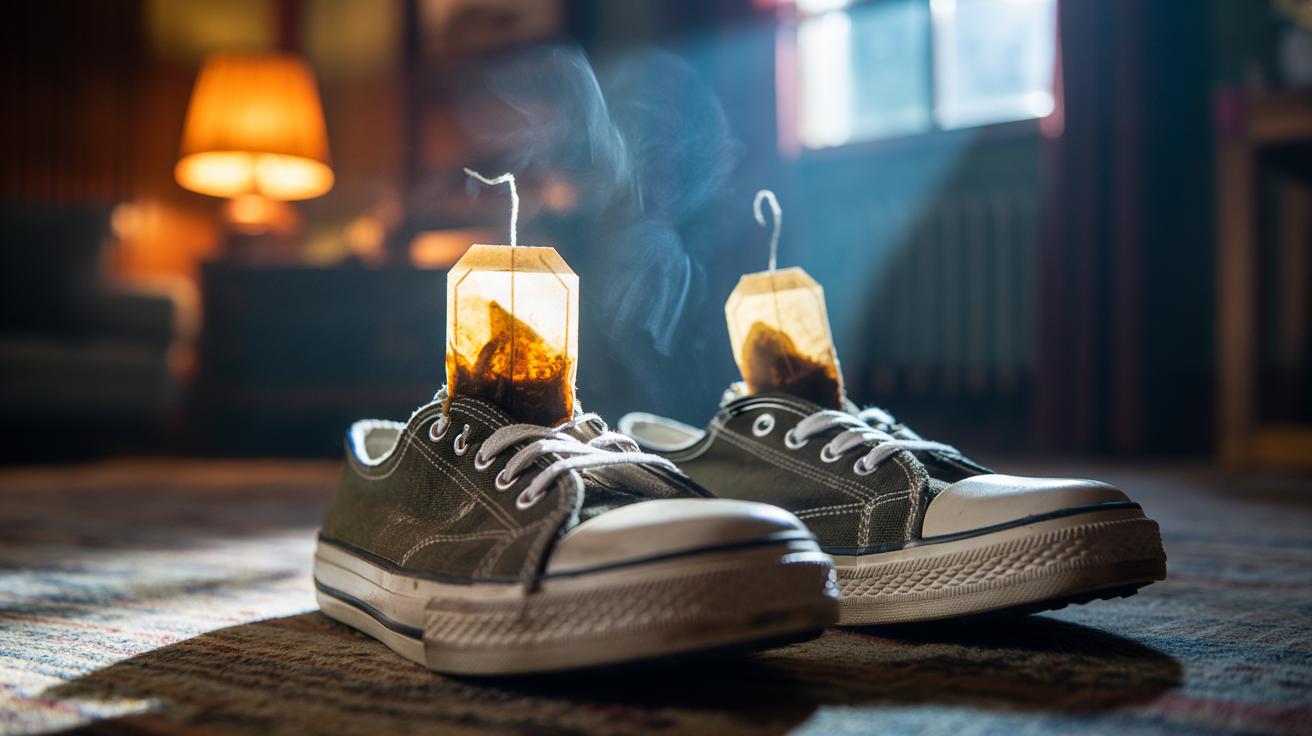
It sounds like a hack from your nan’s kitchen, yet it’s rooted in hard chemistry. Slip a used tea bag into each smelly trainer, leave it overnight, and by morning the stench has largely vanished. Why? Because tannins — the plant compounds that make tea taste astringent — quietly attack the microbes and molecules that create odour. Your feet sweat. Bacteria feast. The result is that sharp, sour fug you’d rather not announce on the commute. This is a low-cost, low-effort fix that works while you sleep, and with a few careful steps it won’t mark your shoes or leave them damp.
Why Tannins Neutralise Shoe Odours
Smelly trainers are a microbiology story. Sweat itself is mostly water and salt; the pong arises when resident bacteria digest skin lipids and amino acids, releasing volatile fatty acids, amines, and sulphur compounds. Tea’s tannins — polyphenols abundant in black blends — address both players in this drama. They bind to bacterial cell wall proteins, destabilising membranes, which can curb growth. They also complex with metal ions and enzymes, inhibiting pathways that churn out those nose-wrinkling volatiles. The effect isn’t hospital-grade sterilisation, but it is meaningful.
Then comes the astringency you feel in your mouth after a strong brew. That same property helps “tighten” and dry the shoe’s micro-environment. Less moisture means fewer thriving microbes. Crucially, a used bag has enough tannin left to work yet not so much liquid that it soaks the fabric. Think of it as a gentle, overnight reset: reduce bacterial load, mop up odour molecules, and blunt the conditions that allow the stink to rebound by lunchtime.
Step-By-Step: The Overnight Tea Bag Method
Start with two bags you’ve already brewed for a cup. Black tea is best; more tannin, more impact. Let each bag cool, then squeeze firmly. You want them damp, not dripping. Pat them with kitchen roll for good measure. If the bag feels wet enough to spot your worktop, it’s too wet for your trainers.
Slip one bag into each shoe, pushing towards the toe box where odour concentrates. If your trainers are heavily used, add a second bag near the heel for full coverage. Leave them undisturbed 8–12 hours. Overnight works nicely with routines and circadian temperatures; cooler air slows bacterial rebound while tannins get to work. In the morning, remove the bags and let the shoes air somewhere dry for 20 minutes. If you like, dust a teaspoon of bicarbonate of soda inside and shake out after an hour for a belt-and-braces finish.
Check for residue. There shouldn’t be any if the bags were properly wrung. Never use freshly brewed, dripping-hot bags — heat and excess moisture can set stains and feed new microbial growth. Repeat once or twice a week, or after intense workouts.
Choosing the Right Tea and Avoiding Pitfalls
Not all tea bags are created equal. For odour control, black tea generally wins: Assam, Ceylon, English Breakfast blends. They’re richer in hydrolysable and condensed tannins, which boost antimicrobial and deodorising punch. Green tea has fewer tannins but still helps; herbal infusions like peppermint offer a pleasant scent but limited microbial action. Materials matter too: white mesh bags are less prone to tearing, reducing risk of leaf spills inside your shoes. And shoe fabrics vary — canvas and synthetics tolerate the method well, while pale knit uppers and soft leather demand extra caution.
Minimise risks by pre-drying the bag to merely damp, placing a thin layer of kitchen roll under the bag for light-coloured insoles, and spot-testing hidden areas. If your trainers are already wet from rain or a wash, skip the tea bag until they are fully dry; dampness is the enemy here. For persistent odour, rotate two pairs of trainers, wear moisture-wicking socks, and add cedar shoe trees between uses to keep humidity in check.
| Tea Type | Approx. Tannin Level | Odour Control | Stain Risk | Notes |
|---|---|---|---|---|
| Black (Assam/Ceylon) | High | Strong | Medium | Best all-round; wring well |
| Green | Moderate | Good | Low–Medium | Milder, safer on pale fabrics |
| Peppermint/Herbal | Low | Light | Low | Adds scent, limited antimicrobial effect |
How It Compares With Other Home Fixes
Kitchen chemistry offers options. Bicarbonate of soda neutralises acids, making it a solid daily deodoriser. It doesn’t directly suppress bacteria, though, so odour may creep back faster. White vinegar spritzes shift pH sharply and can disrupt biofilms, but the aroma lingers and risks damaging glues and leather if overused. Charcoal inserts and silica gel absorb moisture brilliantly; they’re silent, reusable, and mess-free, yet pricier and slower to impact entrenched smells.
The freezer trick? Mixed results. Freezing can pause microbial growth but rarely eliminates the compounds already embedded in the fabric. UV light boxes are effective at sanitising, though they’re specialist kit. In that landscape, the overnight tea bag sits in a sweet spot: cheap, accessible, antimicrobial, and fast enough to matter before your morning run. Make it part of a routine — dry shoes properly, rotate pairs, launder insoles, and use wicking socks — and you shift the whole odour ecosystem in your favour.
There’s a quiet satisfaction in waking to trainers that no longer broadcast your cardio schedule to the carriage. The humble tea bag leverages tannins to knock back bacteria and bind odour molecules, while a few smart precautions keep fabrics safe and dry. It’s not magic. It’s chemistry you can verify with your nose. For most people, one night per week is enough to keep funk at bay. If you try it this evening, what other low-cost, high-impact habits might you add to your kit to keep your footwear — and your day — feeling fresher?
Did you like it?4.6/5 (26)