In a nutshell
- 🔬 Dryer sheets work because anti-static agents—positively charged cationic surfactants—form micelles that lower interfacial tension and lift grease from metal fast.
- 🧽 The quick soak method: hot water + a drop of washing-up liquid + one dryer sheet for 10–20 minutes, then a gentle swirl—stuck-on films release in seconds with minimal scrubbing.
- 🧪 Inside the sheet: cationic surfactants, fatty alcohols/waxes, silicones, and solvents on a nonwoven substrate; modern esterquats emulsify oils while the sheet meters actives to the surface.
- ⚠️ Limits and precautions: avoid cast iron/carbon steel (seasoning can strip), don’t over-soak reactive metals, be gentle on non-stick, and watch for skin irritation from quats or perfumes.
- 🌿 Greener tweaks: rely on strong dish surfactants, baking soda, and mild acids; choose fragrance-free, esterquat-based sheets and plant-fibre substrates to cut environmental impact.
That brown, lacquered rim of fat on your roasting tin feels immovable. Then someone drops a dryer sheet into warm water, and suddenly the sludge lifts as if on cue. It looks like a parlour trick, yet the explanation is delightfully practical: anti-static agents designed for fabrics are also deft at breaking the bonds that keep grease clinging to metal. The sheet acts as a slow-release pad, dispersing charged molecules that ambush oil droplets and cut surface tension. This isn’t witchcraft; it’s surfactant chemistry repurposed from the laundry to the kitchen sink. Used wisely, it can save elbow grease, time, and a few fingernails.
Why Dryer Sheets Disarm Grease
In a tumble dryer, anti-static agents reduce cling by neutralising charge on fabric fibres. Those same molecules—typically cationic surfactants, often quaternary ammonium compounds—carry a positively charged head and an oily tail. On a greasy pan, the tails burrow into fat while the charged heads face the water, building micelles that lift and suspend soil. Think of them as tiny lifeboats for oil, ferrying the mess away from metal into the wash water. Once the interfacial tension drops, stuck-on films lose their grip in seconds, especially when heat has already softened them.
The sheet itself matters. It’s a porous substrate that meters out these actives, sometimes blended with fatty alcohols, silicones and plasticisers. Soaking the pan with a sheet in warm—ideally not boiling—water allows time for diffusion. As the surfactants migrate, they coat the pan, loosen polymerised residues around the edges, and dislodge the hydrophobic network formed by oxidised oils. Agitation speeds everything up. Short wipe, big payoff. The result isn’t just cosmetic: by altering charge interactions on the surface, the sheet helps prevent redeposition as you rinse, limiting that grey film that often returns after scrubbing.
Step-by-Step: The Quick Soak That Saves Your Pan
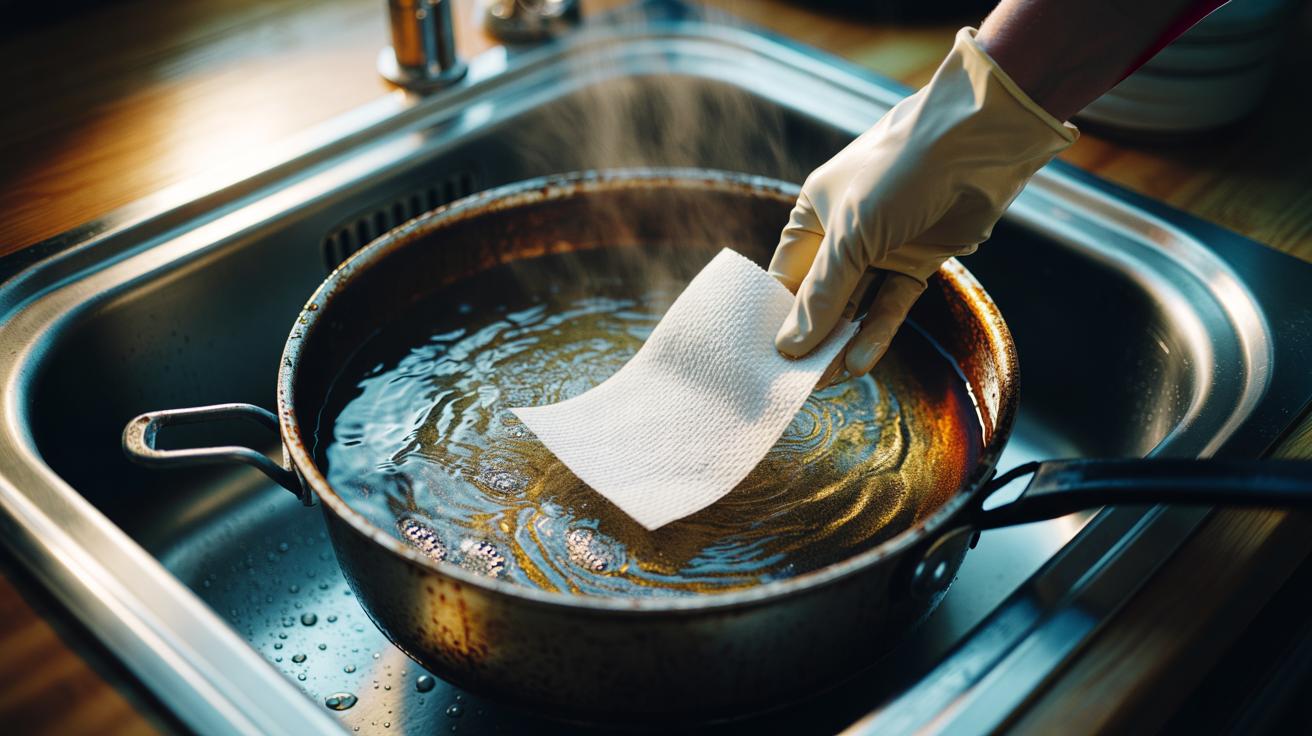
Start with heat. Fill the pan with very warm water—hot from the tap is fine—and a drop of washing-up liquid. Slide in one dryer sheet, pushing it under so it wets through. Leave for 10–20 minutes for light films; burnt caramel or polymerised oil can need 30 minutes. The “dissolves in seconds” effect appears once surfactant concentration at the surface crosses a threshold, which the soak quietly achieves. When you return, swirl the sheet like a cloth; you’ll often see brown halos peel away with minimal pressure.
Stubborn patches respond to a two-step. First, a blunt scraper or spatula to lift brittle carbon. Then the sheet, acting as a lubricant and surfactant source, erases the remaining smear. Rinse with hot water and assess. If the pan is aluminium or copper, avoid prolonged soaks overnight; fragrances and acids in some formulations aren’t ideal for reactive metals. With cast iron, skip the hack—cationics and water can strip seasoning. For non-stick coatings, gentle only: soft swirls, no scouring, and check the manufacturer’s guidance. Wear gloves if you have sensitive skin; many sheets use quats and perfumes that can irritate.
Inside the Sheet: Ingredients at Work
Dryer sheets are cocktail napkins of chemistry. They carry a curated blend of charged and oily materials that tame static and soften fibres. In the sink, those same ingredients play new roles, from emulsifying fat to lubricating wiped surfaces. Here’s the simple breakdown of who does what.
| Component | Role in Laundry | Action on Grease | Common Examples |
|---|---|---|---|
| Cationic surfactants | Anti-static, softening | Form micelles, reduce interfacial tension, lift oils | Quaternary ammonium “esterquats” |
| Fatty alcohols/waxes | Lubrication, soft handfeel | Loosen films, boost glide for wiping | Stearyl alcohol, paraffins |
| Silicones | Slip, anti-wrinkle | Reduce friction, help release residue | Polydimethylsiloxane |
| Fragrance solvents | Deliver scent | Minor solvency on grease, aids wetting | Glycol ethers |
| Substrate (nonwoven) | Carrier for actives | Acts as a soft applicator/scrub | Polyester or cellulose blend |
The headline act remains the anti-static agent, with its dual personality—water-loving head, oil-loving tail—doing the heavy lifting. Many modern sheets use biodegradable esterquats that break down faster than older “DTDMAC”-type quats; if sustainability is a concern, look for that signal on the box. Keep expectations honest: the sheet won’t repolish pitted aluminium or erase baked-on carbon in one pass, but by knocking out the greasy binder, it makes the mechanical clean dramatically easier.
Limits, Risks, and Greener Tweaks
There are boundaries. Cast iron and carbon steel skillets have polymerised seasoning layers that surfactants can destabilise; stick to salt, hot water, and quick oiling. Antique tin-lined copper also deserves caution. Fragrance-heavy sheets can leave a film; a hot rinse and a brief wash with standard detergent removes it. Environmental notes matter: some quats are persistent in waterways, and microfibres from synthetic substrates can shed. Choose fragrance-free formulations, opt for esterquat-based sheets, or use plant-fibre substrates when available.
Prefer an even cleaner route? Mimic the chemistry. Very hot water plus a squirt of washing-up liquid supplies high-efficiency anionic surfactants that also build micelles. For caramel scorch, a baking soda paste followed by a soapy rinse excels. A dash of citric acid (or vinegar) can loosen mineral-larded residues. The dryer-sheet trick is best kept as a tactical shortcut—brilliant for sticky roasting tins, lasagne dishes, and oven trays after a busy service. Used sparingly, it saves time, knuckles, and energy on the hob or in the galley.
It’s funny how a product designed to hush static can moonlight as a kitchen degreaser, yet the science adds up: cationic surfactants flip grease’s loyalty from metal to water, and the sheet meters out just enough chemistry to help. In trials at my sink, light films shifted almost instantly; the real wins came when baked-on rims surrendered after a short soak and a gentle swirl. The trick isn’t a cure-all, but it’s a clever ally. Will you keep dryer sheets by the sink—or will you tinker your own, greener micelle-making method for the next roasting-day clean-up?
Did you like it?4.4/5 (28)