In a nutshell
- 🔬 The chemistry: dryer sheets carry cationic surfactants and softening oils that penetrate paraffin wax; their hydrophobic tails disrupt the crayon matrix so marks lift with minimal effort.
- 🧽 How-to: dampen an unscented sheet, use light pressure in small circles, pre‑warm with a hairdryer if needed, then rinse residue with mild soapy water and ventilate to clear fragrances/VOCs.
- 🎨 Paint matters: satin/eggshell/semi‑gloss are resilient, while matt finishes can burnish; avoid unsealed wallpapers, limewash, and mineral paints, and always spot‑test first.
- 🔄 Alternatives: try melamine foam, baking soda paste, baby/mineral oil, or low heat plus soapy water; match the solvent to the soil, and skip vinegar for crayon and acetone on paint.
- 🧰 Practical takeaways: act quickly on fresh scribbles, rotate to clean sheet sections, choose unscented products if sensitive, and consider a small touch‑up of paint if a faint shadow remains.
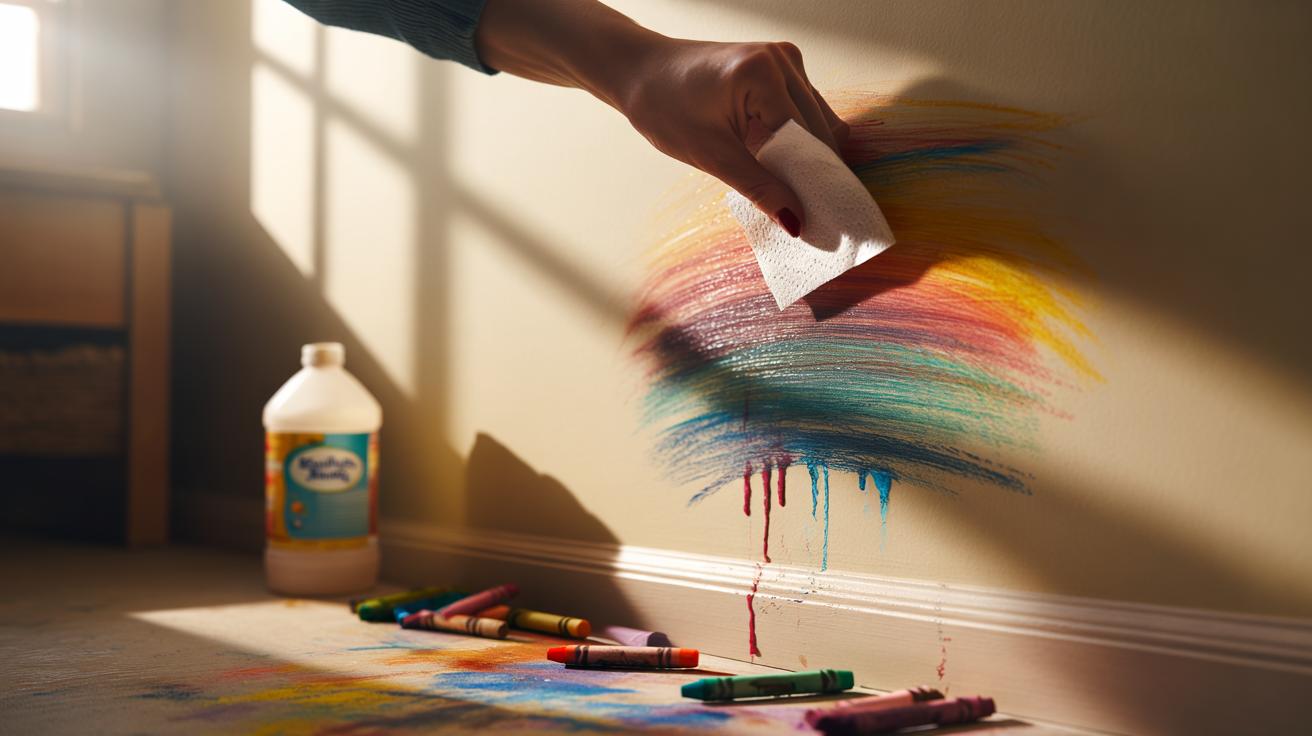
There’s a domestic myth that sounds too good to be true: a humble dryer sheet whisking away a child’s crayon mural from the sitting-room wall in seconds. It works, and it isn’t magic. It’s chemistry you can feel under your fingertips. The coating that makes laundry soft carries oily compounds and surfactants that love wax as much as they love fabric. Glide, lift, gone. Still, walls aren’t T-shirts, and paint finishes have limits. Here’s the science of why fabric softener dissolves wax on contact, how to do it safely, and when to consider alternatives that protect both your paintwork and indoor air.
Why Softener Melts Wax: The Science Behind the Swipe
Crayons combine paraffin wax and coloured pigments. The wax binds the pigment and clings tenaciously to paint. Dryer sheets are coated with fatty, oily agents—typically cationic surfactants (often quaternary ammonium compounds) plus softening waxes—that are brilliant at loosening hydrophobic grime. Their molecules have a split personality: a charged head that latches onto surfaces and a hydrophobic tail that dissolves into wax. Once those tails embed, they disrupt the crayon’s wax matrix, breaking the bond with the wall and forming tiny droplets that wipe away. That’s why the mark seems to vanish the moment the sheet touches it.
Two extra forces help. First, gentle friction from the nonwoven sheet slightly warms and softens the wax, accelerating transfer. Second, a light mist of warm water lowers surface tension, letting surfactants spread thinly across textured paint and into the tiniest pores. Pigments don’t dissolve, but they hitch a ride as the wax lifts into an oily film, which the sheet absorbs. On tougher scribbles, low heat from a hairdryer softens the crayon so the softener can work more quickly—like butter on warm toast.
Step-By-Step: Erasing Crayon Marks in Seconds
Always test in an inconspicuous spot first. Different paints behave differently, and strong rubbing can burnish flat finishes. Start by slightly dampening an unscented dryer sheet with warm water—just enough to activate its coating. Hold it flat and use small, circular motions over the crayon, keeping pressure light. You’ll see wax smear briefly, then lift. Rotate to a clean section of sheet as it loads up with residue. For a heavy mural, switch to a fresh sheet before it becomes slick.
If marks are stubborn, pre-warm the area for 10–15 seconds with a hairdryer on low, held 20–25 cm away, then repeat. Use light pressure; let chemistry do the heavy lifting. Once the colour has gone, wipe with a damp microfibre cloth and a drop of mild washing-up liquid to remove any lingering softener residue that can attract dust. Rinse with clean water and pat dry. Open a window to clear fragrance and VOCs if your sheets are scented. Avoid scrubbing edges and corners where paint is thinner, and never attack the spot with abrasives before trying the sheet—you’ll only roughen the finish.
Paint Finishes, Safety, and What To Watch For
Not all walls are equal. Satin, eggshell, and semi‑gloss acrylic emulsions tend to be far more forgiving, resisting moisture and allowing gentle wiping. Flat/matt paints, especially cheaper vinyl‑free emulsions, can burnish—leaving a shiny patch—if rubbed too hard. Textured or older walls may also hold pigment in micro‑pits; you’ll need multiple light passes rather than one aggressive scrub. When in doubt, work slowly and stop as soon as colour ceases lifting.
Chemically, cationic surfactants can leave a thin film that feels soft to the touch. It’s harmless to most paints but slightly tacky, so a soap-and-water follow‑up is essential. Those sensitive to fragrance should choose unscented sheets and ventilate, as many formulas include perfumes and trace solvents. Don’t use dryer sheets on unsealed wallpapers, limewash, or chalk/mineral paints; they can darken or spot. And remember the source: children’s crayons are typically food‑grade pigments in paraffin, but some “artist” crayons with higher dye loads may stain; prompt treatment gives you the best odds. Pets around? Keep them out until the wall is rinsed and dry.
Alternatives That Work (and When To Skip the Sheet)
Dryer sheets excel on waxy colour, but there are moments to reach for something else. If you’ve got a delicate matt finish or a very large area, try methods that limit sheen change or chemical residue. Oils dissolve wax effectively, micro‑abrasives lift pigment without chemistry, and heat alone can do surprisingly much when followed by a mild wash. Here’s a quick guide:
| Method | How It Works | Best For | Risk/Notes |
|---|---|---|---|
| Dryer sheet (damp) | Cationic surfactants solubilise wax | Most modern emulsions | Rinse to remove residue; avoid unsealed finishes |
| Melamine foam (Magic Eraser) | Micro‑abrasive lifts wax/pigment mechanically | Gloss/eggshell | Can dull matt paint; use minimal pressure |
| Baking soda paste | Mild abrasive; gentle polishing | Small, fresh marks | May burnish; wipe thoroughly |
| Baby/mineral oil | Oil dissolves wax, then soap rinse | Stubborn, wax‑heavy scribbles | Two‑step clean; possible halo if not rinsed |
| Low heat + soapy water | Softens wax; detergent lifts residues | Delicate paints | Slower; blot rather than scrub |
Avoid white vinegar for crayon; it’s water‑based and won’t touch hydrophobic wax. Alcohols are better for marker and pen, not crayon. Match the solvent to the soil: oil for wax, alcohol for ink, abrasion for scuffs. And never use harsh household solvents like acetone on painted walls—fast damage, slow regret. If a shadow remains after cleaning, a tiny touch‑up with leftover paint is often the most invisible fix.
In the end, the magic of dryer sheets is simple: surfactants and softening oils break the crayon’s wax grip, and a few gentle swipes do the rest. It’s quick, oddly satisfying, and—used wisely—kind to most paints. Keep a couple of unscented sheets in your cleaning caddy, and you’ll fear creative toddlers far less. Have you tried this trick at home, and if so, which method struck the best balance between speed, safety, and a pristine finish on your walls?
Did you like it?4.5/5 (20)