In a nutshell
- 🌱 Eggshells supply calcium carbonate (CaCO₃) that buffers pH, improves soil aggregation and cation exchange capacity, opening pores for better root growth and water flow.
- 🧪 Preparation matters: rinse, heat, and grind finely; blend with compost/vermicast/biochar; use modest, targeted rates; choose gypsum instead of shells when you need Ca without raising pH.
- 🔬 Calcium stabilises cell walls and membranes, optimising uptake of nitrate, potassium, and magnesium; healthier rhizosphere partners boost phosphorus delivery and micronutrient chelation.
- 🍅 In practice: steadier turgor, thicker stems, fewer disorders like blossom end rot—provided watering is consistent, as calcium moves in the transpiration stream.
- ♻️ Safe and sustainable—but slow: not a quick fix for deficiencies; avoid acid-loving plants; don’t over-lime; maintain soil tests and balance Ca with Mg and K to prevent antagonism.
Turn your breakfast leftovers into a quiet revolution beneath your feet. Finely milled eggshells, rich in calcium carbonate, do more than sweeten sour soils: they coax roots to grow straighter, pores to open smarter, and microbes to work harder. This isn’t garden folklore. It’s chemistry and biology dovetailing in the rhizosphere, where cell walls harden and membranes behave with new discipline. Used judiciously, an eggshell blend invigorates soil structure and primes plants to draw in nutrients they previously couldn’t reach. The result is resilience you can see—steadier growth, cleaner leaves, fewer physiological disorders—and sustainability you can feel, by diverting a common kitchen waste into a home-grown soil tonic.
How Calcium From Eggshells Works in Soil
Eggshells are largely CaCO₃—about 95%—with traces of magnesium and a protein matrix. Ground to a fine powder, they dissolve slowly as soil acids and microbial respiration release carbon dioxide and weak organic acids. That slow dissolution buffers pH, particularly in acidic beds, easing aluminium toxicity and improving the chemistry that governs cation exchange capacity. As flocculated clays form better aggregates, pores open up. Water infiltrates more evenly. Roots push with less resistance. Structure improves first; nutrition follows.
Inside the plant, calcium stabilises cell walls (pectates) and shores up membranes, helping roots regulate the entry of nitrate, potassium, and magnesium. It also acts as a secondary messenger, coordinating stress responses that protect against heat spikes or transient drought. This biochemical orderliness translates into balanced uptake: phosphorus is less locked, micronutrients move more predictably, and root tips remain intact and exploratory. Calcium does not “feed” the plant like nitrogen; it enables the plant to feed itself more efficiently.
There’s a caveat. Excessive liming can narrow nutrient availability. Soil testing pays for itself by preventing the slow creep to over-alkaline conditions that choke iron and manganese uptake.
Preparing an Effective Eggshell Blend at Home
Rinse shells, air-dry, then heat at 120–150°C for 10–15 minutes to sanitise and make them brittle. Grind thoroughly—mortar and pestle, blender, or burr mill—aiming for powder and fine grit. Finer particles dissolve faster. Fold the powder through mature compost, vermicast, or biochar to distribute calcium and seed microbial partners. For a quick-release option, pre-soak the powder in vinegar to form soluble calcium acetate; dilute before use. Whatever the method, keep rates modest and observe the crop’s response over several weeks.
| Use Case | Suggested Rate | Notes |
|---|---|---|
| Vegetable beds (neutral–slightly acidic) | 150–200 g/m² spring or autumn | Work into top 5–8 cm; retest pH yearly |
| Containers and seed compost | 1 tbsp per litre of mix | Blend evenly; avoid hotspots |
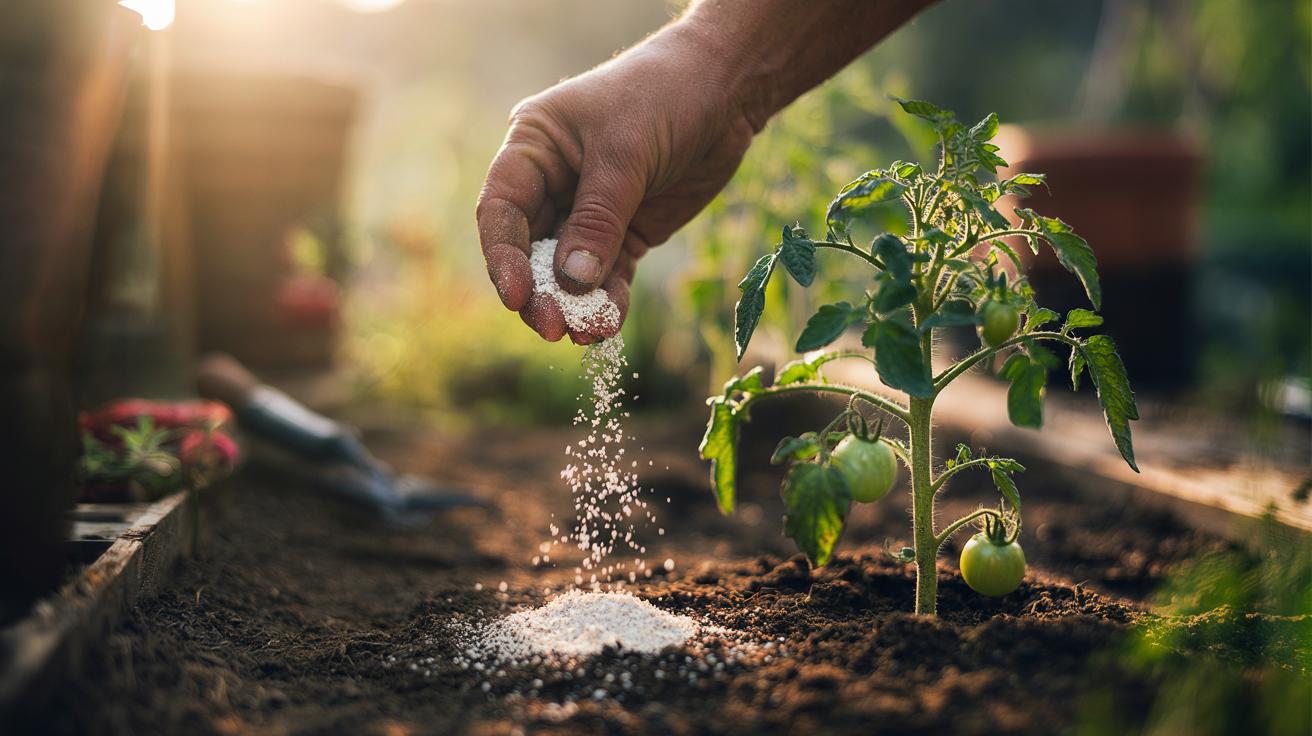
| Fruiting solanums (tomato, pepper) | 1–2 tbsp per planting hole | Do not rely on this alone for Ca; steady watering essential |
| Acid-loving plants (blueberry, camellia) | Not recommended | Avoid raising pH; use gypsum if Ca is needed |
Do not over-lime. If your pH already sits at 6.8–7.2, switch to gypsum for calcium without the pH lift. After application, wait 4–6 weeks to judge effects, as eggshells release gradually unless pre-dissolved.
Improving Nutrient Absorption: The Science and the Signs
Calcium’s value lies in orchestration. By stabilising the apoplastic pathway and tightening membrane selectivity, it reduces leakiness at root tips. That means less wasted exudate, more targeted exchange at the rhizoplane, and mycorrhizal partners that can shuttle phosphorus more effectively. In buffered, well-aerated pores, microbes produce organic acids that chelate micronutrients, keeping iron and zinc soluble. The plant’s ion pumps can then draw in K⁺ and NO₃⁻ with less energetic strain. Better structure begets better biochemistry.
Look for signs that uptake has improved: leaves hold turgor longer between waterings; new growth is steady rather than flushy; stems thicken without brittleness. In tomatoes and peppers, the risk of blossom end rot falls where watering is consistent and Ca supply is steady. In lettuces, tip burn eases as inner leaves develop with stronger cell walls. Caveat: very high calcium can antagonise magnesium and potassium. Balance matters; a soil test revealing excessive Ca saturation suggests backing off shells and leaning on organic matter to round out the cation profile.
Timing plays a role. Apply modest amounts ahead of peak demand so roots mature into a Ca-rich zone. Pair with mulches that maintain moisture—calcium moves largely in the transpiration stream, so erratic watering undermines its delivery to fruit and young tissues.
Safety, Sustainability, and Common Mistakes
Eggshell amendments are a tidy sustainability win: you’re diverting a household waste into a soil conditioner that displaces quarried lime. Their carbon footprint is effectively the energy you spend drying and grinding. Still, there are pitfalls. Eggshells are not a fast cure for acute deficiencies; they act slowly unless acid-treated. Rely on them for steady background calcium, not emergency interventions. If sodium is the problem (saline soils), use gypsum, not calcium carbonate, to displace Na⁺ without raising pH.
A hygiene note. Heating shells is prudent—pathogen risks are low in soil, but kitchens aren’t labs. Avoid mixing shells with strong ammonium fertilisers at the same moment; transient alkalinity plus ammonium can release ammonia gas and stress seedlings. And remember acid-lovers: blueberries, azaleas, rhododendrons. For these, keep pH low and source calcium via gypsum or chelated foliar feeds.
Best practice is simple and measured: test soil every couple of seasons; track plant responses; keep additions small and regular rather than episodic and heavy. Fold shells into a broader programme—compost for biology, mulches for moisture, and balanced nutrition that respects the push-and-pull between Ca, Mg, and K.
When you blend kitchen shells with good compost and thoughtful watering, you build a quieter, smarter root zone where calcium nudges physics and biology into your plants’ favour. The soil breathes a bit easier, roots read the menu better, and nutrients arrive on time rather than in a rush. Small, steady doses beat heroic gestures: that’s the gardener’s advantage. Which crop in your patch will you trial with a finely ground eggshell blend, and how will you measure the difference in growth and resilience over a season?
Did you like it?4.5/5 (28)