In a nutshell
- 🧅 Onion works as a repellent by releasing volatile sulphur compounds that mask scent trails and confuse ants, aphids, and some mites, best used as part of integrated pest management.
- 🌙 The overnight method: chop an onion or make an infusion, spray light bands or place slices near skirting, bins, and entry points; hang muslin pouches in gardens; apply at dusk, ventilate by morning, and repeat 2–3 nights.
- 🏡 Safety and hygiene: keep all forms away from pets (toxic to cats and dogs), avoid fabrics and delicate foliage, wipe residues, and pair with cleaning, sealing gaps, and drying damp spots.
- 🌿 Garden guidance: spritz the air around plants—not blooms—patch-test leaves, rotate with gentle deterrents, protect beneficial insects, and rinse harvests thoroughly.
- 🚨 Limits and next steps: results vary and it’s weak against cockroaches or bed bugs; if infestation signs persist, contact a licensed pest professional and use onion as a quick, low-cost bridge solution.
You don’t need exotic sprays or pricey traps to tame a creeping bug problem. One humble kitchen staple can do surprising work while you sleep. The everyday onion releases pungent, volatile compounds that many small pests dislike, masking food scents and confusing their navigation. It’s cheap. It’s fast. It can be deployed in minutes before bedtime and checked in the morning. Used smartly, it supports tidier homes and calmer gardens without drenching everything in harsh chemicals. The trick is understanding how onions repel, where to place them, and how to avoid common mistakes. Below, we unpack the science, a simple overnight routine, and the safety notes professionals wish more people knew.
Why Onions Repel Common Pests
Onions emit a bouquet of sulphur compounds, including thiosulfinates and syn-propanethial-S-oxide—the lung-prickling tear-maker released when you slice. These molecules create a strong, unfamiliar odour field that can muddle the chemical trails and host cues used by ants, aphids, and some mites. For small scavengers, the smell is a deterrent; for plant-suckers, it can mask the botanical signals that guide them. That’s why a simple overnight placement can blunt activity around bins, skirting boards, and windowsills, or on susceptible plants. Think of onion as a defensive screen, not a lethal toxin.
There’s a behavioural angle too. Many household pests forage under cover of darkness. Load the environment with onion volatiles at dusk and you intercept the night shift. By morning, movements often shrink, trails break, and hotspots cool. Still, it’s not universal. Cockroaches and bed bugs are notoriously stubborn, and some species adapt quickly. Used as part of integrated pest management—cleaning, sealing entry points, drying damp spots—onion can buy you valuable breathing space and reduce chemical reliance.
Overnight Method: Onion Infusion and Placement
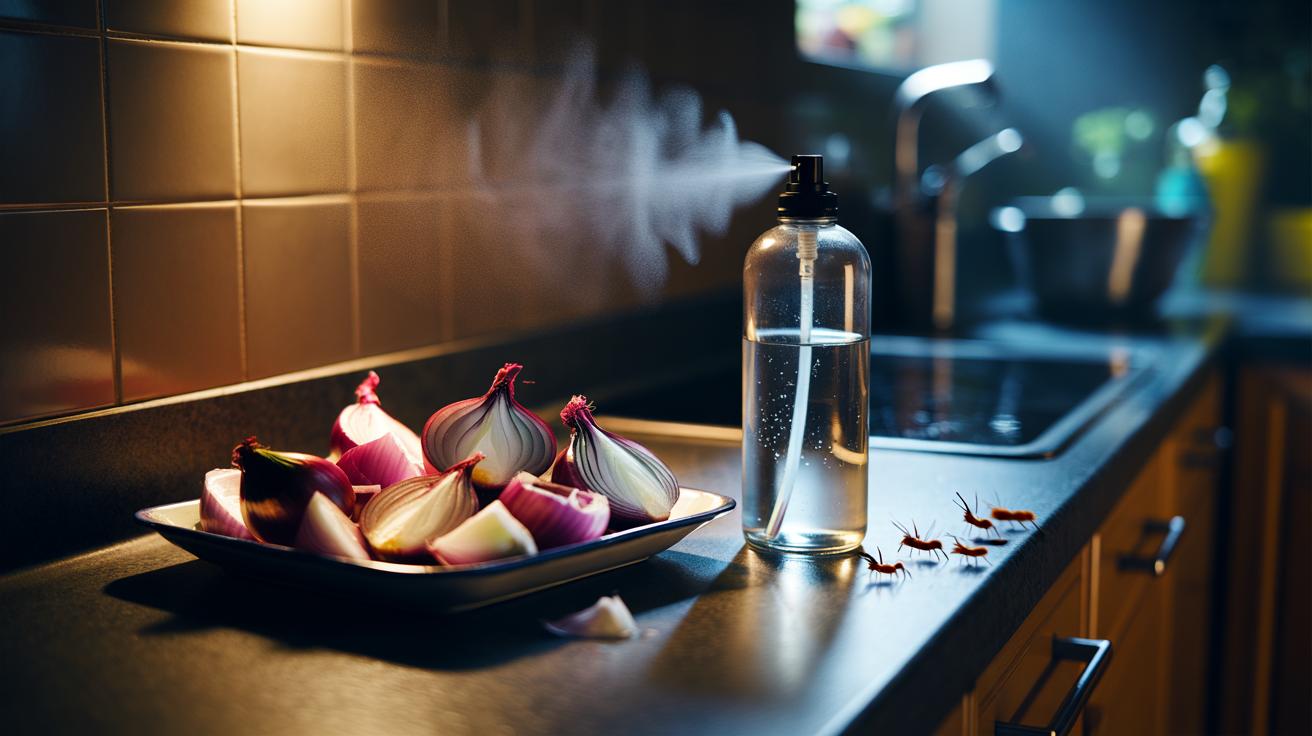
Start with one medium brown or red onion. Chop roughly to expose surface area. For a fast ramp-up, make an onion infusion: cover the pieces with 300–400 ml of warm water in a jar, seal, and steep for 30–60 minutes. Strain into a spray bottle. Alternatively, leave peels and ends steeping for several hours to intensify the aroma while you prepare the house for night-time. Apply at dusk for best results.
Indoors, mist light bands along skirting near ant trails, around bin rims, and onto a cloth tucked behind appliances. For non-spray use, place a few onion slices in shallow dishes near suspected entry points; replace in the morning. In the garden, lightly spritz the air around vulnerable plants or hang onion-filled muslin pouches on stakes so vapours drift without soaking leaves. Keep contact minimal on delicate foliage. In either setting, ventilate gently by breakfast. Repeat for two or three nights to see a trend, then move or refresh placements as activity shifts.
Safe Use Indoors and in the Garden
Onion isn’t toxic to humans at normal household exposure, but the odour lingers. Use small amounts in targeted spots. Wipe up residues on wood or polished stone to prevent staining. Avoid spraying fabrics. Never allow pets to ingest onions or onion water—onion is toxic to cats and dogs even in modest quantities. If you share your home with animals, rely on closed jars with perforated lids or high, inaccessible placements rather than open dishes.
In the garden, test first. Some plants can show mild leaf scorch from concentrated volatiles or droplets. Spray the air around plants, not directly on blossoms that attract beneficial insects such as bees and hoverflies. Rotate with other gentle deterrents—soap-and-water for aphids, physical barriers for slugs—to avoid over-reliance on one cue. For food crops, rinse harvests well. Indoors or out, tie the method to basic hygiene: empty bins nightly, scrub sticky residues, fix leaks, and seal gaps. Onion is a repellent, not a licence to skip sanitation.
| Target | How Onion Helps | Best Placement | Key Caution |
|---|---|---|---|
| Ants | Masks scent trails | Skirting boards, bin areas | Keep away from pet bowls |
| Aphids | Confuses host cues | Near plants, not on blooms | Patch test leaf sensitivity |
| Mites | Deterrent odour field | On stakes or pouches | Do not soak foliage |
| General scavengers | Reduces night foraging | Kitchens, entry points | Ventilate by morning |
Evidence, Limits, and When to Call a Pro
Laboratory and field studies on the Allium family (onion, garlic, leek) repeatedly show that their volatile sulphur compounds repel or disrupt various insects, especially soft-bodied plant pests. That said, results vary wildly by species and setting. In a warm, crumb-strewn kitchen, ants may return once the onion scent fades. In a tidy flat with sealed skirting, they may abandon the route entirely. It’s effective enough to try, but not a guaranteed cure.
Set expectations: assess overnight change in traffic, repeat for up to a week, then reassess. Combine with sealing gaps using silicone, drying damp cupboards, and storing food in airtight containers. If you spot signs of a larger infestation—multiple cockroach sightings, bed bug bites, extensive droppings—skip home experiments and contact a licensed pest professional. Keep onion as a bridge solution: quick, accessible, and low-impact. It shines when you need to calm a flare-up fast while you organise a longer-term fix, from improved housekeeping to targeted traps and, where necessary, regulated treatments.
Used thoughtfully, onion can suppress pest wanderings overnight, cut odours around bins, and protect tender plants with a simple, kitchen-made barrier. It won’t replace deep cleaning, sealing, or proper pest surveys, but it can tilt the odds in your favour when nothing else is handy. Try a small trial this week, note results, and refine your placements. One chopped bulb, a jar, and a plan—that’s your starter kit. What pest hotspot will you target first, and how will you measure the difference by morning?
Did you like it?4.5/5 (22)