In a nutshell
- 🔌 Tariff-backed, on-bill finance attaches solar costs to the meter, not the person, delivering net-positive savings from day one without upfront payments.
- ☀️ Lower finance rates and higher self-consumption (with smart controls and a small battery) shift monthly bills into the black, verified via smart meters and the Smart Export Guarantee.
- 🏡 Works for renters and landlords: the charge runs with the meter, easing split-incentive barriers, improving EPC profiles, and enabling social housing scale-ups.
- 🛡️ Strong consumer protections: no early repayment penalties, transparent warranties, performance-based adjustments, and data-backed monitoring ensure users only pay for real savings.
- 🏁 What’s next: light-touch Ofgem guidance, clear supplier offers, aggregated public tenders, and smoother DNO connections—leveraging zero-rated VAT and existing smart infrastructure.
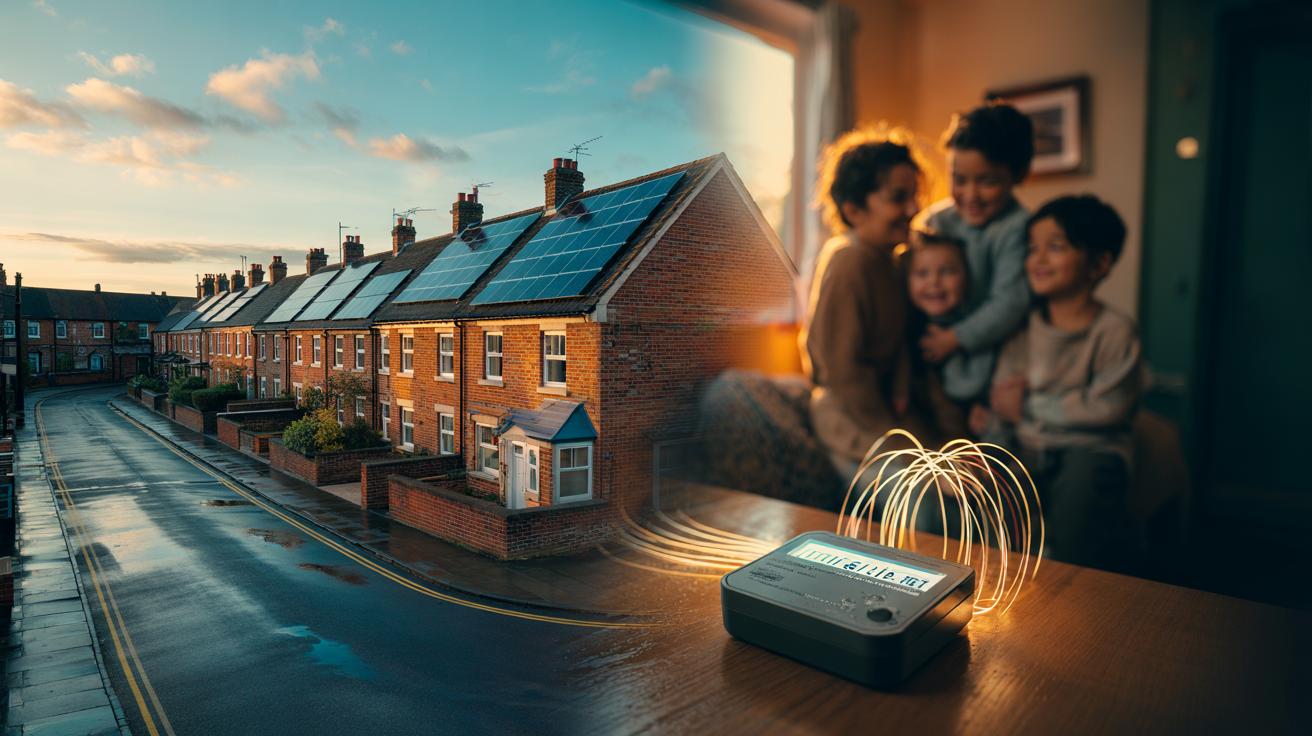
There is a deceptively simple change that energy analysts argue could flip the script on rooftop solar: move the cost from the household’s balance sheet to the electricity bill. Instead of a chunky loan or an upfront purchase, the investment is repaid through a small line on the meter, calibrated so the typical saving exceeds the charge. The idea is not new, but the timing is perfect. With smart meters rolled out, zero-rated VAT on many domestic installations, and suppliers chasing retail innovation, the plumbing exists. Attach the finance to the meter, not the person, and solar becomes a utility upgrade rather than a luxury good. That single tweak can make solar feel universal, not niche.
The Simple Change: Put Solar on the Bill
The proposal, often called tariff-backed finance or “on-bill” repayment, treats a solar-and-inverter package like an efficiency measure bundled with the tariff. A supplier (or a local authority partner) procures systems at scale, installs them, and adds a fixed charge to the customer’s bill. Crucially, the programme design sets a cap: the expected annual bill savings from self-consumed solar and export payments must exceed the annual charge. Households see a lower net bill from day one without taking on a personal loan. If the occupant moves, the charge stays with the meter for the next bill payer to benefit from the same lower energy costs.
Analysts say this small change knocks out the two biggest barriers: high upfront costs and consumer credit checks. The risk profile improves for lenders because repayment sits within a regulated billing relationship with proven collection rates. Bulk procurement cuts soft costs, while standardised kit lifts installer productivity. Smart meters verify generation, Smart Export Guarantee rates monetise surplus power, and optional time-of-use tariffs can boost savings further. In practical terms, it turns a complex home-improvement decision into a simple tariff upgrade tick-box.
From a regulatory perspective, nothing exotic is required. Programmes already exist for boilers and insulation; the same scaffolding can support rooftop solar and batteries. Suppliers pilot, Ofgem sets consumer protections, and distribution network operators coordinate connection rules. The “simple change” is alignment, not invention.
How It Shifts the Economics for Households
Today’s economics hinge on two levers: finance cost and self-consumption. On-bill finance lowers the weighted average cost of capital by tapping utility-grade credit, and it extends terms to match asset life. Meanwhile, smart controls and modest batteries lift self-use of daytime generation, turning more sunshine into bill reductions at the retail rate. The combined effect is powerful. Reduce the financing rate and increase the share of solar you actually use, and affordability improves without subsidies. The following illustrative table shows how the monthly picture can change for a typical 4 kW system in the UK.
| Scenario | Upfront Cost | Typical Monthly Charge | Typical Monthly Saving | Net Monthly Impact |
|---|---|---|---|---|
| Cash Purchase | £6,500 | £0 | £45–£60 | +£45–£60 |
| Standard Personal Loan (10 yrs ~7%) | £0 | ~£75 | £45–£60 | −£15 to −£30 |
| Tariff-Backed, On-Bill (15 yrs ~3%) | £0 | ~£44 | £50–£65 | +£6 to +£21 |
Figures are indicative and depend on roof size, tariff, export price, and self-consumption. But the pattern holds: low-cost, meter-attached finance can deliver net-positive cashflow from month one, especially when paired with a small battery that raises self-use. Households keep the upside as retail prices fluctuate, while the programme keeps safeguards so charges never outstrip expected savings. That is a consumer proposition people can understand in seconds.
Why It Works for Renters, Landlords, and the Grid
Renters typically face a dead end: they move often, cannot alter the property, and rarely pass credit checks for long loans. With on-bill solar, participation is voluntary, and the obligation runs with the meter. Landlords approve the installation, tenants enjoy lower bills, and no one carries a personal loan. When tenants leave, the next occupant steps into the same arrangement, already reflected in the tariff. This design finally aligns incentives in the split-incentive problem that has stalled rental upgrades for years.
Landlords gain a modest value uplift and stronger EPC trajectories without tying up capital. Social housing providers can aggregate estates, cutting costs with scale and ensuring equitable access. For the grid, distributed solar paired with controllable loads and batteries shaves peaks, eases constraints, and reduces the need for expensive reinforcement. Smart Export Guarantee payments value surplus energy, while time-of-use tariffs shift demand. The public benefits are real: fewer network bottlenecks, lower wholesale exposure, and improved resilience during heatwaves or winter spikes.
Consumer protection is baked in. Programmes specify no early repayment penalties, transparent kit warranties, and performance verification via smart meter data. If a system underperforms, the charge is adjusted. People should only pay for savings they actually receive. That principle builds trust, which in turn accelerates uptake.
What Needs to Happen Next in the UK
Three steps would unlock scale. First, Ofgem can issue light-touch guidance to standardise tariff-backed finance features: meter attachment, savings tests, dispute resolution, and portability. Second, suppliers should launch competing offers with clear, comparable disclosures—monthly charge, expected saving, kit specification, and exit options—so households can choose with confidence. Third, public bodies can catalyse volume. Local authorities and housing associations can run aggregated tenders that set quality baselines, squeeze soft costs, and seed a nationwide supply chain.
A modest support layer will speed the flywheel. Planning clarity for panels and batteries, streamlined DNO connections, and integration with existing schemes (for example, ECO-style protections for low-income households) make participation effortless. The UK already has zero-rated VAT for many home energy upgrades, the smart meter estate, and proven consumer protections—most of the scaffolding is in place. What’s missing is the product wrapper that converts latent interest into easy action. Call it utility-grade solar, delivered on a bill everyone already knows how to pay.
None of this requires a moonshot. It simply reframes solar as an energy service, not a capital purchase. By lowering finance costs, lifting self-consumption, and safeguarding consumers, on-bill solar can widen access across terraces, towers, and semis alike. The payoff is broad: cheaper household energy, a sturdier grid, and faster progress towards climate goals. If suppliers put this option on your bill tomorrow—clear, fair, and net-positive—would you switch your tariff and start generating your own power?
Did you like it?4.4/5 (25)