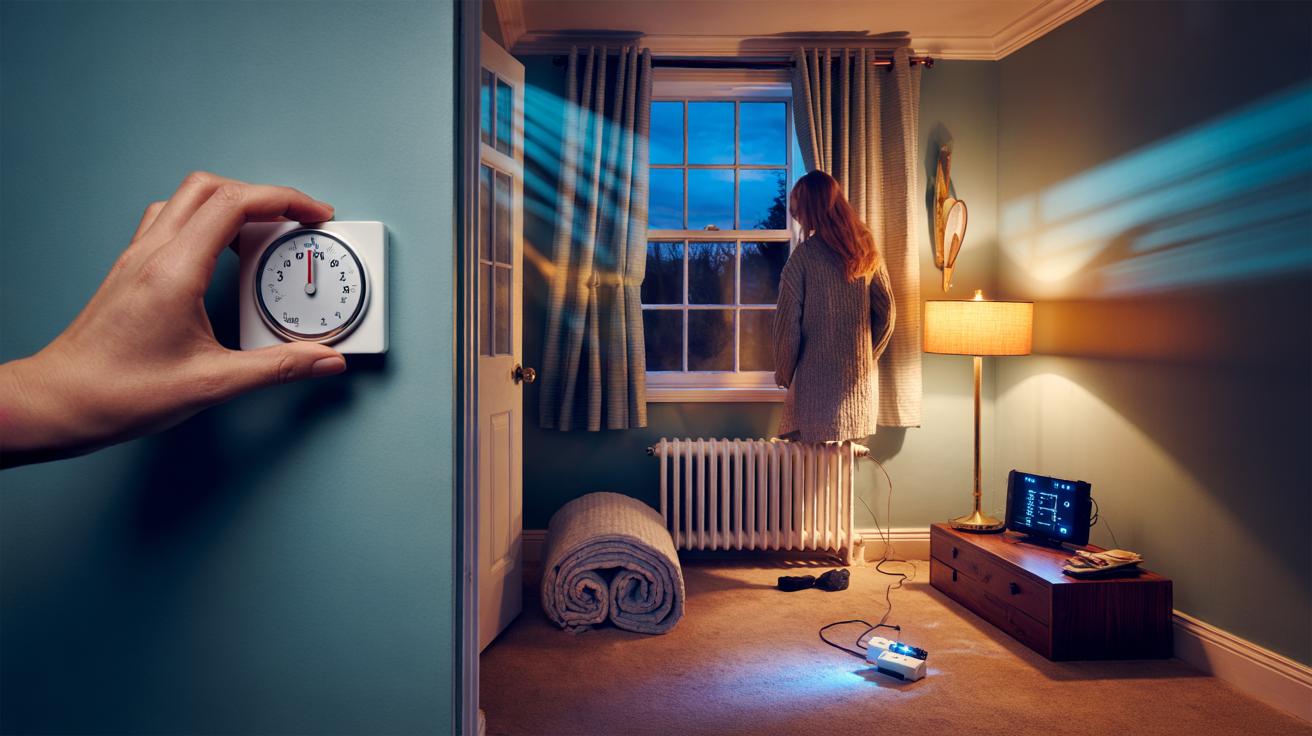
In a nutshell
- 🔎 Adopt the 5-4-3-2-1 rule: a fast, no-spend sequence to audit rooms, fix leaks, optimise controls, cement daily habits, and maintain a weekly check for sustained energy efficiency.
- 🚪 Do 4 draught stops with what you own: rolled towels at doors, cardboard in letterboxes, locked windows for tighter seals, curtains closed at dusk, and foil behind radiators on external walls.
- 🎛️ Make 3 control tweaks: lower the thermostat by 1°C, tighten heating schedules to actual occupancy, and set TRVs room-by-room; shorten hot-water timing where possible.
- 🔁 Build 2 daily routines: use short “burst ventilation” after cooking/showers and “heat the person, not the house” with doors shut, right layers, and standby power fully off.
- 📊 Keep 1 weekly Energy Hour: meter reading and notes, socket sweep, clean filters and vents, verify programmes and clocks, and listen for radiator issues to stop waste creeping back.
Energy bills feel relentless, yet some of the fastest wins are hiding in plain sight. Experts now champion the simple 5-4-3-2-1 rule—a rapid sequence of no-spend tweaks that sharpen your home’s energy efficiency in minutes. It’s practical. It’s grounded in habit. And it works with what you already have. Think quick checks, smarter control settings, everyday routines, and one weekly moment of accountability. No new kit required, just attention and a bit of intention. Follow the steps, and you’ll waste less heat, tame standby loads, and make every degree you pay for pull its weight. Ready to start today? Here’s the plan.
5-Minute Whole-Home Audit
Set a timer for five minutes and walk your home with purpose. Start at your radiators: are they blocked by sofas, long curtains, or cabinets? If so, pull furniture a few inches forward and tuck fabric away so heat can circulate—free and instant. Feel around window frames, skirting boards, and keyholes with the back of your hand. Notice a chill? That’s a clue to draughts you can tame in the next step. Glance at standby lights; note anything glowing red. Check curtain behaviour: are they closed at dusk and open at dawn to capture daytime warmth? Small adjustments compound quickly when they’re repeated daily.
Open internal doors strategically. Keep warm rooms shut; let sunlit spaces share heat. In the kitchen, do the “paper test” on your fridge: close the door on a sheet; if it slides out easily, tidy the seal and shift any items preventing a tight close. On your boiler controller or smart thermostat, confirm the time and programme are correct—clocks go out of sync surprisingly often. Finally, look up. Are extract fans clogged with dust? A quick wipe improves airflow and reduces moisture, helping rooms warm faster and stay warm longer.
| Number | Focus | Typical Actions | Time Needed |
|---|---|---|---|
| 5 | Whole-home audit | Radiators clear, curtains set, standby spotted | 5 minutes |
| 4 | Draught stops | Doors, windows, letterbox, floors | 10–15 minutes |
| 3 | Controls | Thermostat, schedules, TRVs | 5 minutes |
| 2 | Daily routines | Vent smartly, shut doors | Ongoing |
| 1 | Weekly check | Standby sweep, meter read | 15 minutes |
This audit isn’t about perfection; it’s about noticing leaks, obstacles, and waste. Once you see them, you can fix them with what you already own. The payoff is immediate: rooms feel warmer at the same thermostat setting, appliances behave better, and you learn your home’s quirks. That knowledge, not gadgets, is your first efficiency upgrade.
4 Draught Stops Using Only What You Own
Draughts are sneaky. They strip warmth and force your boiler to work harder. Start with the front and back doors: lay a rolled towel or spare blanket as a DIY draught excluder. If you notice air at the sides, adjust the latch plate with a screwdriver to pull the door snug—free and fast. For letterboxes that rattle, wedge a piece of clean cardboard inside when you’re at home. On internal doors, deploy a doormat or folded runner to cover gaps on chilly corridors. Shut the doors of rooms you’re not heating to trap warmth where you need it.
Next, windows. Close them fully, then lock them; many latches pull sashes tighter against the seal. For older frames, fold newspaper or kitchen roll and tuck it along the leakiest edges as a temporary buffer. Thick curtains? Make them work harder. Close them as soon as dusk falls, tucking fabric behind radiators so heat flows into the room, not the glass. If you’ve got spare cardboard and aluminium foil in the cupboard, place a foil-faced panel behind radiators on external walls to reflect heat back inside—no purchase required if it’s already in your kitchen drawer.
Finally, mind the floor. If you feel cold air near skirting, push a cushion against gaps when you sit; it’s not glamorous, but it’s effective on winter evenings. Think of draught control as stacking small wins. Each blocked leak trims heat loss you were literally paying to blow outdoors. Once you feel the difference, you won’t go back.
3 Thermostat and Control Adjustments
Heat strategy beats heat quantity. First, set your main thermostat one degree lower than usual. Try it for 48 hours. Most homes feel the same after ten minutes, and the boiler cycles less. That single degree is often the biggest free saving of the season. Second, sharpen your heating programme: concentrate warmth around when people are actually home. Bring the “on” time forward by 15 minutes after sunrise and trim the evening “off” by 20 minutes if the house holds heat; tweak until comfort meets thrift.
Third, use your TRVs—those numbered valves on radiators—as intended. Bedrooms sleep better cooler (setting 2–3), spare rooms can sit on frost-protect, and living rooms can run warmer (3–4) only when occupied. Keep the main thermostat in a genuinely representative location: away from radiators, ovens, and direct sunlight. If it’s near a draught, shield it with a book spine or a picture temporarily to reduce false readings. Hot water tank on a timer? Shorten the schedule; most cylinders hold temperature longer than you think, especially with a jacket. Turn off electric towel rails until needed. It’s control, not denial—targeted warmth where it matters.
Review these changes after a week. If someone’s chilly at particular times, nudge the relevant room by a single TRV notch rather than hiking the whole-house set point. Local tweaks protect comfort without inviting the boiler to burn through your budget.
2 Daily Routines That Compound Savings
Routine one: master ventilation. Open windows wide for five to seven minutes after showers and cooking, then close them. This “burst vent” dumps humidity quickly without cooling the building fabric. Leave doors shut while you vent to keep heat where you want it. Short, sharp ventilation beats windows ajar all day. Keep lids on pans and use existing extractor fans—after you’ve dusted them—so they move air properly. Less moisture equals less condensation, fewer cold spots, and rooms that warm faster the next time the heating clicks on.
Routine two: heat the person, not the whole house. Close internal doors as you move, especially late afternoon when temperatures dip. Stack comfort: slippers, a jumper, a throw on the sofa. Boil only the water you need; kettles are stealth power hogs. Batch oven use in one evening, then open the door after cooking to spill residual warmth into the kitchen. Switch appliances fully off at the wall when done—TVs, consoles, speakers, chargers. Standby is a constant leak; stopping it is free. These two routines cost nothing and ask little, yet they shave the peaks from your daily consumption curve.
Set a daily two-minute “curtain check” alarm at dusk. Close every curtain, blind, and loft hatch you can. It’s mundane. It’s also a genuine thermal barrier you already own.
1 Weekly Check That Keeps You Honest
Call it your Energy Hour. Once a week, do a sweep. Start with sockets: anything glowing or warm that isn’t serving you gets switched off. Next, take a meter reading or open your supplier’s app and note using digits, not guesswork. Patterns emerge quickly—especially if you add a quick note like “hosted dinner” or “away for weekend.” Check schedules on your heating controller; clocks drift after power cuts or seasonal clock changes. Confirm the hot water period is still lean and that school or work routines haven’t shifted since you last set it.
Cleanliness matters. Vacuum fridge and freezer vents to help compressors run cooler. Rinse or dust filters on extractors. Wipe the tumble dryer lint filter—even if you mostly air-dry, a clean filter improves airflow for those essential loads. Walk past radiators: if you hear gurgling, note it for a later bleed if you already have a key; otherwise, lower the affected TRV one notch to reduce noise and wasted circulation. Finally, open the loft hatch briefly: any unexpected draught or smell can signal gaps you can block with spare fabric until a longer-term fix is possible.
This weekly ritual keeps the small stuff small and prevents waste from creeping back in. Accountability turns good intentions into evidence. When the numbers trend down and rooms still feel comfortable, you’ll know it’s working.
The 5-4-3-2-1 rule succeeds because it aligns attention, not spending, with how homes actually lose heat. You prioritise draughts, sharpen controls, and build habits that keep warmth where you live—not where you don’t. The result is quieter boilers, quicker warmth, and fewer kilowatt-hours gone with the wind. Start tonight, repeat tomorrow, and lock in a weekly check. Consistency, not kit, is your secret weapon. Which step will you try first, and what difference do you notice after a single week of mindful, no-spend energy housekeeping?
Did you like it?4.4/5 (26)