In a nutshell
- 🧪 White vinegar works via mild acetic acid that dissolves limescale and soap scum, slashing bathroom scrubbing time with a clean, low-residue finish.
- ⏱️ A fast routine: mix 1:1 vinegar and water (plus a drop of washing‑up liquid), spray, dwell 5–10 minutes, then wipe with microfibre and a squeegee; use bicarbonate + vinegar foam for grout and a bag soak for shower heads.
- 📊 Follow clear ratios and contact times to let chemistry work; never mix vinegar with bleach, label bottles, ventilate, and finish chrome with a dry buff to prevent water marks.
- 🛑 Surface safety: avoid natural stone (marble, limestone, travertine) and delicate lacquered metals; patch test unknown finishes, rinse seals, and use pH‑neutral cleaners where required.
- 💷 Big UK wins: excels in hard water areas, cutting a weekly clean from ~30 minutes to ~15–18, while staying budget-friendly and reducing product clutter.
There’s a reason cleaning pros whisper about it and savvy renters swear by it: the humble bottle of white vinegar. In many UK homes wrestling with hard water, this pantry staple slashes grime without harsh fumes or complicated routines. Spritz, wait, wipe. That’s the rhythm. The secret is simple chemistry that melts through soap scum and limescale so you scrub less and finish faster. Costs pennies, too. For bathrooms dulled by mineral deposits, white vinegar can cut scrubbing time in half. Consider this your no-nonsense guide to turning a kitchen cupboard standby into your most reliable bathroom ally.
The Pantry Staple: Why White Vinegar Wins
White vinegar’s power lies in mild acidity—specifically acetic acid—which reacts with alkaline deposits like limescale and breaks them down before you even touch a sponge. UK hard water leaves stubborn mineral films on taps, screens, and tiles; vinegar’s chemistry does the heavy lifting. Instead of attacking with elbow grease, you dissolve the problem at the source. It’s also low residue. No filmy gloss, no sticky feel that attracts dirt. Just spray, dwell, and wipe to a streak-free sheen.
Compared with specialist sprays, a litre of supermarket vinegar often costs under a pound, which makes every spritz astonishingly cheap per use. It’s also biodegradable and light on packaging if you buy in bulk, refilling a reusable trigger bottle. The scent? Sharp, yes, but fleeting. It dissipates as it dries and disappears completely after a quick rinse. For glass, chrome, acrylic, and ceramic, white vinegar delivers fast, repeatable results without the faff. That repeatability matters: when you can rely on a single bottle, you clean more consistently—and quicker.
How to Use It: A 10-Minute Routine
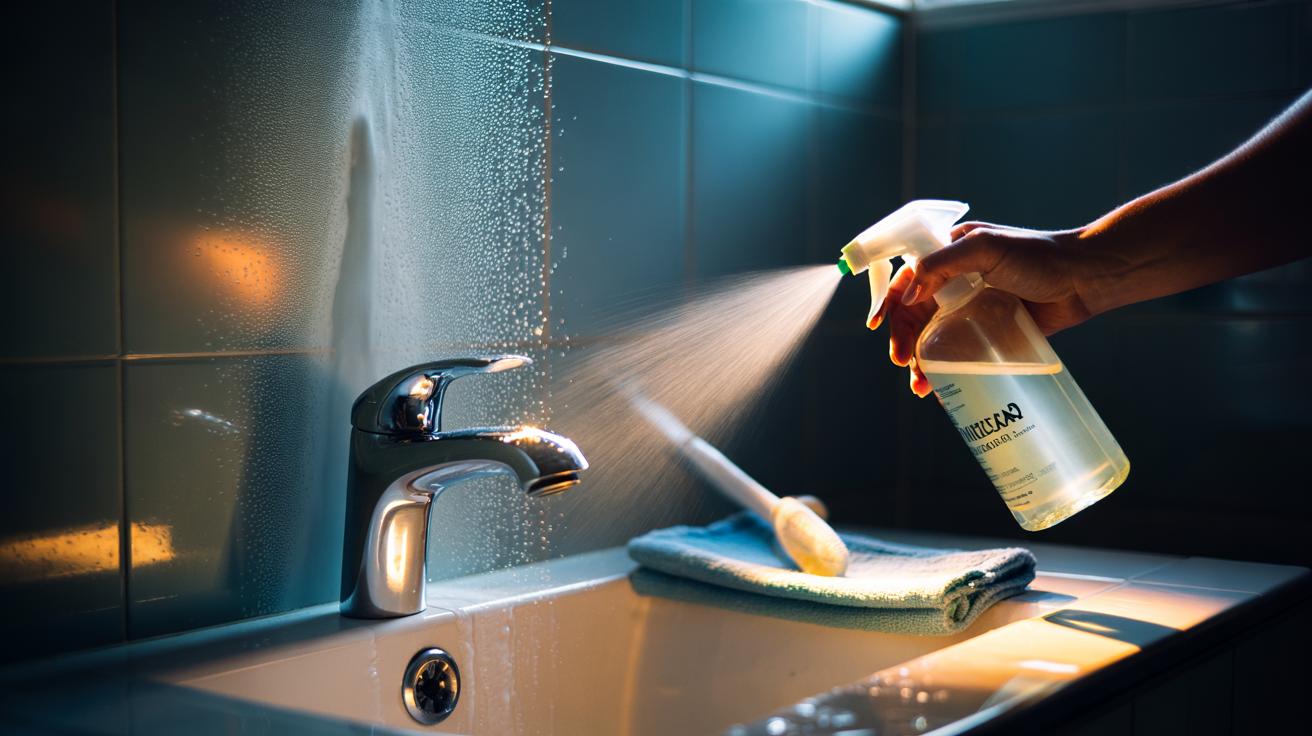
Start with a simple mix: 1:1 white vinegar and warm water in a sprayer. Add a small splash of washing-up liquid to boost glide on vertical glass. Clear the surfaces, turn on the fan, and mist everything—shower glass, taps, tiles. Let it sit for 5–10 minutes; do not rush the dwell time. That pause unlocks the time savings, as deposits soften and detach. While it works, drop a microfibre in hot water so it’s ready to wring and wipe.
For the clear screen finish, wipe with a microfibre cloth, then squeegee from top to bottom. Taps and fittings? Wrap a vinegar-dampened cloth around them for three minutes, then buff dry. Grout looking grey? Sprinkle bicarbonate of soda on damp lines, spritz vinegar to foam, wait two minutes, then scrub lightly with a soft brush. You’ll notice the brush glides because the scum has already loosened. For shower heads, bag-and-soak in warm vinegar for 20 minutes, rinse, and run hot water for a minute.
Toilet touch-up: press vinegar-soaked paper around the bowl ring for 15 minutes, then brush. Finish the whole room with a quick rinse of high-contact spots and a dry buff on chrome. This rhythm—spray, dwell, wipe—turns what used to be a battle into a brisk circuit that consistently saves time.
Quick Ratios and Contact Times
Precision helps you move faster. Use the table below as a cheat sheet for the most common bathroom jobs. Stick to the contact time; that’s where the magic—and the time savings—happen. If deposits are heavy, repeat once rather than scrubbing harder. Always finish chrome with a dry cloth to banish water marks, and keep the room ventilated.
| Task | Mix | Contact Time | Tool | Tip |
|---|---|---|---|---|
| Shower glass | 1:1 vinegar:water + drop of washing-up liquid | 5–10 min | Microfibre + squeegee | Buff edges dry to prevent runs |
| Taps and chrome | Neat vinegar on cloth | 3–5 min | Soft cloth | Wrap cloth round spout for full contact |
| Grout refresh | Bicarbonate sprinkle + vinegar spray | 2–4 min | Soft brush | Avoid stiff wire brushes |
| Shower head | Neat warm vinegar in bag | 15–20 min | Rinse and run hot | Check manufacturer finish care |
| Toilet bowl ring | Neat vinegar on paper | 15–30 min | Toilet brush | Flush twice to clear smell |
| Tile haze | 1:2 vinegar:water | 3–5 min | Microfibre | Rinse thoroughly, dry |
Never mix vinegar with bleach or bleach-based products, as this can release dangerous gases. Label your spray bottle clearly and store it away from oxidising cleaners. If a surface is very sensitive or unknown, do a patch test in a hidden spot and shorten the dwell time on the first pass.
Safety, Surfaces, and When Not to Use It
Vinegar is not universal. Avoid natural stone such as marble, limestone, and travertine—acids etch them, leaving dull patches. Skip unsealed concrete, some enamel finishes, and reactive metals that warn against acids. Nickel and brass with delicate lacquers may haze; check the manufacturer’s care notes. If in doubt, test a tiny area, reduce strength, and keep contact time short. Always ventilate. The tangy smell fades, but fresh air speeds it up and keeps cleaning comfortable. And yes, rinse seals and rubber trims to prevent long contact with acid.
Mind your combinations. Do not pair vinegar with bleach, chlorine tablets, or percarbonate powders in the same session. If you routinely use a bleach gel in the loo, let it clear fully before any vinegar pass. Wear gloves if you have sensitive skin, and use a microfibre rather than scourers—chemistry should do the work, not abrasion. For stone bathrooms, deploy a pH-neutral cleaner, keeping vinegar for glass and chrome only. The result is a smart, surface-safe routine that stays quick without sacrificing finish.
Real-World Time Savings and Budget Benefits
In hard-water areas from Kent to Cumbria, vinegar’s value multiplies. The pre-soak dissolves the worst of the film, so you cut scrubbing strokes dramatically. Many households report a weekly clean dropping from 30 minutes to around 15–18 for a typical shower room once the routine beds in. Time savings come from dwell time discipline and a final dry buff that prevents new marks. That last step slows re-soiling, so you clean less often. It’s a quiet compounding effect: cleaner today, easier tomorrow.
Then there’s the wallet. A litre of basic white vinegar often costs less than a coffee, and it replaces multiple bottles—glass cleaner, limescale spray, and some bathroom gels. Fewer products mean less clutter and fewer decisions, which also speeds you up. Keep one labelled sprayer, one microfibre, one squeegee. That’s your kit. The method is repeatable, teachable, and quick to deploy after a shower while steam softens deposits for you. Small habit, big payoff.
White vinegar won’t fix everything, but it transforms the parts of bathroom cleaning that are slowest: limescale and soap scum. Let chemistry loosen the grip, then glide to the finish. Keep it off sensitive stone, respect contact times, and dry surfaces to lock in the shine. Simple, cheap, fast. For UK homes in hard-water zones, this is the closest thing to a bathroom cleaning cheat code. Will you try a one-week swap—timing your usual clean against a vinegar routine—and see how much scrubbing time you actually save?
Did you like it?4.3/5 (23)