In a nutshell
- 🔥 Use aluminium foil as a heat reflector and pressure spreader to create sharper, longer-lasting hems while protecting fabrics from shine and scorch.
- 🧰 Step-by-step: insert heavy-duty foil at the fold, press (don’t slide) with a pressing cloth, allow a full cooling phase, and use a clapper on thick fabrics.
- 📏 Follow fabric-specific settings: lower heat and light steam for synthetics and silk; medium with steam for wool; high with ample steam for cotton, linen, and denim; adjust foil stiffness accordingly.
- 🛠️ Troubleshooting: reduce heat or time to stop shine, support fabric to prevent waves, tweak stitch length and tension to avoid puckers, and replace rumpled foil for clean results.
- 👗 Versatile applications: works on wovens and knits, pairs with wash-away tape or fusible web, and handles curves, pleats, cuffs, and school-uniform hems with reliable precision.
Hems can misbehave. They ripple, stretch, or refuse to hold a crease no matter how earnestly you steam and press. Enter an unlikely hero from the kitchen drawer: aluminium foil. This gleaming sheet reflects heat, distributes pressure, and encourages fabric to remember its fold. It’s quick. It’s cheap. And it works on everything from school trousers to silk slips. Think of foil as a portable mini-press that shapes cloth precisely where you need it. In trials with tricky blends and bouncy knits, the foil trick delivered sharp, durable hems without shine or scorch. Here’s how to wield it like a pro.
Why Foil Beats Pressing Alone
Ironing flat fabric is easy; persuading a hem to hold a crisp, consistent line is not. Foil solves that mismatch. It reflects heat back into the folded edge, creating a pocket of warmth that mimics a boutique pressing setup. The result? A more even temperature, less drag from the iron’s soleplate, and a crease that sets faster. Foil acts as a heat mirror and a pressure spreader, so fibres relax and reset in a clean fold rather than drifting under the iron.
There’s another benefit: protection. Foil shields delicate fibres from direct contact with hot metal, reducing the risk of glazing on wool or shine on synthetics. It also tames moisture. Instead of steam dispersing randomly, the reflected vapour penetrates the fold line, speeding the setting phase. That matters on curved hems and heavy fabrics where memory is stubborn. For tailors, the trick prevents seam allowances from imprinting on the right side; it evens out the topography. For home sewers, it turns wavering hems into smart, uniform edges that look professionally finished. Sharper crease, fewer passes, less guesswork.
Step-By-Step: The Foil Hem Press
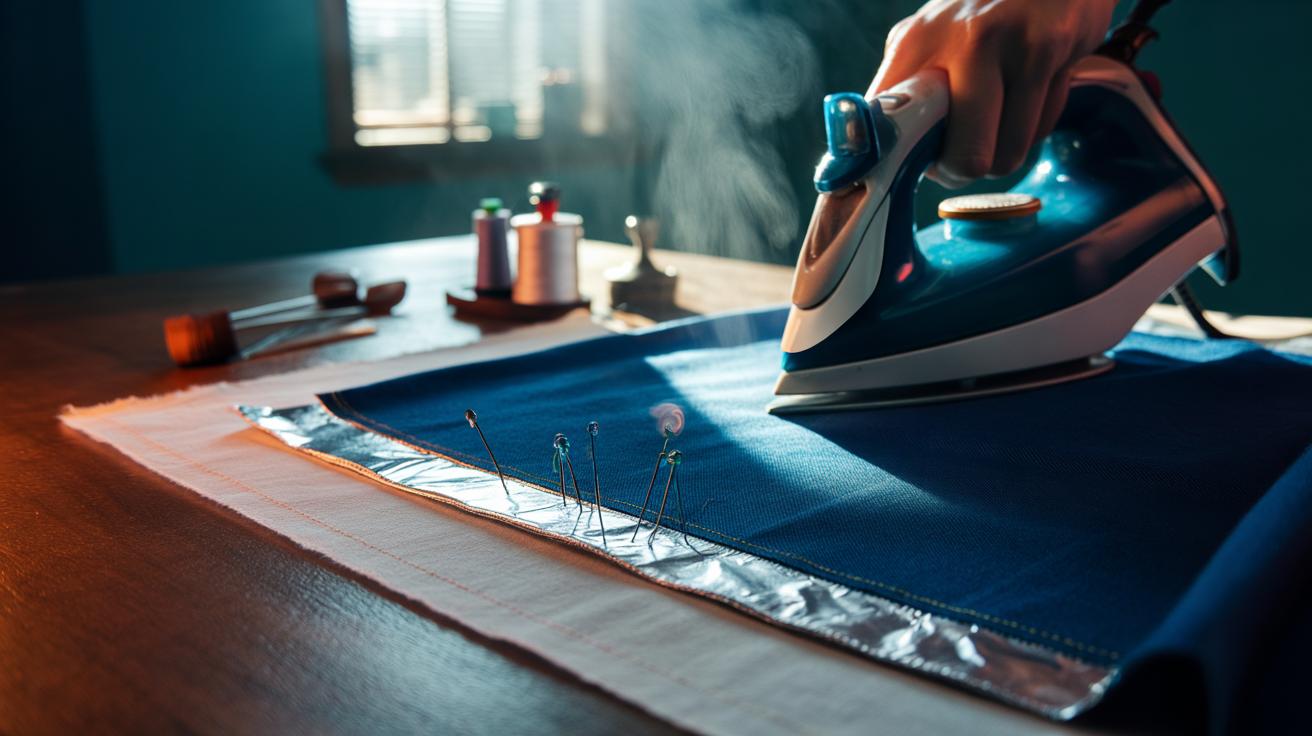
First, prep the edge. Press the raw edge to establish a guideline, then fold the hem to the desired depth and pin or clip lightly. Cut a strip of heavy-duty aluminium foil slightly narrower than your hem allowance and as long as the segment you’ll press. Fold the foil once lengthways for stiffness and slide it inside the hem, snug against the fold. The foil must sit exactly where you want the crease to live.
Set your iron to a fabric-safe heat. Place a pressing cloth over the area to discourage shine. Press down, no sliding, for 8–15 seconds on wovens; a touch less on synthetics. Steam lightly if the fabric tolerates it. Move along in sections, keeping the foil tight to the fold. Let the cloth cool flat before moving it. That cooling phase locks the memory. For curves, use shorter foil pieces and overlap them like scales to follow the contour. For thick hems (denim, coating), add a wooden clapper after each press to store the heat and compress the layers. Press, don’t iron; time and stillness beat motion.
Once the crease is crisp, stitch: blind hem, topstitch, or fuse with webbing if appropriate. If the foil tugs, pull it out and reinsert ahead of the next section. On knits, combine the foil trick with wash-away tape to stabilise stretch until the seam is sewn. The method is simple, repeatable, and forgiving.
Choosing the Right Foil, Heat, and Fabric
Not all foils or fabrics are equal. Standard kitchen foil works, but heavy-duty foil resists crumpling and applies steadier pressure, ideal for wool, denim, and cotton twill. Use lower heat on synthetics and silk; rising temperatures can glaze polyester or distort viscose. On the classic UK dot scale, think one dot for delicate fibres, two for blends, three for cotton and linen, while wool sits between with steam and a cloth. Match foil stiffness and heat to fibre temperament.
| Fabric | Iron Setting | Steam | Foil Type | Notes |
|---|---|---|---|---|
| Silk, Acetate | • (low) | Minimal | Standard | Use a pressing cloth; test first. |
| Polyester, Viscose | •–•• (low–medium) | Light | Standard/Heavy | Avoid shine; brief presses only. |
| Wool, Suiting | •• (medium) with cloth | Generous | Heavy-duty | Clapper improves crease retention. |
| Cotton, Linen | ••• (high) | Ample | Heavy-duty | Press longer; cool flat. |
| Denim, Canvas | ••• (high) | Moderate | Heavy-duty (doubled) | Use weight/clapper for depth. |
For stretch knits, the foil helps set a fold without stretching the edge. Add stabilising tape or a narrow strip of fusible web if topstitching later. For slippery satins, a slightly textured pressing cloth prevents skating. When in doubt, test on a scrap with the same layers.
Troubleshooting and Pro Tips
If you see shine: reduce heat, increase cloth thickness, keep the foil but shorten dwell time. For wavy hems, the culprit is stretching—support the fabric’s weight on the board, and let each section cool before moving. Puckering after stitching? Increase stitch length slightly and avoid tugging; the foil’s crisp fold means you’re sewing less bulk, so adjust tension accordingly. Cooling is not optional; it is the secret sauce.
Pro tricks lift the finish. Use a ruler or seam gauge to pre-mark the hem depth, then slip the foil to that line for instant accuracy. For circular hems, snip tiny relief notches in the seam allowance, then insert short foil segments to maintain the arc. On heavy coats, pre-steam with the foil in place, press, then clamp with a clapper for 10–20 seconds. Want a soft fold, not a knife edge? Press through a thicker cloth and halve the dwell time. Clean foil matters; replace if it rumples heavily, as creases can imprint. And if your iron spits, purge it, or the minerals will mark the cloth. Small controls create big, repeatable results.
From school uniforms to hand-finished suits, foil turns hemming from a nag into a neat, fast ritual. The method is inexpensive, portable, and compatible with almost any fibre you’ll meet on a British ironing board. It rewards patience, not force, and makes home pressing look like workroom craft. Heat, time, and stillness do the heavy lifting. Ready to try the foil trick on your next hem, or will you push it further—perhaps shaping pleats, setting cuffs, or taming a tricky bias edge with the same mirrored heat magic?
Did you like it?4.5/5 (25)