In a nutshell
- ✨ The banana peel trick works because natural oils and plant waxes fill micro-scratches, smoothing leather so scuffs vanish in seconds; friction spreads a thin, reflective film while fibres act as a gentle abrasive.
- 🧪 Chemistry check: trace potassium salts lift dust, mild acids improve optical clarity, and moisture aids glide—delivering a fast, cosmetic shine, not deep conditioning.
- 🧰 Safe steps: clean first, rub the inside of the peel in small circles, wait 30–60 seconds, then buff thoroughly with a soft cloth until dry; patch-test on pale or aniline leathers.
- ⚠️ Limits: avoid suede, nubuck, and unfinished pull-up; sugars can mat fibres. It won’t replace wax polish for water resistance or rich conditioners for long-term care.
- 🌱 Practical take: a low-waste commuter fix that buys time; rotate this hack with proper conditioning and wax to protect stitching, preserve patina, and keep uppers supple.
It sounds like a pub myth, yet it survives the commute test: rub your tired brogues with a banana peel and they gleam. Not sorcery. Chemistry. The peel’s natural oils and waxy compounds slip into micro-scratches, banishing grey scuffs with a shine that appears in seconds. For anyone dashing between meetings or hopping off a rain-slicked train, it’s a tidy, low-waste fix that works when polish is nowhere to hand. But the trick deserves a closer look. There’s real material science behind the gloss, and a few smart caveats that keep leather healthy rather than sticky, dulled or stained.
Why Banana Peel Polishes Leather
Leather is a porous, collagen-based surface. When it scuffs, light scatters off roughened fibres and the shoe looks dull. The inner surface of a banana peel contains natural lipids, trace waxes, and moisture that behave like a micro-thin dressing. Glide it over the leather and the oils wick into the shallow abrasions, levelling the surface just enough to restore sheen. Friction helps. A quick rub warms the film so it spreads evenly, and the peel’s microscopic plant fibres act as an ultra-gentle abrasive, tidying loose nap without scratching.
There’s chemistry at play beyond lubrication. Trace potassium salts can alter surface charge, helping dust release before buffing, while mild plant acids assist with optical clarity by lifting oxidised grime. Crucially, this is a fast optical fix rather than a deep feed for the hide. It re-aligns the surface temporarily, so scuffs vanish and colour looks richer—but it isn’t a substitute for proper conditioning. Used judiciously, though, the peel creates a clean, bright patina in moments, which is why commuters and cobblers alike keep the hack in their back pocket.
How to Use a Banana Peel Safely
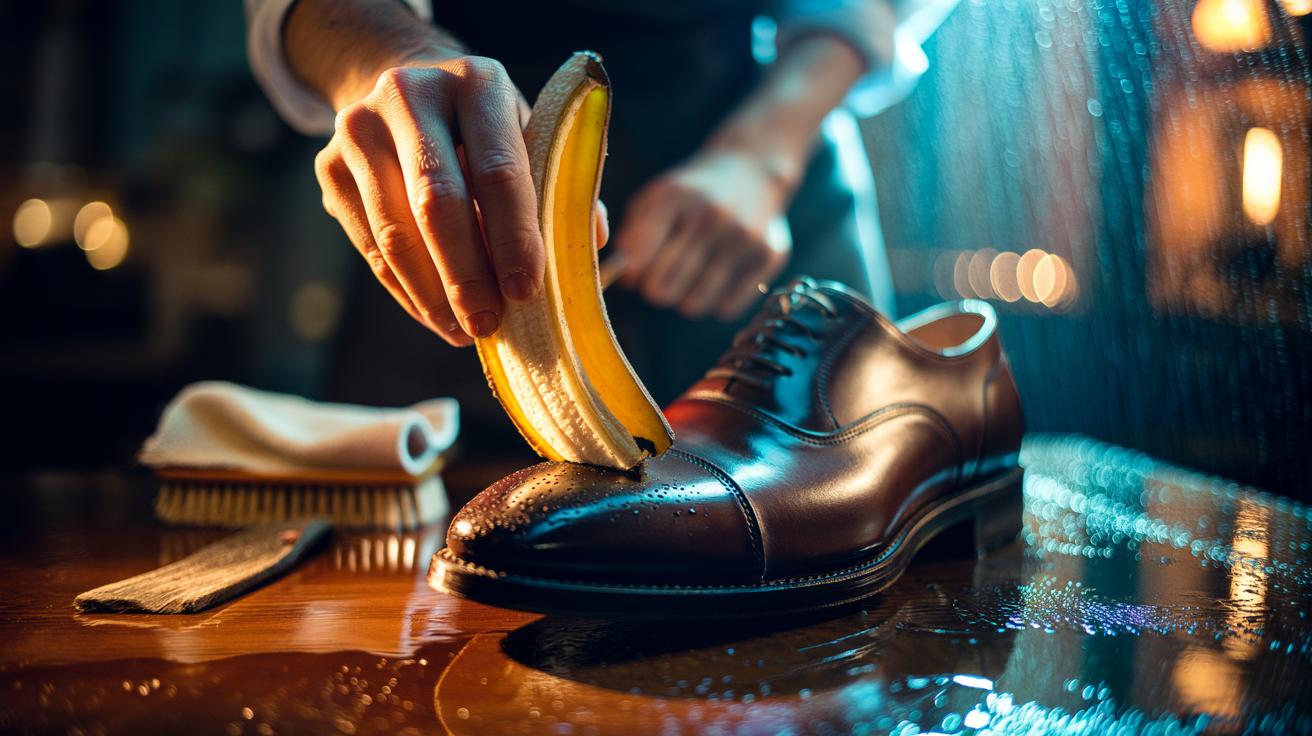
Start clean. Brush away grit so you’re not grinding dirt into the leather. Choose a ripe, not mushy, banana; the inner peel should feel supple, not wet. Working section by section, rub the inside of the peel over the shoe in small circles, paying attention to toe boxes and quarters where scuffs stand out. Give it 30–60 seconds to settle. Then buff briskly with a soft cloth or tissue until the surface looks even and dry to the touch.
Do not use this hack on suede, nubuck, or unfinished pull-up leathers. The sugars can mat fibres and leave tide marks. On very pale or aniline-finished shoes, perform a discreet patch test—banana residue may deepen tone slightly. If you’ve overapplied, a damp cloth followed by a dry buff removes excess. Keep the peel away from stitched welts if you’ve recently applied coloured edge paint. Always finish by buffing thoroughly—any sticky residue attracts dust and dulls the shine you’ve just created. For longevity, rotate this quick fix with a proper conditioner and wax polish every few weeks to keep the hide resilient.
Peel Versus Polish: Science, Pros, and Limitations
A banana peel delivers a fast, cosmetic improvement. Traditional creams and waxes deliver structure and protection. Understanding the difference matters if you want sharp shoes after the first meeting and still supple uppers by the end of the quarter. The peel’s mix of lipids and plant compounds creates a thin, refractive film that “fills” the topography of light scuffs. Wax polish, by contrast, builds a harder shell, improving water beading and resisting abrasion. Cream polish feeds pigments and conditioners deeper into the leather, evened out by solvents designed for the job.
| Peel Component | Role on Leather | Visible Effect |
|---|---|---|
| Natural oils/lipids | Lubricate fibres; fill micro-scratches | Immediate gloss; richer colour |
| Plant waxes | Creates thin reflective film | Smoother highlights; quick shine |
| Potassium salts | Helps lift dust and grime | Cleaner surface before buff |
| Sugars/moisture | Temporary plasticising and glide | Can attract dust if not buffed |
This is a stopgap, not armour. No peel can match the hydrophobic barrier of a high-quality wax or the nourishment of lanolin-rich conditioners. It’s brilliant before a pitch or dinner. Less brilliant in a downpour or on heritage boots that need real care. Used thoughtfully, it fits a modern, low-waste routine—rescuing appearance without clogging pores with heavy product. But respect the boundaries: test first, buff thoroughly, and schedule real maintenance to protect stitching, prevent creasing, and preserve that prized patina.
As quick fixes go, the banana-peel shine is disarmingly effective: low-cost, low-waste, and startlingly fast. It flatters worn toes, revives tired quarters, and buys you time until the next proper polish. Yet leather loves consistency. It lasts longer—and looks better—when you balance instant gloss with periodic nourishment and weather protection. Will you keep a spare peel in the kitchen for last-minute rescues, or double down on a disciplined care kit to future-proof your favourite shoes?
Did you like it?4.6/5 (27)