In a nutshell
- 🧪 Acid + oil synergy: Citric or acetic acid dissolves limescale (calcium carbonate), while lemon balm essential oil breaks down soap scum for a fast, streak-free shine.
- 🌿 Lemon balm’s role: Terpenes like citral and limonene boost degreasing power, add a fresh scent, and leave a subtle hydrophobic finish that helps repel new spots.
- 🧴 DIY method: Mix a mild acid solution with a lightly emulsified oil phase; apply for 60–120 seconds, agitate with a soft microfibre cloth, rinse, and buff dry.
- 🛠️ Surface guidance: Excellent on chrome and stainless steel; use caution on nickel and brass; avoid natural stone like marble that acids can etch.
- ⚠️ Safety & upkeep: Keep contact times short, never mix acids with bleach, ventilate, and maintain weekly to prevent build-up and keep taps sparkling.
Hard water leaves taps looking tired. White dots, grey film, a dullness that resists ordinary wiping. In British bathrooms and kitchens, that’s often limescale glued to a thin layer of soap scum. One quick, aromatic fix has been quietly gaining fans: lemon balm on metalwork. Pair the herb’s bright essential oil aroma with a gentle acid and you get a fast-acting cleaner that lifts both mineral deposits and grease. The trick isn’t mystical; it’s chemistry you can see fizzing on contact. Use the right acidity, keep contact time short, then buff to a mirror shine. The result? Tarnished taps that sparkle again, without the nose-stinging harshness of many shop-bought descalers.
Why Acidic Oils Cut Through Limescale and Soap Scum
Limescale is mostly calcium carbonate. Acids—think citric acid from citrus or household vinegar (acetic acid)—react with it, forming soluble salts and releasing fizzing carbon dioxide. That visible effervescence is your cue the deposits are dissolving. Soap scum, by contrast, is hydrophobic. An oil phase excels at loosening that waxy film so it wipes away instead of smearing. Combined, acid and oil do double duty: the acid unlocks mineral crusts while the oil lifts grime and slows future spotting by leaving a whisper-thin hydrophobic sheen on metal.
Where does lemon balm fit? Its essential oil carries terpenes (citral, neral, limonene) that help solubilise greasy residues and leave a clean, herb-citrus scent. The “acid” component doesn’t live in the oil—so you create a two-phase or lightly emulsified mixture. Think of it as a targeted partnership: acid for inorganic deposits, oil for organic films. Kept gentle, it’s safe for chrome-plated taps, stainless steel, and most modern fittings. Leave it sitting too long, and any acid can dull finishes, so timing matters.
How to Make a Lemon Balm Two‑Phase Tap Cleaner
You need two parts. First, the acid: dissolve 1 teaspoon of citric acid crystals in 150 ml warm water, or use 2 tablespoons white vinegar in water for a milder option. Second, the oil: 20 ml of a light carrier oil (sweet almond or fractionated coconut) scented with 10–15 drops of lemon balm essential oil, or a quick infusion made by bruising fresh lemon balm leaves in the oil for 30 minutes. For easier mixing, add 3–4 drops of washing-up liquid to create a loose emulsion that clings to vertical surfaces.
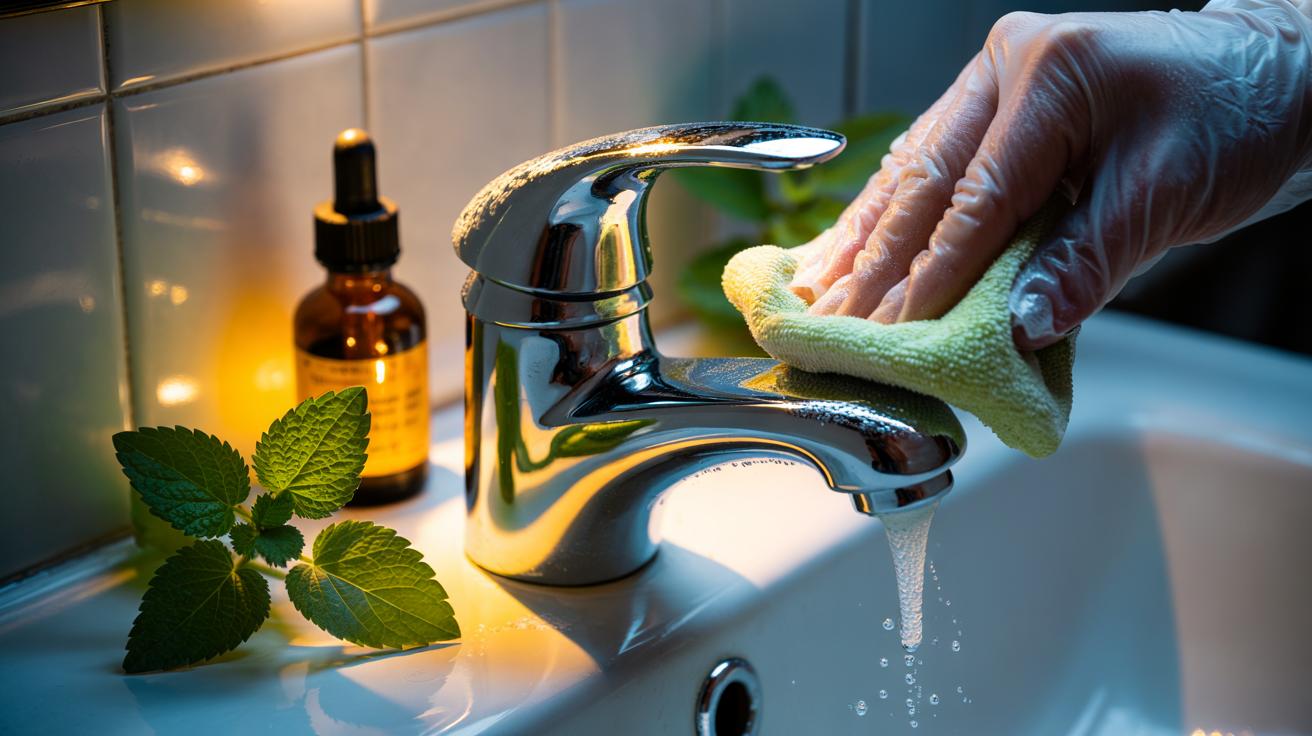
To use, shake the bottle to combine, spritz or wipe onto the tap, and let it sit for 60–120 seconds. You’ll often see faint fizz on chalky spots—good sign. Agitate with a soft microfibre cloth or an old soft-bristle toothbrush at the base and aerator. Rinse thoroughly, then buff dry. Always test on an inconspicuous area first, and never mix acids with bleach. For stubborn accumulations around joints, wrap a soaked strip of kitchen paper around the area for five minutes, then repeat the buff. Finish with a tiny drop of the scented oil on a cloth for a gleam that resists new droplets.
Which Surfaces and Stains It Works On
This method shines on many bathroom and kitchen finishes, yet a little caution protects expensive fixtures. The acid phase is the hero against white, chalky limescale rings on tap necks and the crumbly crust around the aerator. The oil phase loosens soap scum, toothpaste residue, and fingerprints fast. Chrome, stainless and most brushed finishes respond brilliantly when the solution isn’t left to dry on the surface. Nickel and brass are trickier; gentle, brief contact only. Avoid natural stone nearby, as acids can etch limestone and marble splashbacks.
| Surface | Suitability | Notes |
|---|---|---|
| Chrome | Excellent | Short contact; rinse and buff promptly. |
| Stainless Steel | Excellent | Safe with brief dwell; wipe with grain. |
| Brushed Nickel | Good with care | Use weak acid; never scrub abrasively. |
| Unlacquered Brass | Conditional | May alter patina; test first. |
| Powder-Coated Parts | Good | Limit dwell time; avoid pooling. |
| Marble/Limestone | Avoid | Acids etch and dull stone. |
Safety, Evidence, and Practical Tips
The underlying science is solid: acids dissolve carbonate scale; oils displace hydrophobic grime and water. Terpenes in lemon balm enhance degreasing and leave a pleasant, low-chemical scent profile. But household chemistry rewards restraint. Use mild acids, short contact times, and soft cloths. Do not let acidic solutions dry on the metal; residues concentrate and can mark plated finishes. Keep mixtures away from bleach, grout damaged by acid, and reactive stones. Wear gloves if you have sensitive skin and ventilate small bathrooms—essential oils are potent, and some noses are fussy.
Maintenance prevents heavy build-up. After showers, a quick wipe-down and dry buff deter spots. Weekly, reapply the two-phase cleaner for 30–60 seconds instead of waiting for a thick collar of scale to form. Clean the aerator monthly: unscrew, soak in warm citric solution for five minutes, rinse, reinstall. If your water is very hard, consider a tap-mounted filter to reduce deposits. And if you prefer a single bottle, make a light emulsion and label it clearly with ingredients and date, refreshing every four weeks to keep the fragrance bright.
Done right, this tiny ritual transforms dull metal into a mirror that shrugs off splashes and resists fingerprints. It smells like a garden after rain, not a laboratory. The method is quick, economical, and kinder to surfaces than brute-force scouring. Acid unlocks the stone, oil lifts the film, and a dry buff seals the deal. Ready to trade the chalky ring around your tap for a crisp, camera-ready shine—what blend, contact time, and cloth will you experiment with first?
Did you like it?4.3/5 (27)