In a nutshell
- 🍋 Quick polish: a lemon half harnesses citric acid and the pulp’s mild abrasion to lift tarnish fast, especially on sterling silver.
- 🔬 Chemistry at play: tarnish is mainly silver sulphide and copper oxides; acid-driven protonation plus chelation (citrate binding ions) keeps residues from resettling, restoring shine.
- 🧰 How-to in minutes: cut lemon (optional salt), rub 30–90 seconds per area, then rinse, soap-wash, dry and buff to halt acidity and prevent water spots.
- ⚠️ Know the limits: avoid lemons on porous gemstones, rhodium-plated pieces, or intentional patina; for heavy black tarnish, use the aluminium-foil + bicarbonate reduction bath instead.
- 🛡️ Keep it bright: store silver airtight with anti-tarnish strips/cloth and give items a quick microfibre wipe after use to slow future dulling.
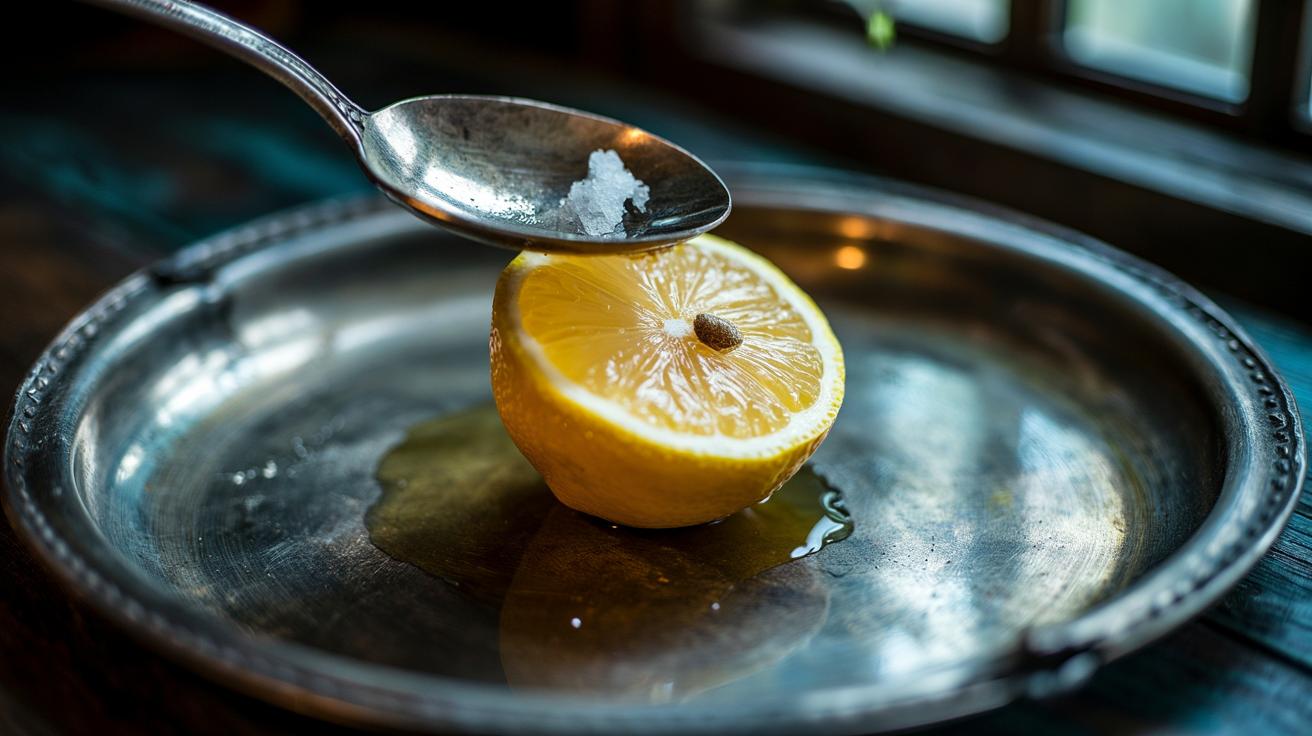
Lemon against tarnish sounds like folklore. It isn’t. Slice a lemon, press it to a dulled spoon, and the grey haze melts into a clean, bright sheen. What looks like magic is firmly grounded in chemistry. The fruit’s citric acid targets the compounds that darken silver and helps lift them away with minimal effort. In kitchens and jewellery boxes across Britain, this quick fix saves money, time, and the faff of bottled polishes. It also cuts harsh fumes. Used correctly, a lemon half can restore a brilliant finish in moments while keeping the metal’s character intact.
The Chemistry of Tarnish: Sulphur, Copper, and Surface Films
Silver doesn’t rust, but it does tarnish. The culprit is usually silver sulphide (Ag2S), formed when silver meets trace sulphur compounds lingering in air, wool, rubber bands, or eggs. If your piece is sterling silver (92.5% silver, 7.5% copper), the copper fraction adds another pathway: copper oxides and copper sulphides. These films scatter light, turning cutlery brown-black and necklaces muddy. Thin layers mute shine; thick layers feel sticky or rough. Left long enough, the film can grow uneven and stubborn.
Why a lemon? Weak acids shift the chemistry at the surface. Citric acid lowers pH, helping to break bonds in copper oxides and loosen mixed sulphide layers. It also chelates (binds) dissolved metal ions, keeping loosened grime from resettling. On pure silver sulphide, the acid’s effect is modest, but on sterling—where copper-derived tarnish is common—it’s notably faster. Add gentle pressure from the lemon’s pulp and you get mild abrasion that thins the film. The result is a rapid, visible brightening without the harshness of aggressive pastes.
Citric Acid at Work: Protonation, Chelation, and Mild Abrasion
A lemon’s juice sits near pH 2. That acidity promotes protonation at the tarnish interface. In plain terms, the acid nudges oxygen- and sulphur-bearing compounds into forms that are easier to dislodge. Meanwhile, citrate—the deprotonated form of citric acid—acts as a multi-toothed ligand, grabbing stray copper ions as they lift off the surface. This chelating action keeps the micro-layer mobile, so a few wipes carry the dullness away instead of smearing it around.
The pulp matters too. Lemon cells provide ultra-fine texture—softer than baking soda, kinder than commercial abrasives—ideal for fragile filigree or thin plating. A pinch of table salt can be added to increase conductivity and boost the acid’s bite, though it’s not essential. Go light: you’re encouraging chemistry to work for you, not sanding the metal. After polishing, a thorough rinse stops residual acidity from lingering, and drying immediately halts water spots and fresh tarnish. That’s the quiet genius here: a gentle trio of acidity, chelation, and texture doing the heavy lift in minutes.
How To Polish With a Lemon Half
Prepare a clean workspace and test first on a discreet area. Halve a fresh lemon. For heavy tarnish on hardy pieces, sprinkle a touch of fine salt on the cut face; for delicate items, use juice only. Press and wipe along the silver in short strokes, then in small circles. Work for 30–90 seconds per section. You’ll see the grey bloom lift quickly. Re-squeeze to refresh the juice as needed. Rinse the item thoroughly under warm water, then wash with a drop of mild washing-up liquid to neutralise residue. Dry immediately with a soft microfibre cloth. Never leave acidic juice sitting on silver for long; polish, rinse, and dry in one smooth sequence.
| Step | Action | Why It Works | Time Guide |
|---|---|---|---|
| 1 | Cut lemon; optional pinch of salt | Citric acid lowers pH; salt improves contact | 30 seconds |
| 2 | Rub gently, refresh juice | Chelation + mild abrasion thin tarnish film | 1–3 minutes |
| 3 | Rinse and soap wash | Stops ongoing acidity; removes residues | 1 minute |
| 4 | Dry and buff | Prevents water marks; restores lustre | 1–2 minutes |
Tip: After drying, a whisper of anti-tarnish cloth can deposit inhibitors that slow future dulling without changing the look.
Limits, Risks, and Smarter Alternatives For Heavy Tarnish
There are boundaries. Avoid lemons on porous gemstones (opal, pearl, coral), on pieces with glued settings, or on rhodium-plated jewellery where any abrasion may thin the plating. Skip antique silver with intentional patina; acid will strip character alongside grime. If tarnish is thick, patchy, or nearly black all over, choose the classic kitchen-lab method: aluminium-foil reduction. Line a heatproof bowl with foil (shiny side up), add hot water, stir in bicarbonate of soda (about 1 tablespoon per 250 ml), immerse the silver so it touches the foil. Wait a few minutes.
That setup creates a gentle galvanic cell. Aluminium sacrifices electrons to reduce silver sulphide back to metallic silver, while sulphur transfers to the foil. No rubbing needed; the film is chemically reversed. Rinse and dry. Use good ventilation—there may be a faint sulphurous whiff. For heirlooms or high-value pieces, consult a professional silversmith who can choose between chemical dips, ultrasonic cleaning, or micro-polishing to preserve detail. Daily prevention helps too: airtight storage, anti-tarnish strips, and a quick microfibre wipe after use keep lemons in the fruit bowl until they’re truly needed.
This is the appeal of the lemon half: simple kit, swift results, and science doing quiet service to everyday beauty. The acid loosens, the pulp lifts, and the shine returns without drama. Keep the exposure brief, rinse well, dry thoroughly, and your favourite spoon or chain will gleam again. For stubborn cases, switch to the foil-and-bicarb reduction or seek expert care. The smartest polish is the one that respects the metal and the maker’s intent. Which piece in your drawer deserves the citrus treatment first, and what finish do you want to preserve?
Did you like it?4.8/5 (23)