In a nutshell
- 🍋 Lemon juice + steam break down baked-on grime fast: latent heat and condensation soften residue, while acidity and aroma neutralise odours for an easy wipe-away finish.
- 🧪 The science: citric acid disrupts protein–sugar bonds and chelates minerals; limonene dissolves grease; micro-droplets penetrate seams, speeding up cleaning without abrasion.
- ⏱️ Quick steps: 250–300 ml water + half a lemon (with rinds), heat 3–6 minutes depending on wattage, rest 1–3 minutes with door closed, then wipe; never seal the container.
- 🛡️ Safety first: use microwave-safe glass or ceramic, lemon slices reduce superheating risk, open carefully to avoid hot vapour, and avoid metal, cling film, and abrasive pads.
- ✨ Pro tweaks: pinch of salt for hard water, a short second burst for stubborn spots, tilt bowl to target walls, finish with microfibre; add bicarbonate of soda afterward to mop up lingering odours.
Grimy microwave? Don’t reach for harsh sprays. Reach for a lemon. In a trick beloved by home economists and lab technicians alike, lemon juice and steam team up to loosen splatters, cut through grease, and neutralise odours with almost theatrical speed. The secret is heat, pressure, and a dash of chemistry. A sliced citrus, a bowl of water, and five minutes of gentle power are usually all it takes. A cloud of lemon-scented vapour softens baked-on gunk so it wipes away in seconds. It’s cheap, low-waste, and quietly brilliant. Here’s how the process works—and why it’s so effective that you might actually enjoy the clean-up.
Why Steam Supercharges Lemon Cleaning
Microwave muck clings because food oils oxidise and sugars caramelise, forming a sticky, resilient film. Enter steam. Vapour carries immense latent heat, condensing on the cool inner walls and transferring energy right where deposits sit. That warms splatters from the outside in, unzipping bonds between the residue and enamel. The result is a soft, swollen layer that yields to the lightest wipe. Steam is your solvent and your scrubber.
Now bring in lemon juice. Its citric acid lowers pH, disrupting the gluey matrix of proteins and sugars while helping to chelate mineral bits that act like grime anchors. Meanwhile, lemon’s aromatic oil, limonene, is a natural degreaser that nudges melted fats back into motion. Heat amplifies everything, dispersing scent molecules that also knock back odours from yesterday’s curry or last week’s fish pie.
Two mechanics, one mission: thermal softening and mild chemical persuasion. Because the steam condenses as micro-droplets, it creeps into seams, door gaskets, and grill covers. That penetration is why five minutes of vapour often beats twenty minutes of elbow grease. It’s swift. It’s gentle. And it protects the interior coating far better than abrasive scouring pads.
Step-By-Step: The 5-Minute Microwave Reset
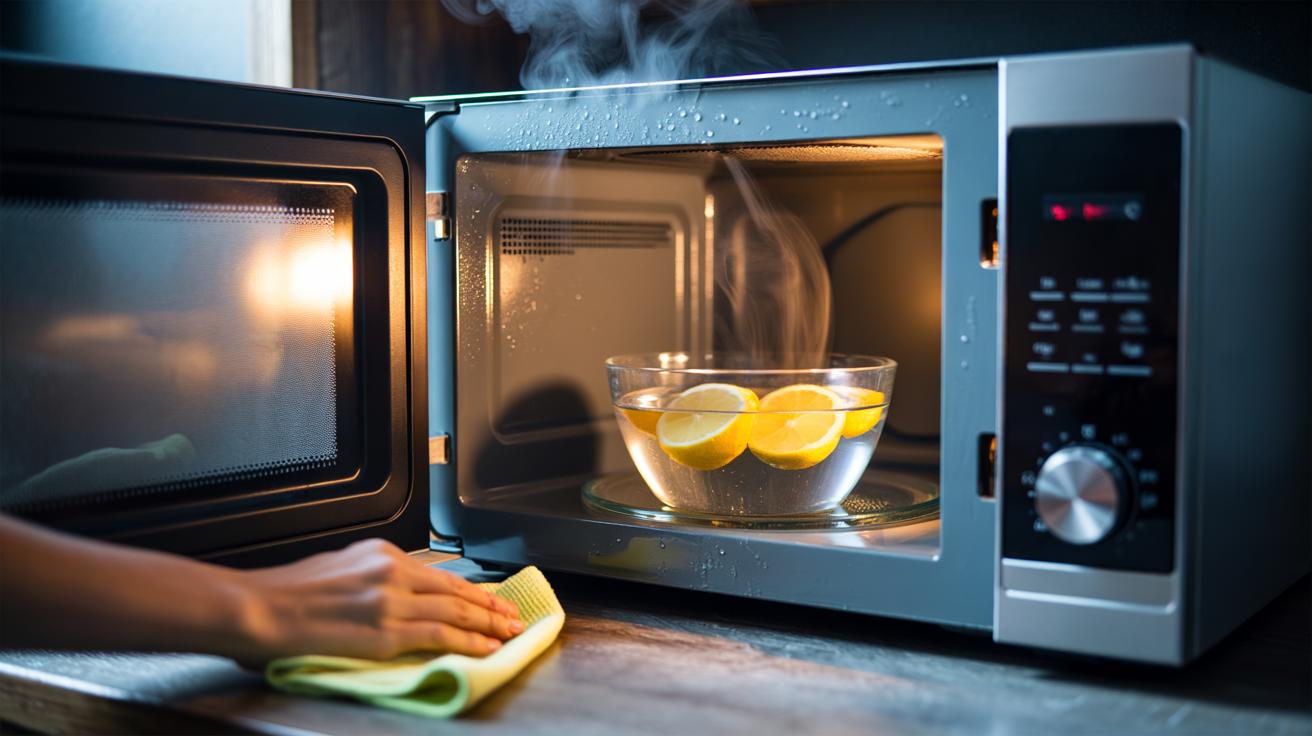
Fill a microwave-safe bowl with 250–300 ml water. Add the juice of half a lemon, plus the squeezed halves. The cut surfaces seed boiling and scent the vapour. Place uncovered in the centre. Never tightly seal the container. Heat until you see vigorous steaming and the door window fogs. Then let it sit, door closed, so condensation can do its quiet work. Open carefully, remove the hot bowl, and wipe with a soft cloth. Stubborn corners? Reheat for two minutes and repeat.
Time depends on power. Use this quick guide to land in the sweet spot without overcooking the citrus:
| Microwave Wattage | Heat Time | Rest (Door Closed) |
|---|---|---|
| 600–800 W | 5–6 minutes | 2–3 minutes |
| 900–1000 W | 4–5 minutes | 2 minutes |
| 1100–1200 W | 3–4 minutes | 1–2 minutes |
Do not use metal bowls or clingfilm. For crusty turntables, ladle some hot lemon water directly onto the glass and let it sit while you wipe the cavity. Finish with a dry pass to prevent streaks and to spot any lingering patches. The payoff is immediate: a shine, a fresh scent, and a reset you can genuinely see.
The Science: Citric Acid, Oils, and Odours
Citric acid sits around pH 2–3 in solution. That acidity helps unravel the protein-sugar scaffold behind brown splatters, while subtly breaking the ionic bridges that make grime grip. It’s not a heavy-duty descaler, but it’s enough. Acid plus heat equals fast softening without scratching. Meanwhile, the rind releases limonene, a hydrocarbon solvent that dissolves lipid films. Warm limonene spreads thinly, sneaking under grease so the next wipe lifts it away in one clean pass.
Odour control is a bonus. Volatile citrus compounds don’t just mask smells; they bind to and override lingering aldehydes and amines from reheated meats and spillovers. Steam also carries away light molecules, venting them when you open the door. That’s why the interior smells neutral rather than perfumed. It’s a reset, not a cover-up.
Safety matters. Superheating is rare but possible in ultra-pure water; lemon slices act as nucleation sites that encourage safe boiling. Use a microwave-safe glass or ceramic bowl, handle with an oven glove, and crack the door slowly to avoid a faceful of hot vapour. The process is gentle on enamel coatings and safer for seals than abrasive pastes or metal scouring pads.
Beyond Lemon: Tweaks, Troubleshooting, and Safety
Hard water? Add a pinch of salt to the bowl to promote even boiling and extra nucleation. Sticky sugar explosions from porridge or jam often need a second, shorter burst; think two minutes on high, rest, then wipe. For day-old cheese splats, tilt the bowl so vapour targets the upper side walls. Heat follows exposure, so angle for the mess. Finish with a damp microfibre cloth; its split fibres trap loosened particles so they don’t smear.
Want odour insurance? After the lemon cycle and wipe-down, leave a teaspoon of dry bicarbonate of soda in a ramekin to adsorb stragglers. Do this only after the acid step; mixing acids and alkalis at the same time wastes both. Persistent tea stains on turntables may yield to a brief soak in warm lemon water before a gentle rub with the soft side of a sponge. Avoid abrasive powders that can scratch the glass or dull the cavity’s finish.
A quick note on containers and timing. Use open bowls, never sealed jars, to prevent pressure build-up. Plastics can warp; glass is safer. If your oven has a deodorise or steam-clean setting, the lemon method complements it rather than conflicts with it. Do this once a week in a busy household, once a fortnight for light use. The routine is simple, repeatable, and strikingly sustainable.
In the end, the lemon-and-steam clean is a small domestic miracle: low cost, low effort, high reward. It preserves the interior, keeps odours polite, and ditches harsh chemicals for a solution you could drink—though please don’t. The speed is the seduction: five fragrant minutes, then a single effortless wipe. Your microwave looks newer, food tastes fresher, and the job’s done before the kettle boils. Will you try the citrus cloud tonight, or is there another kitchen shortcut you swear by that deserves equal billing?
Did you like it?4.7/5 (24)