In a nutshell
- 🔬 The science: citric acid in lemon juice dissolves limescale (calcium carbonate) by protonating carbonates and helping citrate ions chelate calcium and magnesium, lifting residue without scratching glass.
- 🧽 Step-by-step: start on a dry surface, apply lemon juice (neat for heavy stains or 1:1 with water), allow a 3–5 minute contact time, wipe, rinse, and buff dry for a streak-free finish.
- 🍋 Versus other cleaners: lemon offers a low-odour, eco-friendlier descaler than many commercial acids and can outperform vinegar on chalky rings, though it won’t fix permanent silica etching.
- ⚖️ Practical ratios: use neat juice for heavy rings, a 1:1 mix for general haze, or add a drop of washing-up liquid for soap scum; the article includes estimated pH and best-use cases.
- ⚠️ Safety first: keep acids off natural stone and unsealed grout, test a hidden patch, use soft cloths, and consider a bicarbonate rinse to neutralise residues on sensitive metals.
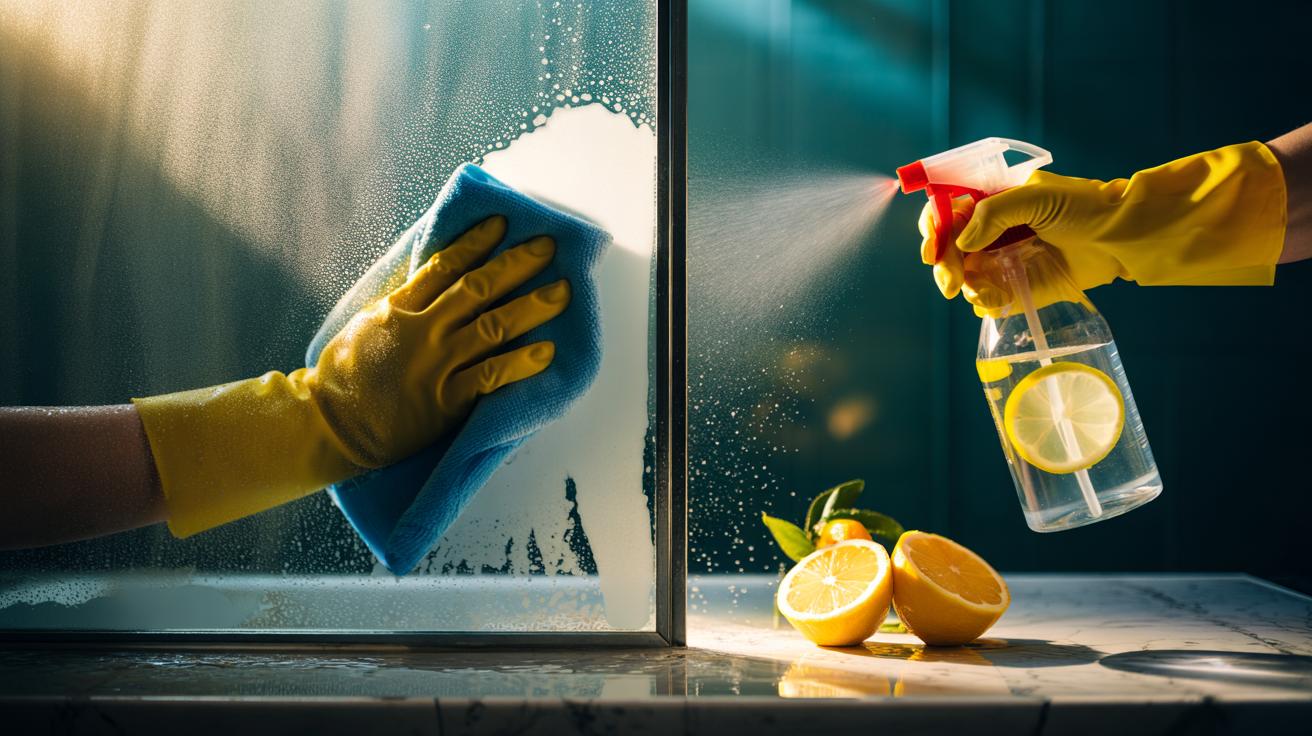
Hard water stains leave glass looking tired. Kettle splashes on the hob guard, shower screens fogged by chalky rings, a window pane peppered with dots that refuse to shift. Reach for a lemon. The fruit’s natural citric acid attacks the mineral crusts that cling to smooth surfaces, releasing the film without harsh fumes or bleaches. A few squeezes, a short wait, a gentle wipe. The difference can be startling. Because the acid dissolves the deposit rather than abrading the glass, clarity returns with less elbow grease and far less risk of scratching. It’s quick, thrifty, and it smells like summer rather than a lab.
How Citric Acid Breaks Limescale Chemistry
Hard water stains are mainly limescale: deposits of calcium carbonate and magnesium salts that crystallise as water evaporates. They cling stubbornly to glass because water spots dry into tiny mineral mounds. Citric acid, the main acid in lemon juice, donates protons that react with carbonate ions, forming carbonic acid that decomposes into water and carbon dioxide. That gentle fizz you sometimes see? It’s the chemistry at work. At the same time, citrate ions chelate calcium and magnesium, bundling them into soluble complexes that lift away with a rinse.
Crucially, citric acid dissolves the deposit, not the glass. Typical lemon juice has a pH around 2, strong enough to tackle hard water haze but far milder than hydrochloric or sulphamic acids in industrial descalers. The result is precision cleaning: the scale goes, the surface stays. On very thick build-up you may need two passes, but each pass strips another layer, revealing more sparkle without abrasion. That’s why old shower screens, window corners, and tap surrounds respond so well to a citrus approach.
Step-by-Step Method for Crystal-Clear Glass
Begin with a dry surface. Water dilutes the acid prematurely. Halve a fresh lemon and squeeze the juice into a bowl, fishing out pips. For light haze, mix 1:1 with warm water; for stubborn rings or drip marks, use it neat. Apply using a microfibre cloth, a soft sponge, or a spray bottle if you’ve strained the juice. Work in sections so contact time is consistent. Let the juice sit for three to five minutes—long enough to dissolve the crust, not long enough to dry.
Once the dwell time is up, wipe with slow, overlapping strokes. You’ll feel the cloth run more smoothly as the scale loosens. Rinse with clean warm water to carry away dissolved minerals, then buff dry with a second microfibre to prevent new spots. For edges around silicone or chrome, use a cotton bud dipped in juice. If soap scum is also present—a greasy film that traps minerals—add a tiny drop of washing-up liquid to your lemon mix. It loosens the soap so the acid can reach the scale. Wear gloves if you have sensitive skin, and ventilate small bathrooms. Avoid long contact with plated fittings and keep acids away from natural stone.
When Lemon Beats Commercial Cleaners
Lemon juice is not just a folk remedy; it’s a targeted descaler with a pleasant odour and a low environmental footprint. Ready-mixed bathroom sprays often rely on stronger acids, synthetic fragrance, and surfactants. They work fast, but they can etch certain metals, sting the lungs, and leave residues. Lemon offers a nimble alternative for regular upkeep. It costs pennies per treatment, leaves no synthetic perfume, and rinses clean. For weekly maintenance of shower glass or kitchen splashbacks, lemon is often faster to grab and gentle enough to use often.
Compared with vinegar (acetic acid), lemon’s citric acid clings slightly better and chelates minerals more avidly, so it can outpace vinegar on chalk rings and tap stains. Where lemon may fall short is on silica etching—microscopic corrosion from years of hard water—because that isn’t removable by any mild acid; it needs polishing. If scale is inches thick, a commercial gel descaler might be quicker for the first pass, followed by lemon for upkeep. Pair lemon with a razor scraper only if the glass is rated safe and you’ve tested a tiny patch. Patience and a second application are safer than force.
Ratios, Contact Times, and Surface Safety at a Glance
Getting the mix right makes lemon juice a reliable tool rather than a hopeful hack. The table below summarises practical ratios, estimated pH, and where each mix shines. These are field-tested ranges for household jobs, not lab absolutes, and they assume clean water and a reasonable room temperature. The goal is simple: enough acid to dissolve the minerals, enough time to act, and a clean rinse to remove residues before drying leaves fresh spots.
| Mixture | Estimated pH | Contact Time | Best For | Avoid On |
|---|---|---|---|---|
| Neat lemon juice | ~2.0 | 3–5 minutes | Heavy rings, shower glass corners, tap bases | Marble, limestone, travertine, unsealed grout |
| 1:1 lemon juice : water | ~2.3–2.5 | 5–7 minutes | General glass haze, splashbacks, window spots | Natural stone, damaged chrome plating |
| Juice + drop of washing-up liquid | ~2.0–2.5 | 4–6 minutes | Soap scum plus scale on screens | Porous stone, untreated wood trim |
| Lemon followed by bicarbonate rinse | Neutralised | Immediate after scrub | Odour control, quick neutralisation on metals | None specific; rinse thoroughly |
Always keep acids off natural stone and cement-based materials unless they are professionally sealed. If in doubt, test a hidden corner for 60 seconds and check for dullness before treating the whole pane. Use soft cloths, not scouring pads, and finish with a dry buff to lock in the shine. Store leftover juice in the fridge for a day or two, or freeze in cubes for future cleaning sessions. It’s efficient, repeatable, and easy to fit into a weekend reset.
Lemon juice turns a stubborn cleaning chore into a satisfying reveal. The science is sound, the method is simple, and the results are impressive: a glass surface that gleams, without harsh chemicals or lingering fumes. Citric acid disarms the scale and vanishes with a rinse, leaving only clarity behind. Next time your shower screen clouds over or the kitchen window blooms with spots, skip the mystery bottle and raid the fruit bowl. Will you try the citrus method this week and see how quickly your glass bounces back to a spotless gleam? What surface will you tackle first?
Did you like it?4.6/5 (25)