In a nutshell
- 🍋 Lemon scrub harnesses citric acid to chelate Ca/Mg/Fe deposits, dissolving limescale and detergent film while preserving the stainless steel’s chromium-oxide passivation layer for instant shine.
- 🧽 Practical method: rub a cut lemon over clean, dry cutlery; boost with fine salt (gentle abrasion) or sprinkle bicarbonate of soda for fizz; allow 15–30 seconds’ contact, then rinse hot and dry immediately.
- 🧪 Pro tips: in hard-water areas, use a 0.5–2% citric acid solution for consistency, buff with microfibre, and never mix acids with bleach; focus on deposit removal, not aggressive scouring.
- 🛠️ For stubborn marks: soak in 1–2% citric acid for 5–10 minutes and brush with soft nylon; avoid prolonged treatment on plated or high-carbon knives, and tweak dishwasher habits (right rinse-aid, vent steam) to prevent re-dulling.
- ✨ Benefits at a glance: low-cost, safe, deodorising clean that restores reflectivity fast; a quick monthly lemon refresh keeps cutlery consistently bright with minimal effort.
There’s a quiet heartbreak to opening the cutlery drawer and finding spoons that have lost their sparkle. The culprits are everyday: tea tannins, dishwasher heat, and stubborn limescale. Yet the remedy is delightfully low-tech and thrifty. A simple lemon scrub taps the natural power of citric acid to lift deposits and restore the warm gleam of stainless steel in minutes. Think chemistry that you can smell and see. Zest, fizz, shine. With a few swipes of a cut lemon, dullness gives way to clarity, and stainless looks stainless again. Here’s how it works, why it’s safe, and the quick method you’ll use on repeat.
Why Stainless Steel Goes Dull and How Lemon Helps
Stainless steel doesn’t “tarnish” like silver, but it does accumulate a thin film of deposits. In hard-water regions, calcium and magnesium salts cling to flatware, while dishwasher cycles can leave a rainbow sheen of detergent residues. Add trace iron oxides from water and sulphur compounds from foods, and your knives and forks soon look tired. The fix is elegant: citric acid, abundant in lemon juice, chelates metal ions and gently dissolves limescale, breaking the bonds that hold that dulling film in place. It’s a targeted clean, not a harsh strip.
Chemically, citric acid donates protons to loosen mineral build-up and forms soluble citrate complexes with Ca²⁺, Mg²⁺, and Fe³⁺, washing away into the rinse water. Crucially, it leaves the chromium-oxide passivation layer—the very thing that makes stainless “stainless”—intact when used briefly and at kitchen-safe strengths. The result is fast brightness without scratching or biting into the base metal. That’s why a lemon scrub feels almost magical: science disguised as a quick wipe that restores reflectivity and removes off-odours in one go.
Step-by-Step Lemon Scrub You Can Trust
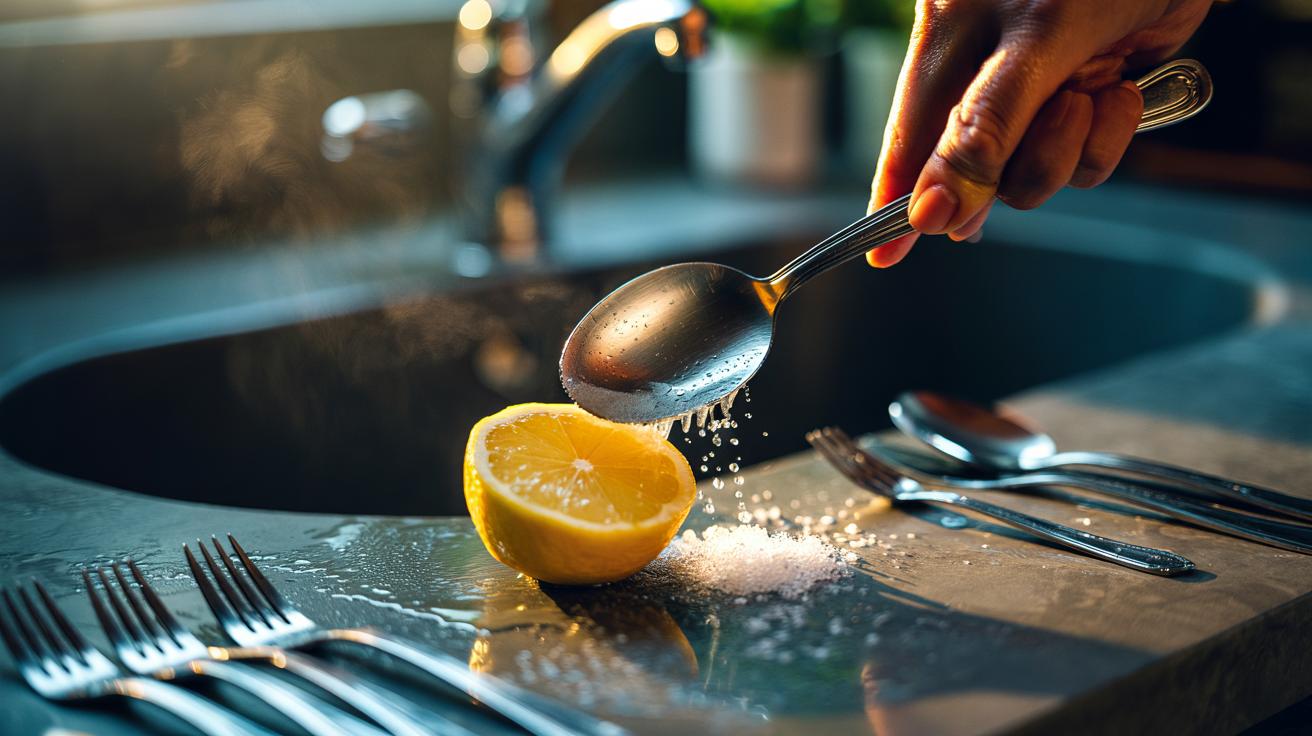
Start with clean, dry cutlery. Halve a fresh lemon. For light film or rainbowing, rub the cut side directly over each piece, squeezing gently to release juice. For more bite, dip the lemon into fine salt and scrub with small circles; the crystals act as a mild, glass-safe abrasive that boosts the acid’s action. Prefer fizz? Sprinkle a little bicarbonate of soda on the cutlery first. The lemon’s acid will react, lifting grime as bubbles agitate the surface.
Give each item 15–30 seconds of contact time, then rinse hot and wipe with a soft cloth. Always rinse thoroughly and dry immediately to avoid new water spots. Heavier staining—tea spoons, curry-streaked forks—benefits from a second pass or a 2–3 minute rest with juice pooled on the metal. Avoid soaking items with wooden handles and keep this method away from silver-plated or carbon-steel knives. If you see black transfer, you may be dealing with silver or plating—switch to a silver polish. For routine upkeep, a monthly lemon wipe keeps the shine easy, especially in hard-water homes.
Pro Tips, Pitfalls, and Science Notes
For those in the South and East of England where water is notably hard, a quick pre-rinse and lemon treatment right after the dishwasher cycle prevents limescale from baking on. A microfibre cloth makes a difference; it grabs loosened mineral film without re-depositing it. Prefer consistency? Keep a small jar of food-grade citric acid in the cupboard. Dissolve 1 teaspoon in 250 ml of warm water for a reliable wipe-on solution that behaves like lemon, without the pulp. Never pair acids with chlorine bleach—dangerous gases can form. Also avoid harsh scouring pads; stainless shines best when its passivation layer remains smooth and intact.
| Cleaner | Best For | Typical Contact Time | Notes |
|---|---|---|---|
| Lemon (citric acid) | Limescale film, rainbowing, light rust specks | 30–120 seconds | Fresh scent, gentle; safe for most stainless |
| Citric acid solution (0.5–2%) | Uniform cleaning, heavy kettling | 2–5 minutes | Consistent strength; rinse and dry well |
| White vinegar | General mineral build-up | 1–3 minutes | Sharper odour; less effective on iron staining |
Remember, the goal is deposit removal, not metal removal. Quick, light treatments are best. If your cutlery shows machining lines or already has micro-pitting, the lemon route still works—just keep the scrub gentle and rely on time rather than force. A final buff with a dry cloth locks in that crisp, mirror-like finish.
When a Lemon Isn’t Enough: Stubborn Tarnish Strategy
Occasionally, discolouration digs in—heat tint from overzealous dishwasher drying or brown specks from ferrous residue. Step up, but sensibly. Mix a warm citric acid bath at roughly 1–2% (2–4 g per 200 ml). Submerge the affected pieces for 5–10 minutes, agitating once or twice. Use a soft nylon brush to whisk away loosened film, then rinse hot and dry. Stainless steel loves being kept dry; water left to evaporate is what writes the next watermark. If faint colour bands linger, a second short dip typically clears them without touching the protective chromium oxide layer.
Reserve scouring powders or aggressive pastes for truly severe cases and only on full stainless, never plated pieces. If a magnet strongly grabs the blade of a “stainless” knife, it may be high-carbon and more reactive—treat swiftly and dry immediately. For prevention, reduce rinse-aid overdose, avoid overcrowding the dishwasher, and open the door after the cycle to vent steam. The combination of controlled heat, balanced detergent, and an occasional lemon refresher keeps cutlery showroom-bright with little fuss.
The charm of a lemon scrub is its simplicity: kitchen chemistry that’s safe, cheap, and astonishingly effective on everyday tarnish. It chelates, it freshens, it revives. Next time your forks look foggy, reach for citrus before spending on specialty polishes and you’ll likely be done before the kettle boils. Short contact time, a thorough rinse, and a dry buff are the winning trio. With hard water and busy routines, little rituals matter. Will you try the straight lemon-and-salt method first, or mix a measured citric acid solution for set-and-forget reliability—and which gives your drawer the most satisfying shine?
Did you like it?4.5/5 (29)