In a nutshell
- 🍋 A lemon slice erases rust because citric acid dissolves iron oxide and uses chelation to lift corrosion from the blade without harsh abrasion.
- 🧪 Understand rust: stainless relies on a self-healing passivation layer, while high-carbon steel forms protective patina; remove flaky rust, not stable patina.
- 🧤 Quick method: rub with lemon 20–60 seconds, pause briefly, rinse and dry immediately, then apply a thin food-safe oil on carbon steel; protect fingers and avoid soaking.
- 🔄 Alternatives: vinegar (acetic), cola (phosphoric), BKF (oxalic), and baking soda offer different speeds and finish risks; choose food-safe options and avoid acids on etched or coated blades.
- 🛡️ Prevention beats cure: prioritise moisture control, dry storage, wipe during prep, and light oiling on reactive steels to maintain sharpness and shine.
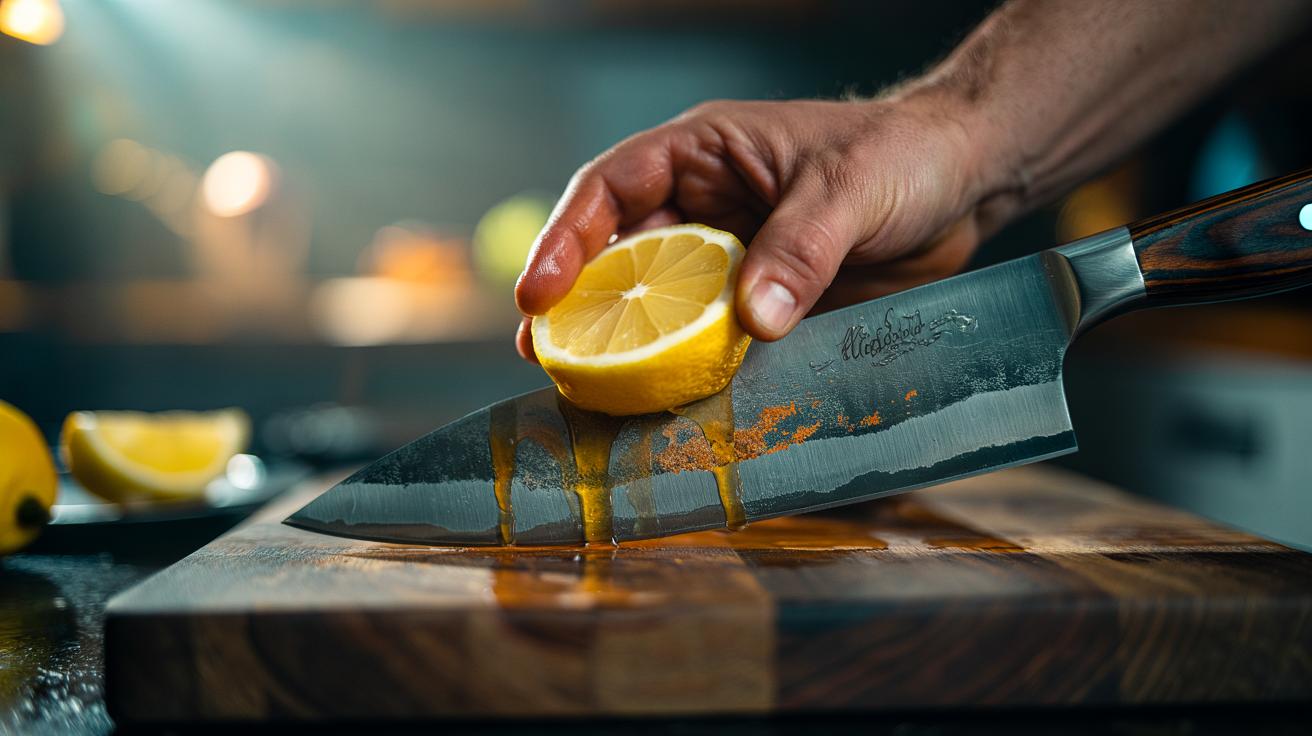
A speckled orange stain on a favourite chef’s knife can feel like a small betrayal. You cleaned it, you dried it, and yet the brown bloom returned. Here’s the twist: a simple kitchen staple, the humble lemon slice, can erase that rust in seconds. The trick is not magic but chemistry. Inside the citrus is citric acid, a weak acid with a powerful knack for binding metals and loosening oxides. Rub, wait, rinse, dry. Bright steel returns. This quick fix doesn’t just polish—it tackles oxidation at its source, and with a little technique you can do it safely without dulling the edge or marring the finish.
The Science of Rust: Why Knives Stain in the First Place
Rust is simply iron oxide, born when iron in steel meets oxygen and moisture. Add dissolved salts from washing-up water or acidic food residue and the reaction speeds up. Even stainless steel is not invincible. It resists rust because chromium in the alloy forms a microscopically thin, self-healing passivation layer of chromium oxide. Scratch it, and fresh air repairs it. Trap moisture under a bead of water near the heel or bolster, or leave residue in a knife block slot, and corrosion can outpace that repair.
High-carbon blades, prized for sharpness, are more reactive. They develop a protective patina—a dark, dense oxide that slows further rust. That’s good. Flaky red-brown rust is not. The difference matters to cooks and collectors alike. Rust is porous and spreads; patina is compact and stabilising. When we say a lemon can “erase” rust, we’re targeting the unstable iron oxides on the surface, not the steel beneath or a deliberate patina that gives character and some protection.
Citric Acid at Work: How a Lemon Dissolves Oxidation
Citric acid is a weak triprotic acid found naturally in lemon juice. Two properties make it perfect for knife triage. First, acidity: at a pH around 2, lemon juice donates protons that help break down iron oxides, nudging them into solution. Second, chelation: citrate ions wrap around dissolved iron ions to form stable complexes—think of a molecular claw gripping the metal—pulling corrosion products away from the surface and preventing them from redepositing.
This is why a quick rub works so well. The juicy slice delivers fresh acid, while the rind provides gentle mechanical abrasion. The contact is local and brief, so the base metal isn’t attacked significantly. Contrast that with long acidic soaks, which can etch markings or haze polished finishes. Citric acid is kinder than stronger agents like hydrochloric or even phosphoric acids, yet fast on light rust. It won’t repair pits (metal already lost), but it will dissolve oxide, expose clean steel, and leave the surface ready for water rinse, drying, and re-passivation by air. That sequence—dissolve, lift, rinse, dry—is key to a lasting shine.
Step-by-Step: Remove Rust with a Lemon Slice
1) Inspect the blade. Identify orange or brown bloom versus dark grey-blue patina. Patina is usually worth keeping; flaky rust is not. Protect etched logos or painted coatings with masking tape if you’re cautious.
2) Cut a fresh lemon slice. Squeeze lightly to wet the rusted patch. Rub with the slice using small, overlapping circles for 20–60 seconds. For stubborn specks, sprinkle a pinch of fine salt or baking soda on the slice to add mild abrasion, but keep pressure light to preserve polish.
3) Pause for 30–90 seconds. Don’t wander off. Wipe and check. Repeat once if needed rather than soaking.
4) Rinse thoroughly with warm water. Then dry immediately—spine to edge, heel to tip—with a clean towel. Moisture control is non-negotiable.
5) Optional but smart: wipe a whisper-thin film of food-safe oil (mineral or camellia) onto carbon steel. For stainless, a clean, dry finish is usually enough. Avoid getting lemon on wood handles; citrus can raise grain and strip oils.
Never scrub the cutting edge directly along the edge; wipe away from it to protect your fingers and the micro-bevel. If light fogging appears on mirror finishes, polish with a soft cloth. The edge should remain unaffected because you acted fast and kept abrasion minimal.
Alternatives, Comparisons, and When to Avoid Acid
Lemon isn’t the only kitchen chemistry fix. Each option balances speed, safety, and surface risk. Here’s a quick reference you can scan before reaching for what’s at hand.
| Agent | Active Ingredient | Typical pH | Speed on Light Rust | Finish Risk | Food-Safe? |
|---|---|---|---|---|---|
| Lemon | Citric acid | ~2 | Fast | Low | Yes |
| White vinegar | Acetic acid | ~2.5 | Moderate | Moderate (etch risk if soaked) | Yes |
| Cola | Phosphoric acid | ~2.5 | Slow–Moderate | Low–Moderate (sticky residue) | Technically |
| BKF powder | Oxalic acid | ~1–2 (paste) | Very fast | Higher (abrasive + strong acid) | No (rinse thoroughly) |
| Baking soda paste | Alkaline + abrasion | ~8–9 | Slow | Low | Yes |
Use acids sparingly on Damascus etches, blued finishes, or black oxide coatings. If you value a curated patina on carbon steel, spot-treat only the active rust. Avoid prolonged exposure on soft metals in bolsters or copper accents. After any acidic treatment, rinse, dry, and let the blade breathe—air restores the passivation film on stainless. Store knives bone-dry, away from leather sheaths and damp blocks. Routine habits—wipe during prep, dry immediately after washing, a thin oil film for carbon steel—beat emergency rescues every time.
One lemon slice, a minute of attention, and the brown flecks give way to clean steel. The chemistry is elegant: citric acid dissolves iron oxide and chelates the released iron, while gentle friction lifts residue without harming the blade. Keep it quick, rinse well, dry thoroughly, and your knife’s passivation will take care of the rest. For the long term, prevention rules—dry storage, careful washing, occasional oiling on reactive steels. A shiny knife is a safe knife, and a maintained one stays sharp longer. Which habit will you adopt today to stop rust before it starts?
Did you like it?4.4/5 (25)