In a nutshell
- 🗝️ The “genius” is a key-loop routine: clip your keys via a small carabiner to the inside handle so you must touch them before the door can shut—works with uPVC multipoint and timber doors.
- 🧭 Simple setup, strong habit: use a 25–45 mm carabiner and a 20–30 cm bright loop; colour‑code for households; position away from the letterbox; don’t leave keys in the lock; at night, keep them accessible but not visible.
- 🛡️ Stay compliant and safe: maintain BS 3621 or multipoint with TS 007 cylinders; avoid letterbox fishing risks; never defeat the latch; consider a thumbturn and clear fire‑escape routes.
- 🔐 Build backups: install a police‑approved key safe (Secured by Design, LPS 1175) and rotate codes; add smart locks (e.g., Yale Linus, Nuki) with a mechanical override; attach a smart tag to your keyring.
- 💷 Low cost, high reliability: the loop costs £3–£10, needs no apps or batteries, and, layered with a key safe and optional tech, delivers everyday resilience and peace of mind.
Lockouts strike at the worst moments. The school run. The bin dash. The quick pop to the shops that turns into a cold stand on the pavement. Here’s the simple, quietly brilliant routine many UK homeowners swear by: a physical prompt that makes it almost impossible to close the front door without your keys. No apps required. No fiddly electronics. Just a repeatable habit and a small piece of kit that costs less than a takeaway. The best part is that it works with uPVC multipoint doors and classic timber mortice-and-latch setups alike. Once you’ve tried it for a week, you’ll wonder how you ever lived without it.
The Everyday Key-Loop Trick, Explained
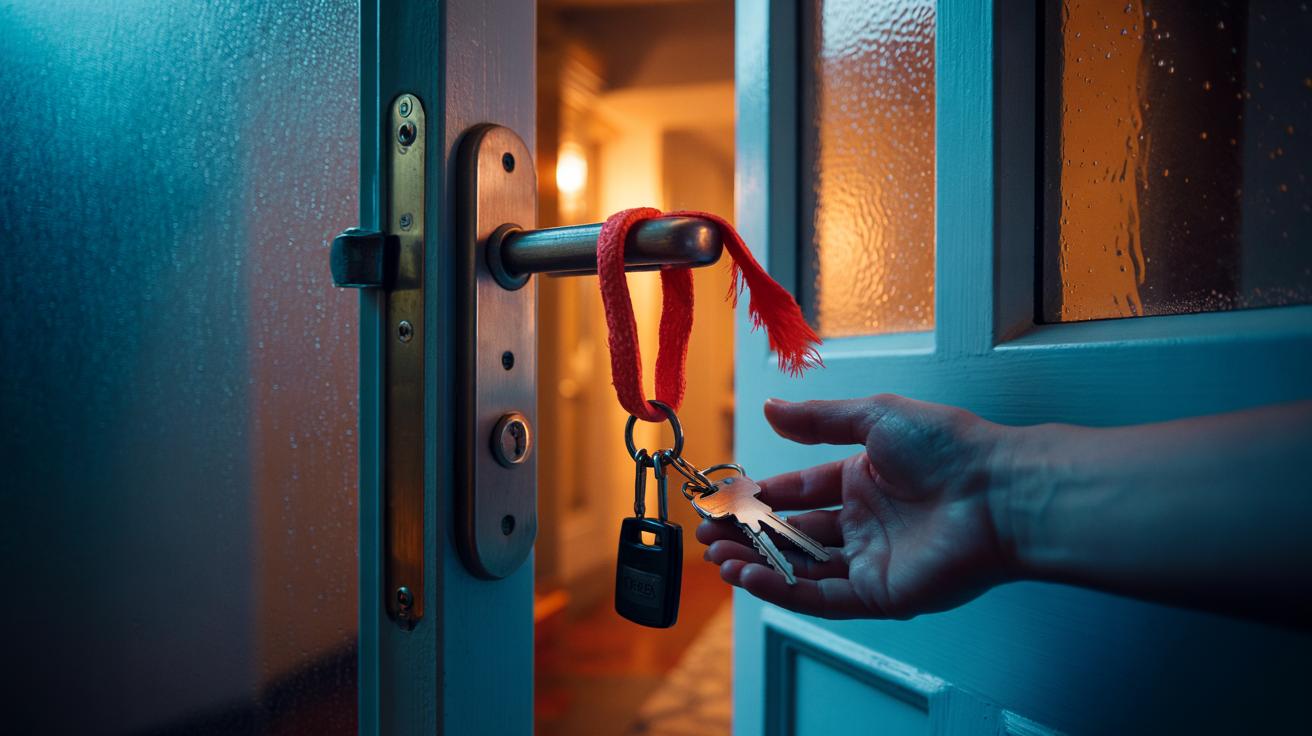
The “genius trick” isn’t a gimmick. It’s a key loop routine: keep your keys clipped to the inside handle while you’re at home, and make the act of leaving require physically unhooking them. Picture a short, bright fabric loop or thin cord with a small carabiner. Your keyring lives on that carabiner. When you’re indoors, the loop hangs from the inside door handle. When you step out, you have to remove the keys to close the door. If you forget, the loop snags the door edge or simply won’t let it shut. That friction is the feature, not a bug.
This is a behavioural hack with teeth. The moment-to-moment design forces you to touch your keys before the door can latch. It’s not about hiding spares or defeating locks; it’s about engineering a fail-safe prompt into the way you exit. The loop is visible, tactile, and obvious—more reliable than memory or phone reminders. It works regardless of Wi‑Fi, batteries, or app updates, and it scales to busy households where someone always seems to leave in a hurry.
Because the loop stays inside the property when you’re home, it’s out of sight from the street. And because the carabiner is attached to your keys—not bolted to the door—you aren’t creating a fixed point that could be manipulated from outside. The trick is humble. That’s why it’s powerful. You do it daily. It becomes muscle memory.
Step-By-Step Setup and Habits That Stick
Pick a small, smooth-gate carabiner (25–45 mm) and a short loop (20–30 cm) made from bright paracord, flat webbing, or silicone. Thread your keyring through the carabiner. Tie or clip the loop so it hangs freely from the inside handle; it should be long enough to grab easily, short enough not to tangle. For lever handles, a simple lark’s head knot grips well. For round knobs, a narrow strap loop stays put.
Adopt this rhythm: keys clip to the handle the moment you come in; shoes off; kettle on. When leaving, hand on keys first, door second. If you forget, the loop literally stops the door. Build the ritual into moments of friction you already experience—grabbing your bag, jacket, or pram—so the prompt is unavoidable. Families can run one loop per set of household keys, colour-coded. Flatmates? Assign colours; add a small tag with a first name or icon.
Positioning matters. Keep the loop out of sight from glazing and well beyond reach of the letterbox. If your door has a large letterplate, mount a simple interior letterbox cage to block access. Night-time routine: clip keys to the loop, then move them to a safe spot away from the door before bed (fire services recommend keeping keys accessible but not visible). Don’t leave keys in the lock; that can compromise both security and insurance, and can jam some cylinders.
Security, Insurance, and UK-Specific Caveats
UK insurers typically expect doors to meet BS 3621 (timber mortice locks) or have a certified multipoint system on uPVC/Composite doors, sometimes with TS 007 3-star cylinders. Your key-loop routine doesn’t alter compliance, but bad habits can. Never prop the latch or tape it down while you’re out; defeating the lock could invalidate cover and invites burglary. Likewise, don’t leave keys visible through sidelights or within easy reach of the letterbox. “Letterbox fishing” is a common entry method in the UK.
Fire safety is equally critical. Many brigades recommend a thumbturn on the inside so you can exit quickly without hunting for keys. Keep the escape route clear and know where your keys live at night—typically on a high hook in the hall, not sitting on the handle. If you use the loop, clip the keys off the handle when you go to bed so they’re accessible yet not on display.
Privacy and data risk? Minimal here, which is a virtue. No cloud accounts. No lock-brand ecosystems. Still, add sensible layers: a door viewer or smart bell to check callers; robust door hardware with anti-snap cylinders; and, if you opt for any connected backup like a smart lock, choose brands with strong encryption and UK support. Keep receipts and certification details; some insurers ask for evidence after a claim.
Backups Worth Adding: Key Safes, Smart Locks, and Tags
The loop prevents the classic “step outside, door slams, panic” scenario. But a belt-and-braces approach wins the day. Consider a police-approved key safe (look for Secured by Design and LPCB LPS 1175 SR-rated models such as the KeySafe C500 Pro). Mounted into brick with the supplied fixings and a memorised code, it gives you a secure, insurer-friendly spare without the cliché rock in the garden. Change the code quarterly and after any contractor access.
Prefer convenience? Retrofit smart locks (e.g., Yale Linus, Nuki) operate your existing mechanism and can auto-lock when you leave, with fobs for kids or carers. Check insurer acceptance, configure PIN/fob limits, and keep a mechanical override key. Add a smart tag (AirTag, Tile) to your keys so lost doesn’t become locked out. It’s a small cost for big calm. Think layered resilience: behavioural prompt first, physical backup second, tech convenience third.
| Option | Upfront Cost | Ongoing Cost | Main Pros | Main Risks |
|---|---|---|---|---|
| Key-Loop Routine | £3–£10 | £0 | Simple, daily, no batteries, immediate prompt | Poor positioning near letterbox could be fished |
| Police-Approved Key Safe | £60–£120 | £0 | Insurer-friendly spare, shareable code | Weak models or poor installation reduce security |
| Smart Lock | £180–£300+ | £0–£30/yr (bridges/batteries) | Auto-lock/unlock, audit trail, e-keys | Power/app failures; must keep mechanical backup |
| Smart Tag on Keys | £25–£35 | £0 | Find misplaced keys quickly | Doesn’t unlock doors, only locates |
The quiet magic of the key-loop trick is its humility. Low cost. High compliance. It turns a forgetful moment into a harmless tug on a strap, not a call to a locksmith. Layer it with a police-approved key safe and, if you like, a smart tag or lock, and you’ve built a resilient system that respects both security and daily life. Small changes, big peace of mind. How will you adapt this setup for your household—purely analogue, a hybrid with a key safe, or a tech-forward approach that adds smart convenience without sacrificing security?
Did you like it?4.5/5 (21)