In a nutshell
- 🌙 Build nights around consistency: same-order sleep cues (dim lights, no screens, warm bath, pyjamas, snack, story, lights out) to signal safety and promote uninterrupted sleep.
- 🧠 Leverage biology: manage light to boost melatonin, protect the circadian rhythm, and preserve sleep pressure by timing naps/activity; keep bedrooms ~17–19°C.
- ⏰ Follow a clear sequence: early wind-down, bath, hygiene, small snack, stories, then lights out with white noise; use timing and a consistent phrase as conditioned cues for sleep.
- 🏠 Tweak the setting and food: calm environment (blackout blinds, clutter-free, one comforter) plus balanced nutrition (protein + complex carbs, no late sugar/caffeine) and smart hydration.
- 🧒 Apply age-specific tweaks: babies get a short sensory-light routine; toddlers get limited choices and visuals; preschoolers use a bedtime pass; neurodivergent kids need sensory supports—always keep stacked cues and steady timing.
British parents from Bristol to Inverness are quietly sharing a simple, repeatable bedtime playbook that turns evenings from chaos into calm. The routine is not flashy. It’s predictable, sensory-aware, and built around the body’s own clock. When done consistently, families report children drifting off fast, then sleeping soundly until morning. The secret? A handful of sleep cues stacked in the same order, every night, at roughly the same time. Lights dim. Voices soften. Screens vanish. Warm bath, cosy pyjamas, a small snack, then story. Consistency is the real sedative. It sounds ordinary, but that’s the magic: ordinary steps that, together, signal safety, soothe stress, and invite deep rest.
The Science Behind Sleep-Friendly Evenings
Behind the lullabies and nightlights sits brain chemistry. Children’s circadian rhythm rises and falls across 24 hours, guided by light, food, and routine. Dimming lamps after supper increases melatonin, the hormone that nudges the brain toward sleep. Blue light from screens stalls this process, so parents aiming for an early bedtime pull the plug 60–90 minutes beforehand. It’s not about punishment; it’s physiology. Keep the home warmish but not bright. Let the evening exhale. Short sentences. Slow voices. Everything tells the body, “It’s time.”
Then there’s sleep pressure, built through activity and time awake. Late naps or long afternoon snoozes dilute it, making bedtime harder. Parents who swear by rock-solid nights pay attention to nap length, daylight exposure after school, and pre-bed play that’s energetic but not wild. Think Lego on the rug, a quick tidy-up race, gentle stretches. Too much excitement too late keeps cortisol high, and cortisol is melatonin’s noisy rival.
Temperature matters as well. A warm bath prompts peripheral blood flow; the body then cools as the child dries and dresses, a natural cue for sleep onset. Bedrooms around 17–19°C help maintain that drop. Add a breathable duvet and cotton sleepwear to prevent overheating. Finally, predictability lowers threat detection. When steps arrive in the same sequence, the nervous system relaxes. The brain stops scanning. Sleep steps forward.
The Step-by-Step Routine Parents Swear By
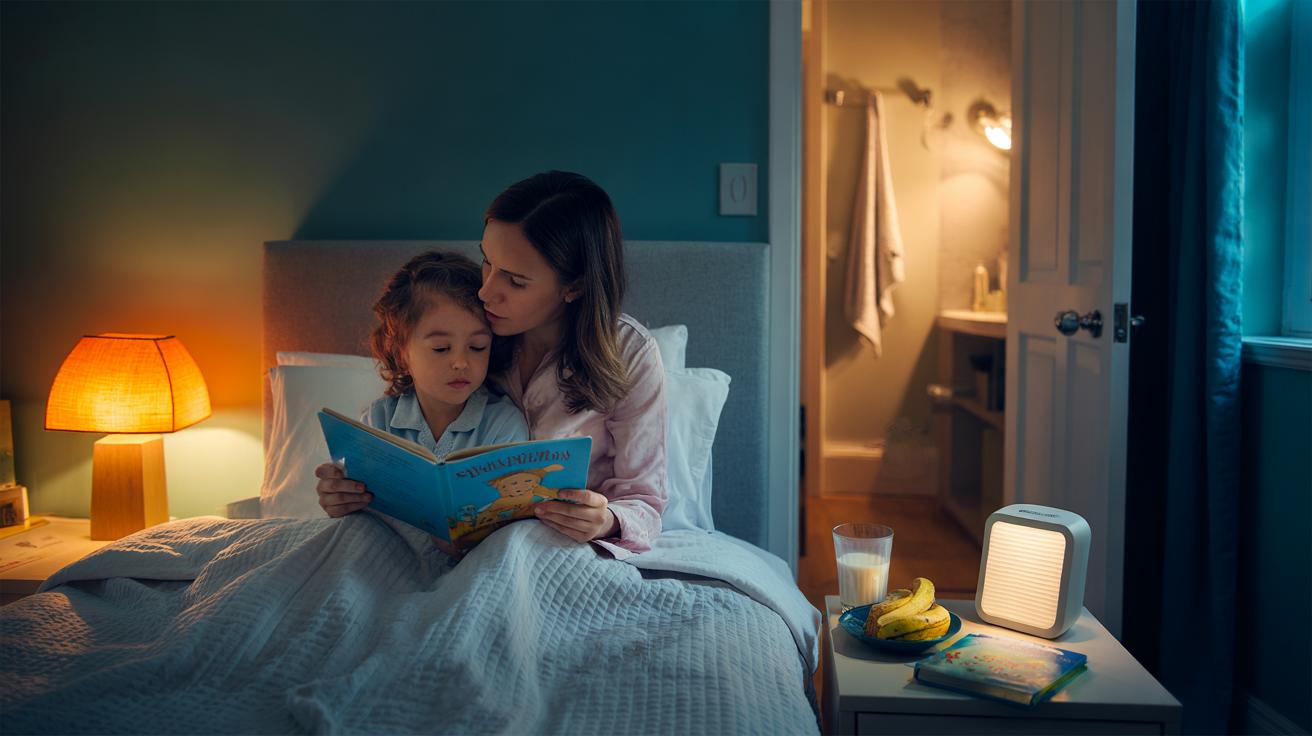
Parents who report uninterrupted nights describe a clear, clock-steady order. The aim isn’t to rush but to repeat. Same time. Same cues. No debates. Begin by dimming lights across the home and switching to “inside voices.” A warm bath follows, then toothbrush, then pyjamas. Offer a light, balanced snack if supper was early. Pause for a cuddle, a short chat about the day, and a bathroom stop. Finally, reading in bed, low lamp, door ajar, white noise if needed. The order does the heavy lifting.
| Time | Step | Purpose |
|---|---|---|
| 18:30 | Lights dim, screens off | Boost melatonin, reduce stimulation |
| 18:45 | Warm bath | Lower core temperature, signal wind-down |
| 19:00 | Toothbrush, pyjamas | Simple hygiene cue chain |
| 19:10 | Snack and water | Stable blood sugar, prevent thirst wakings |
| 19:20 | Story and cuddle | Connection, calm, sleep association |
| 19:35 | Lights out, white noise | Consistent final cue to sleep |
Keep the script short and repeatable. One snack. Two short stories. A consistent “good night” phrase that becomes a conditioned cue. Use a timer to avoid drift; let the timer be the “bad cop,” not you. If a child calls out, return briefly and quietly. No lectures. Minimal light. Same message every time. Children learn the pattern, trust it, then follow it toward sleep.
Environment, Nutrition, and Timing: The Hidden Levers
The bedroom should whisper sleep. Blackout blinds stop early dawns, while a low amber nightlight reduces fear without wrecking melatonin. Many parents rely on steady white noise to mask neighbours or traffic; it’s not essential, but it’s consistent, and consistency is currency at bedtime. Keep toys out of sight or in lidded baskets—visual clutter excites the brain. If a comfort object helps, choose one. Not five. Fewer choices mean fewer battles.
Food can sabotage or support. A mini snack 45–60 minutes before lights-out—Greek yoghurt with oats, a banana with peanut butter, wholegrain toast and cheese—pairs protein with complex carbs for slow energy release. Avoid sugary cereals, chocolate, and fizzy drinks after late afternoon. Caffeine hides in iced tea and some sweets. Hydration matters, but front-load fluids earlier; offer just enough water at bedtime to dodge overnight toilet trips. A last calm loo visit is a gift to everyone.
Timing is half the trick. Overtired children look wired: flushed cheeks, giddy giggles, sudden tantrums. That’s cortisol. Move bedtime earlier by 15 minutes for a week and watch what happens. Protect naps for babies and young toddlers; cap them later on to preserve sleep pressure. School-age kids need wind-down time after clubs and homework. The mantra holds: predictable, not rigid. Structure, then softness.
Real-World Variations for Different Ages
Babies six to twelve months benefit from a compressed, sensory-light routine: bath, gentle baby massage, pyjamas, feed, short song, down drowsy. Night feeds may continue, but the cues still prime sleep. Introduce a single comforter once safe. For toddlers, add choice within limits—“green or blue pyjamas?”—to ease autonomy battles. Keep transitions visual with a simple picture chart by the door. Children respect routines they can see and predict.
By three to five, nap changes alter bedtime. If afternoons are lively, shift the bath earlier and lengthen story time to decompress. A “bedtime pass” system can curb curtain calls: one pass for one reasonable request (water, loo), then it’s done. For primary pupils, involve them in setting a realistic lights-out and a morning wake-up that protects 10–12 hours total sleep. Consistency across weekdays and weekends prevents social jet lag.
Neurodivergent or sensory-sensitive children may need extra scaffolding: softer fabrics, tag-free pyjamas, predictable sounds, and rehearsed scripts. Weighted blankets can help some, but always check safety guidance and temperature. Teen siblings staying up? Headphones and door seals protect younger sleepers. Whatever the age, the spine of the plan stays the same: stable timing, stacked cues, and a room that feels safe, dark, and quiet. That’s the routine parents keep—and kids trust.
When families commit to a calm sequence, the results can feel transformative: quicker bedtimes, fewer wake-ups, happier mornings. It’s not a gimmick. It’s a rhythm, patiently built and repeated until the brain recognises it as home. Choose your cues. Set your order. Trim the friction. Then protect it like treasure. As your evenings soften, something else returns too—time. What will your family’s version of this sleep-through-the-night routine look like, and which cue will you start stacking first?
Did you like it?4.6/5 (21)